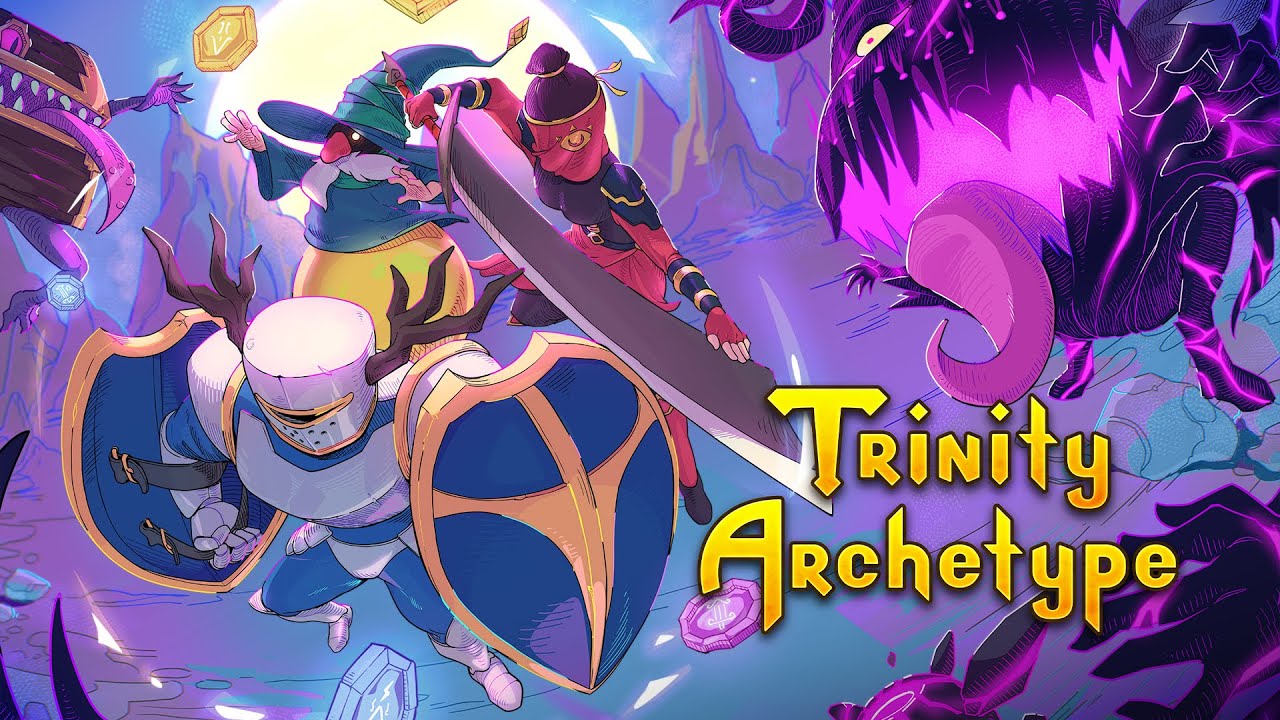
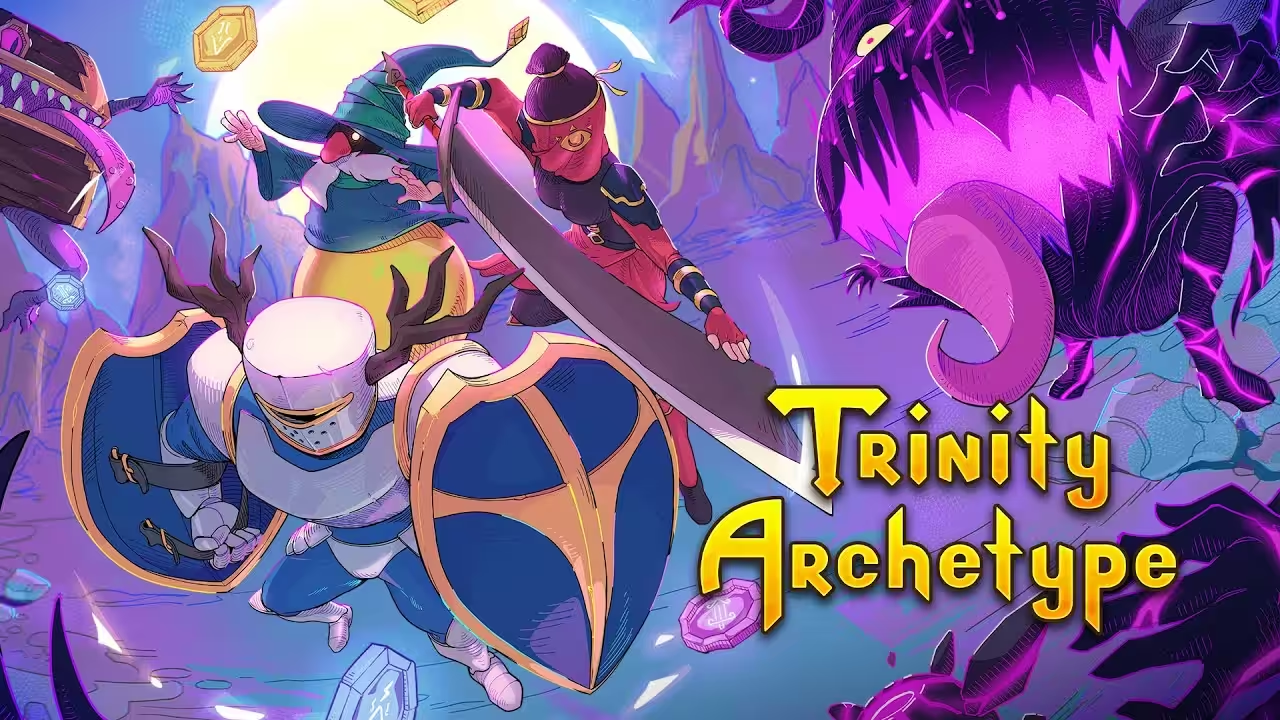
Trinity Archetype is a turn-based roguelike RPG built around a simple idea: every run should let players create something powerful, strange, or outright broken. The game is now live on Kickstarter, with a playable demo on Steam showing the systems that define its identity.
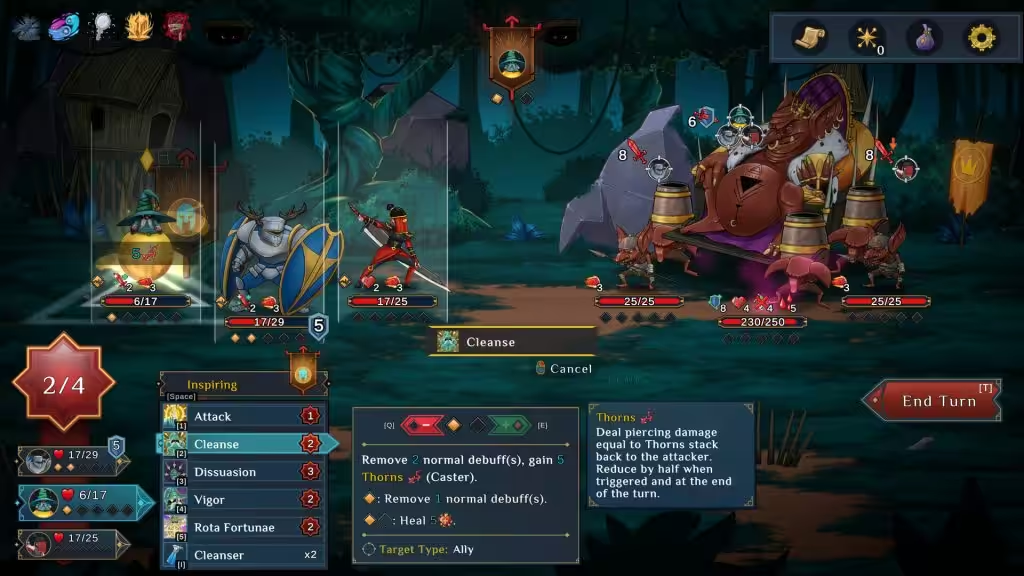
Rather than relying on a fixed deck or character sheet, progression comes from assembling skills and slotting runes that reshape how those skills behave. The developers frame it as a mix of deckbuilder logic and JRPG-style turn order, but the emphasis is on player expression, designing attacks, modifiers, and combos through a growing library of components.
The world itself sets the stage. Archetypes, ancient forces tied to Might, Protection, Wisdom, Pain, Cunning, and Chaos, once shaped reality. When Chaos returned and fractured dimensions, the remaining Archetypes chose new champions to inherit their blessings.
Each playable character embodies one of these principles, bringing not only thematic flavor but a defined mechanical identity to every run.
A Skills-and-Runes System That Drives Every Build
Every character begins with a set of core skills. These serve as the base for customisation, because each skill contains multiple rune slots.
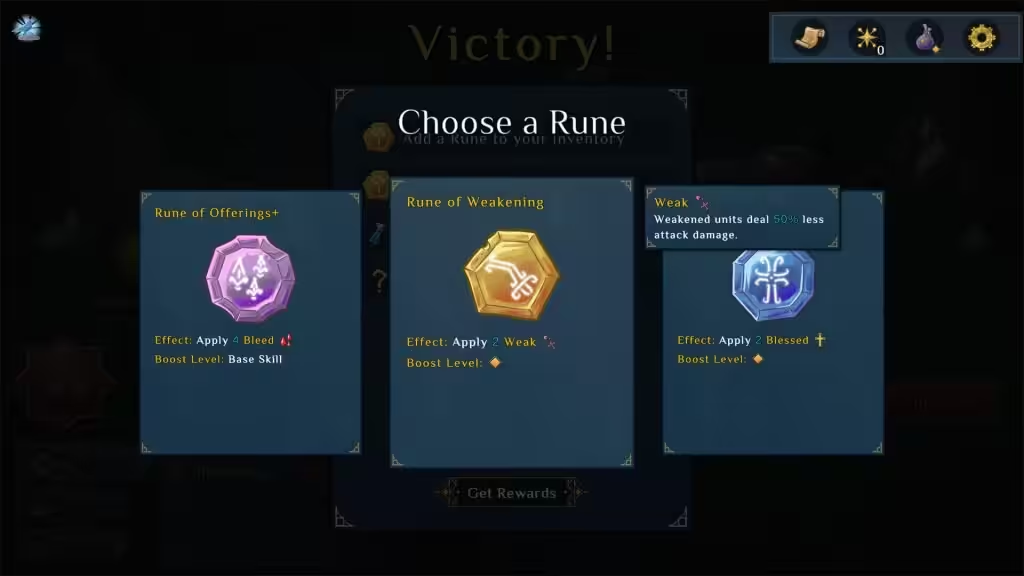
Runes change targeting rules, add conditional effects, or introduce bonuses that scale with in-battle “Boost” levels. Some convert single-target strikes into full-party attacks. Others graft debuffs, shield steals, or break properties onto otherwise simple abilities.
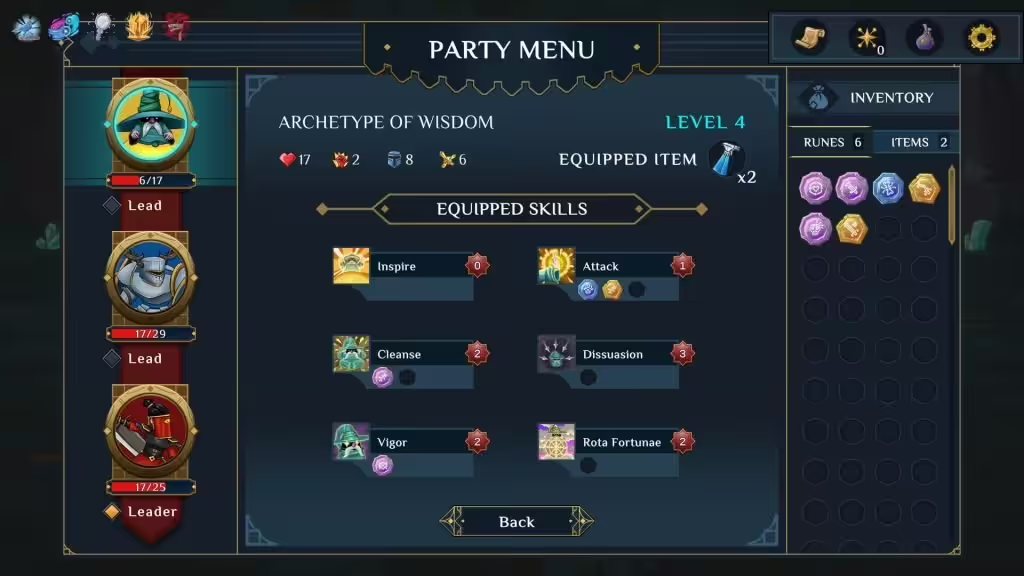
Runes come from battles, exploration events, or NPC encounters such as the Rune Blacksmith, who expands slot capacity and upgrades rune quality.
This gives each run a distinct direction, as players lean into the synergies that emerge from whatever runes they acquire. With hundreds of runes and dozens of modular skills, even repeat runs with the same character diverge rapidly.
Turn-Based Combat, Action Points, and Two Key Systems
Combat mixes traditional turn order with deckbuilder-like telegraphing. Enemy intentions are visible in advance, and Action Points determine how many skills can be used, and the entire system pivots on two mechanics that appear in every encounter: Boost and Inspire.
Boost lets players push a skill to higher effect tiers. Boost levels may add new effects defined by runes, extend durations, or alter damage types. Deciding when to spend Boost Points is a major tactical axis, particularly when building toward large multi-step combos.
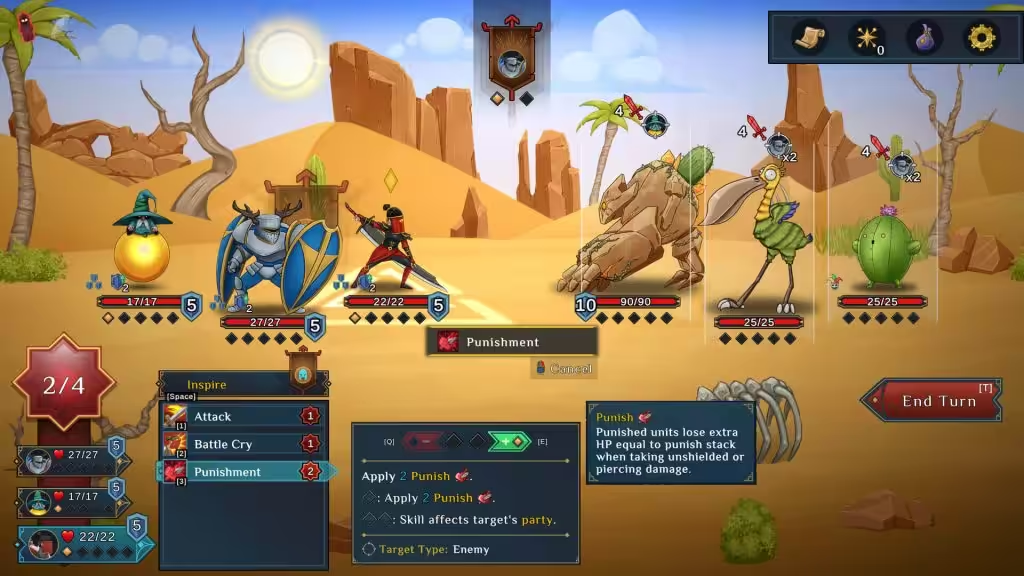
Inspire is the party-wide pivot system. Once per turn, a character may Inspire allies to trigger a unique effect tied to their Archetype. These effects modify incoming damage, create shields, influence enemy actions, or trigger extra hits, depending on who is acting as the source.
The system works as a bridge between characters; players can push a turn from defensive to aggressive or create openings that would otherwise be impossible. Boost and Inspire feed into each other, often enabling the one-turn “broken” builds that the game actively embraces.
Five Playable Characters, Each Anchored to an Archetype
The demo features four characters, with the fifth planned as part of Early Access:
Yami (Archetype of Might)
A frontline attacker who specialises in breaking defenses, dealing piercing damage, and raising party damage when she Inspires. She pushes aggressive builds that reward high Boost usage.
Ank (Archetype of Protection)
A defensive unit who generates shields, redirects enemy attacks, and reinforces allies when he Inspires. His kits pair naturally with runes that convert shields into effects or alter taunt timing.
Worb (Archetype of Wisdom)
A support character focused on buffs, debuffs, break generation, and manipulating turn flow. His Inspire effect exposes enemies by reducing Break Points, supporting build paths that rely on disabling opponents.
Bonnie (Archetype of Pain)
A striker with a Rage mechanic that triggers extra hits for the party. Her builds lean heavily on multi-hit synergies and rune chains that convert repeated strikes into heavier effects.
G.B. – Goblino Butler (Archetype of Cunning)
Planned for Early Access completion. Summons a teapot companion that creates items, captures enemies, and performs actions not yet fully revealed. His design revolves around trickery and irregular interaction loops.
Run Structure and Replayability
Each run lasts 45–60 minutes in the demo. Along the path, players earn artifacts, unlock new runes, and expand the range of skills available in future cycles.
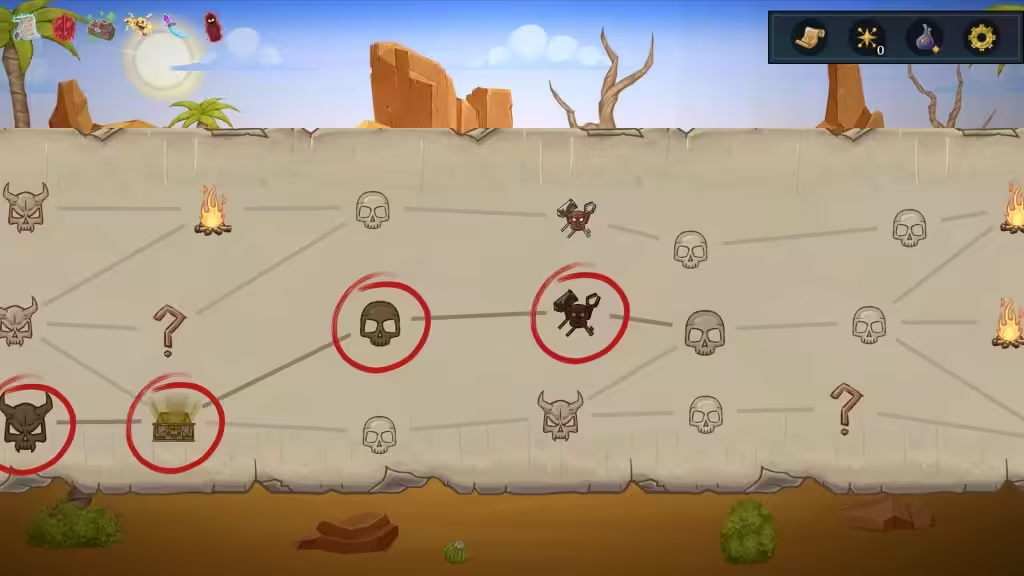
The demo includes four characters, several artifacts, and a broad selection of runes, all of which combine to form a large early pool of possible builds. The game supports mouse-keyboard, keyboard-only, gamepad, and Steam Deck, with the demo already running smoothly on Steam Deck hardware.
A World Split by Chaos
The narrative pitches the characters as inheritors of lost Archetypes who sacrificed themselves to seal away corrupted brethren. With space and time fractured, new champions must gather allies, travel across warped dimensions, and rebuild the world piece by piece.
The story beats are structured around exploring events, meeting NPCs, and acquiring blessings from the remnants of the fallen Archetypes.
Kickstarter Scope, Roadmap, and Developer
The Kickstarter focuses on three main needs: development time, marketing, and localization. The two-person team already has the core systems in place, but extra funding lets one developer work full-time on polishing and stabilizing the game ahead of Early Access.
On the marketing side, the money helps them tackle the usual indie problem of visibility by reaching more players and growing the community. Localization funding goes into translating the game’s dynamic, rune-driven text for both the Early Access phase and the final release.
Backers can choose regular reward tiers or opt for special “creation” tiers that let them collaborate with the team to design a new Inspire skill, an NPC, or even a full playable character during the Early Access period, within some set restrictions.
The team plans to launch Early Access in Q2 2026 with partial localization, a fully playable G.B., a second act, and a reworked map and traversal system. In Q3 2026 they aim to roll out quality-of-life improvements and a Path System to add more structure and variety to runs.
Q4 2026 is dedicated to Act 3, the final boss, a complete run loop, and additional playable characters. By Q1 2027 they plan to finish localization for the remaining languages and bring Trinity Archetype to a polished 1.0 release. Throughout the whole Early Access period, they will keep adding new runes, artifacts, and skills in response to community ideas, without tying themselves to a strict content schedule.
Trinity Archetype is being built by Machinator Corp, a small studio based in Panama City, founded in 2021.
Viktor and Luis cover design and programming, while Timofey handles art and animation. Their shared goal is to create innovative, system-heavy games that let players express themselves through mechanics, which comes through clearly in Trinity Archetype’s modular, rune-based skill design.
The release window is set for Q2 2026 on PC via Steam, with a playable demo now available and the Kickstarter running till December 15, 2025. Below is the Kickstarter campaign trailer.