
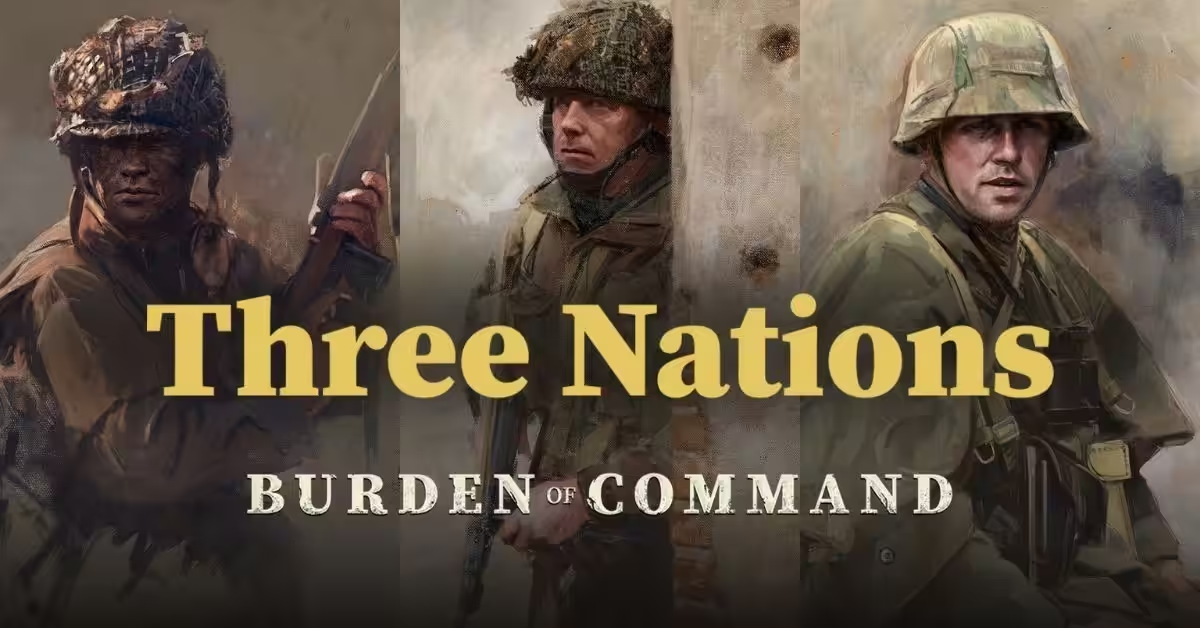
Burden of Command is marching back to the beaches of Normandy. Green Tree Media has opened the Steam page for Burden of Command: Three Nations, a new D-Day themed DLC that can now be wishlisted ahead of a planned Q1 2026 release.
The expansion builds on the base game’s focus on leadership, psychology, and hard choices under fire, and this time it hands command to British and US paratroopers as well as German Wehrmacht units during some of the most famous actions of June 1944.
Four Standalone D-Day Scenarios With Different Points of View
Three Nations is built around four standalone, story-driven scenarios that re-frame the landings from multiple angles. Pegasus Bridge puts you in charge of British paratroopers trying to seize and hold the critical bridge over the Caen Canal.
The scenario doesn’t just drop you into the night of 6 June; it rewinds months earlier, letting you play out pre-invasion decisions that influence the quality of the intelligence supporting the assault.
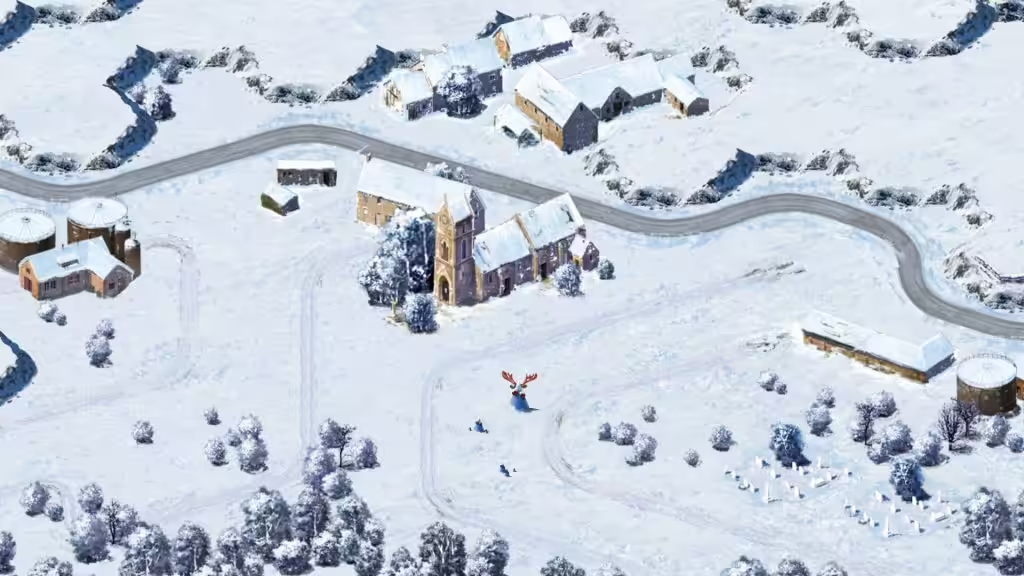
From there, Bénouville focuses on holding the nearby village overlooking the bridge against determined counterattacks, turning that tiny patch of Normandy into a running fight over fields, streets, and bottlenecks that veteran wargamers already know by heart.
The DLC then flips the perspective. Steel Rain casts you as a mechanized German force tasked with retaking the bridge in the chaos after the first landings.
That means working with the same ruleset under very different constraints: pushing armor and infantry into a defended objective while managing morale, casualties, and the growing sense that the strategic picture is collapsing.
Finally, Meyers Hill shifts back to the Allied side and gives US paratroopers the spotlight, backed by new interactive live-action video sequences recorded with leadership expert Colonel John Antal.
Those sequences are used to frame and reinforce key decisions, tying the historical material back into Burden of Command’s emphasis on command responsibility.
New Units, Tactics, and AI Changes
Mechanically, Three Nations expands the toolbox in ways that match those new perspectives. British paras bring intrinsic smoke mortars that can cover assaults or withdrawals without relying on off-map artillery.
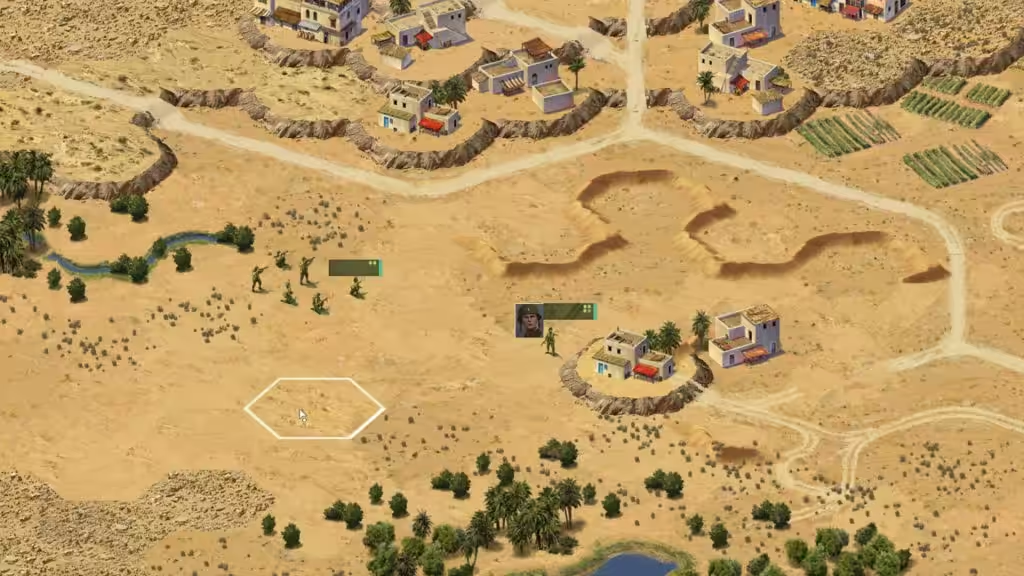
US paratrooper squads gain built-in machine guns, making their fire teams more flexible but also more precious when losses mount. German forces lean on repeat-fire MG42s and limited armored assets to generate local fire superiority.
Across all sides, anti-tank options are deliberately scarce, which should make every bazooka shot or Panzerfaust ambush feel like a major decision rather than a routine order.
According to the developers, AI improvements in the DLC make assaults more aggressive and persistent, so holding a line at Bénouville or breaking through as the Wehrmacht should demand sharper positioning and more thoughtful use of suppression and rally actions.
Leadership Under Fire From Three Nations
Three Nations also introduces new leadership viewpoints. The base game is built around a US rifle company in the “Cottonbalers” of the 3rd Infantry Division; the DLC widens the lens to include British airborne officers under intense time pressure and German commanders serving a regime that is visibly losing the war.
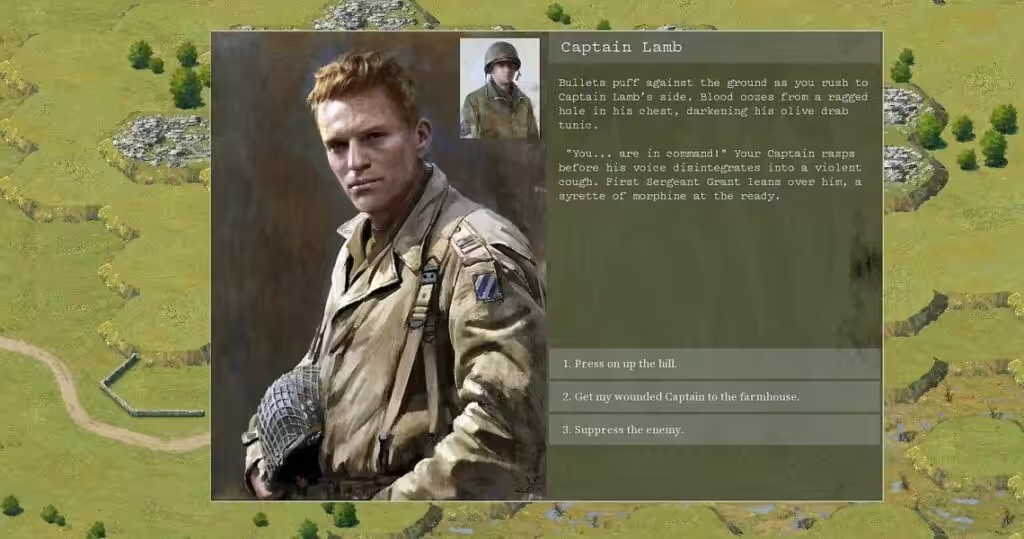
Those shifts in perspective are intended to feed directly into the moral dilemmas that have always been central to Burden of Command’s design.
Historical photographs return as a key storytelling tool as well, and the team is adding a new 4:3 image format that better fits period photography and modern displays, addressing one of the presentation complaints from early coverage.
What Burden of Command Does Differently as a Tactical RPG
For anyone new to the series, the DLC sits on top of a sizeable base game that only released this April on PC.
Burden of Command is described by the developers as an “emotionally authentic tactical leadership RPG” where you play a company-level captain in the historical Cottonbalers, guiding your men through a long World War II campaign while fighting psychology as much as bullets.
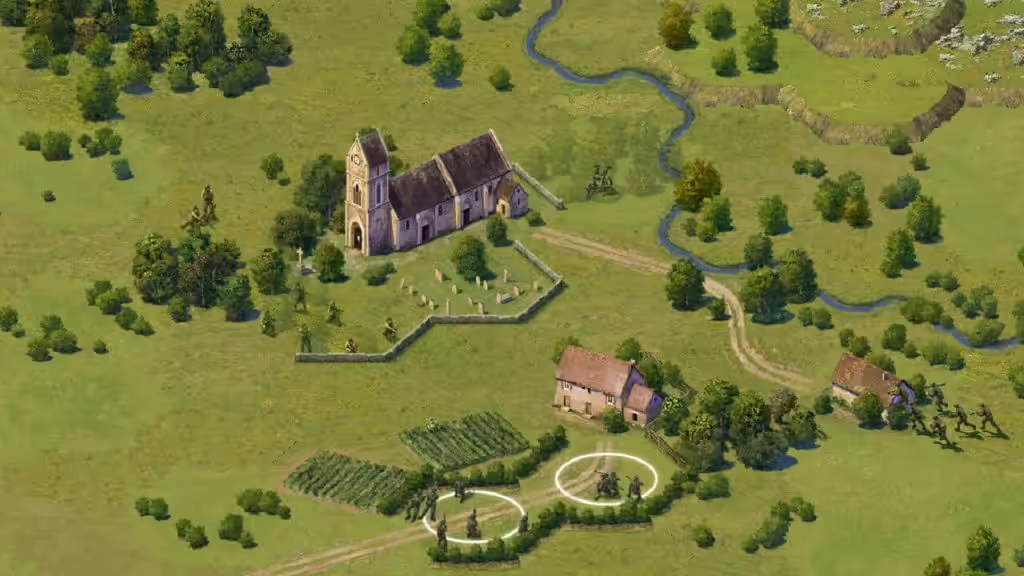
Structurally, the game mixes a long, text-heavy narrative layer with hex-based tactical battles. Writer Paul Wang, who contributed roughly 40% of the script, notes that the campaign weighs in at around 500,000 words of interactive fiction, built around branching decisions and repeated questions about what kind of leader you really are.
On the battlefield, Burden of Command plays like a board wargame spliced with a character-driven tactics title.
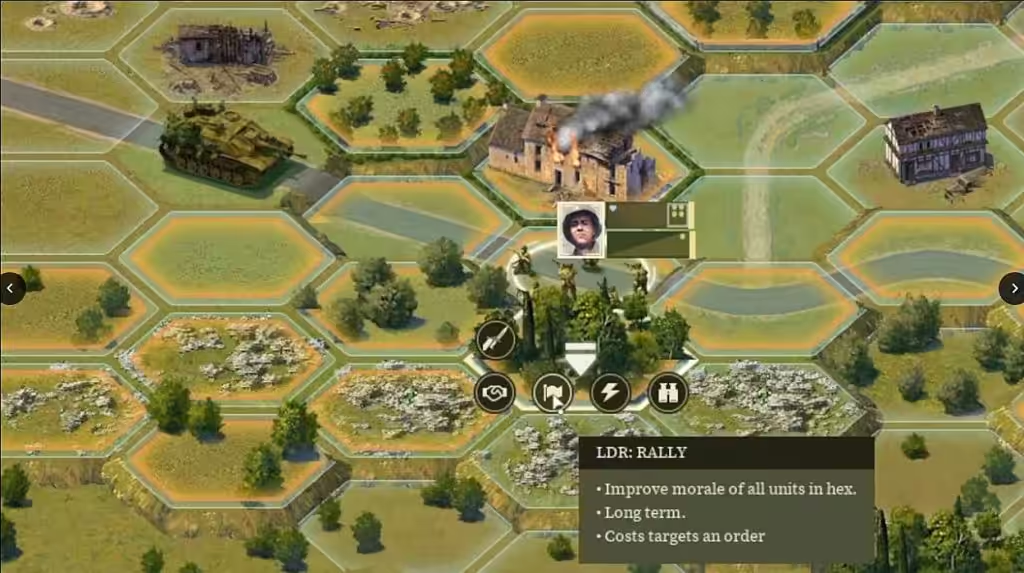
Each turn is split into alternating activation phases where you choose one of your lieutenants to act, then spend that officer’s limited pool of actions to move, fire, or rally the squads under their control.
Moving the officer, ordering a squad forward, or trying to steady panicking troops all draw from the same budget, so careless positioning or overextension can leave whole sections of the company frozen under fire.
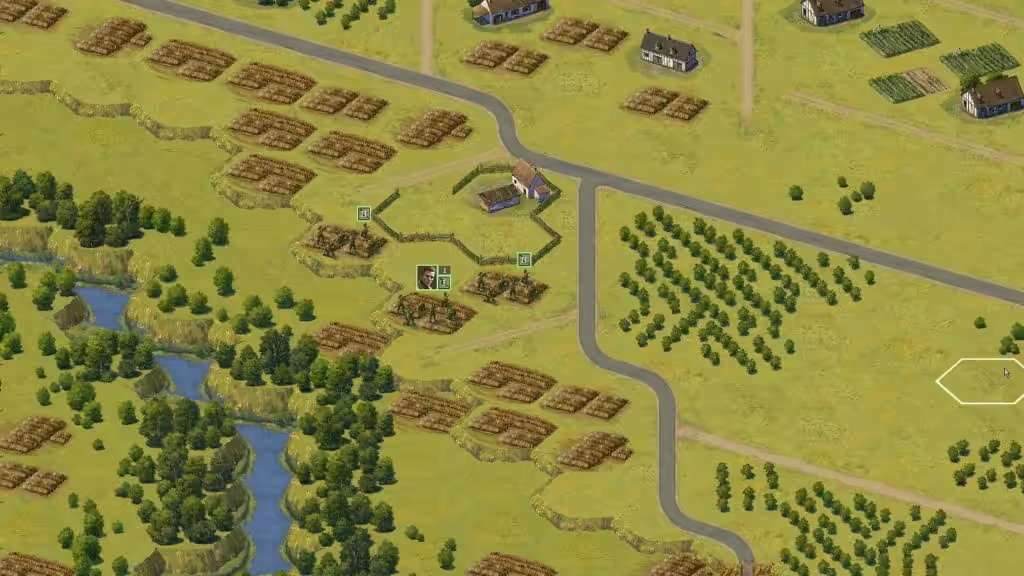
The combat system leans heavily on suppression and morale. Research into period psychology feeds into rules where troops are more likely to be pinned, rattled, or forced to ground than simply wiped out, and most scenarios measure success in terms of mission objectives and casualties avoided rather than total enemy losses.
This is backed up by a trio of social resources, Prestige, Trust, and Loyalty, that track your standing with superiors, fellow officers, and the enlisted men. Choices on and off the battlefield affect those meters and, in turn, influence everything from access to replacements and equipment to how readily soldiers will follow you into risky assaults.
All of this is wrapped in a presentation style that combines stylized 2D hex maps with altered historical photographs and a mature tone with explicit images of wartime injury and disease, and the writing tackles subjects like combat fatigue and sexually transmitted infections alongside more familiar tactical concerns. Reviews so far have highlighted the result as a rare World War II game that makes players feel directly responsible for individuals in their company.
Release Window, Platforms, and Wishlist Info
Three Nations looks like an attempt to apply that same design philosophy to one of the most over-represented battles in gaming.
Focusing on tightly scoped D-Day scenarios, adding distinct national forces with their own tactical quirks, and folding in live-action leadership segments suggests the DLC is targeting both replayable tactical puzzles and the kind of character-driven, morally uncomfortable storytelling that has earned the base game its reputation.
The base game launched on April 8, 2025, and currently holds a “Very Positive” user rating on Steam, while the new DLC is expected for Q1 2026. Below, I share the DLC reveal trailer.

