

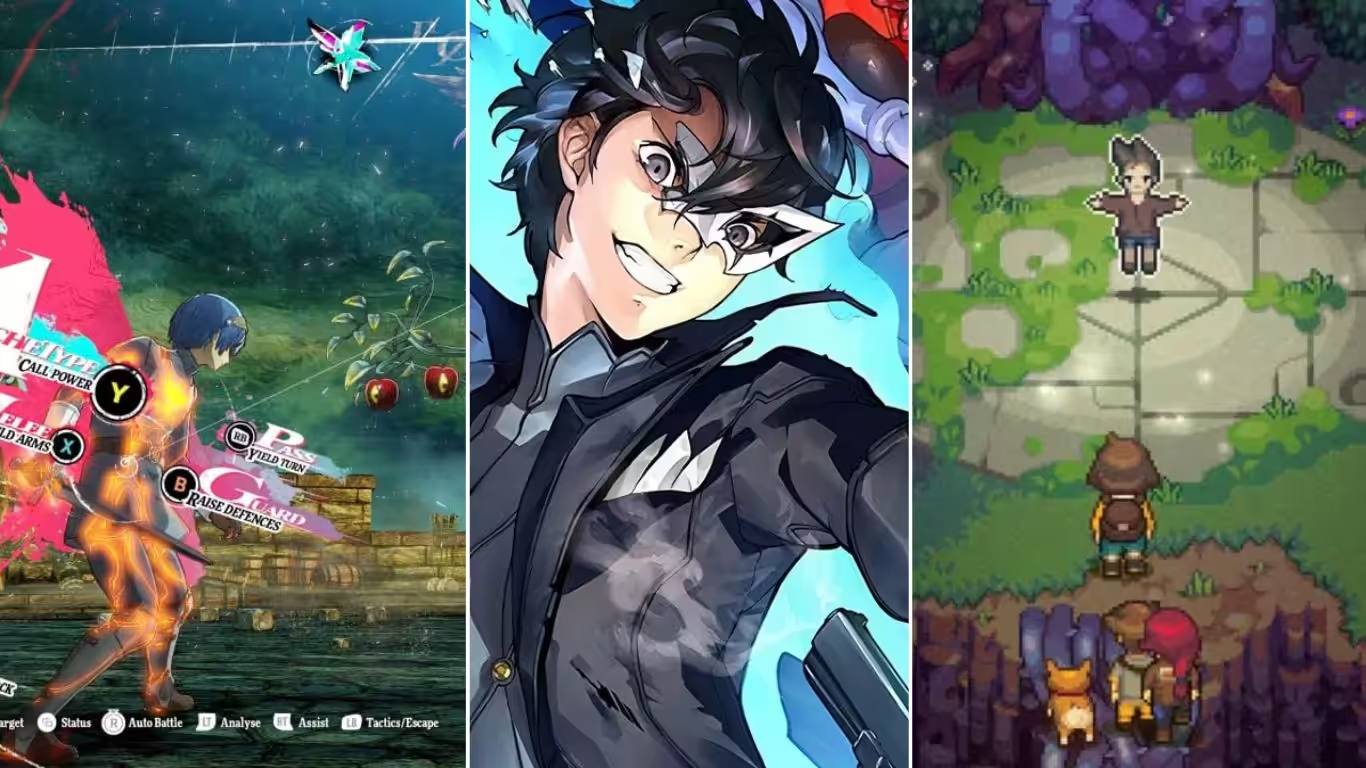
Here are, in my opinion, some of the turn-based RPGs that come closest to, or share something in common with, Atlus’s iconic Persona series.
I’ve noticed that many online lists tend to be either incomplete or off the mark. Fans of Persona, a series that, in my view, helped define the modern JRPG, often end up looking for similar experiences and getting a bit lost along the way.
Persona has a strange effect on people: at first glance, it doesn’t always seem that appealing to the average player. But once you give it a try, that mix of daily life, friendship management, and stylish turn-based combat gets under your skin, and you just can’t let it go.
It’s a balance that very few games ever get right. Yet over the years, several RPGs have tried to reinterpret that structure in their own way, often bringing new settings, combat systems, or tones while keeping the same heart: living a double life between ordinary routines and extraordinary fights.
Below is my look at 9 of the most notable modern RPGs that carry that DNA, each reimagining what life-sim meets dungeon-crawl can be.
Bloomtown: A Different Story

Bloomtown: A Different Story takes the small-town setting and wraps it in 1960s Americana rather than Shibuya neon.
During the day, you bond with friends, explore the suburbs, and uncover secrets; by night, you dive into monster-filled nightmares that mirror the town’s anxieties.
Its turn-based combat mixes classic JRPG flow with creature collecting, making every fight a reflection of the relationships you’ve built. It feels like a warm yet unsettling cousin to Persona 4.
What makes Bloomtown stand out is how its social beats feed into party identity. Side activities and relationship scenes aren’t filler; they prime specific tactics, summons, or status setups for the next dungeon run.
The tone is gentler than the usual teen drama, but the subtext, fear, guilt, and community pressure keep the loop grounded so that each boss feels like a confrontation with something the town would rather not face.
- Borrows: calendar vibe, bonds funneling into combat power.
- Changes: a gentler, Americana tone where monster-taming mirrors social choices.
It was launched on September 24, 2024, on PC, PlayStation, Xbox, and Switch.
Metaphor: ReFantazio

Then comes Metaphor: ReFantazio, Atlus’s own spiritual successor. Set in a high-fantasy kingdom instead of modern Japan, it retains the familiar rhythm of days, relationships, and psychological archetypes while replacing Personas with Archetypes, reflections of personal virtues.
Its hybrid combat blends real-time movement and turn-based combat, pushing the formula toward a grand adventure that’s less about teenage angst and more about universal myth.
The key shift is scale. Where Persona narrows focus to a school year, Metaphor stretches the calendar across a mobile kingdom, tying upgrades and party synergy to exploration choices and social progress across cultures.
The result is a loop that still rewards planning your time, but asks you to think about travel routes, camp interactions, and how your Archetype mix opens tactical options once the fight starts.
- Borrows: time management and social systems.
- Changes: large-scale travel and Archetype jobs that remix party roles.
Released October 11, 2024, on PS4/PS5/Xbox Series/PC, and later joined Game Pass in May 2025.
Varlet

Varlet, from FuRyu (Monark) and AQURIA, it’s one of the most recent games in this list and stays closer to the high-school drama but twists it through a glitching, digital otherworld.
Players attend classes, build bonds, and fight entities born from distorted emotions. The battle system unfolds on a tactical timeline, rewarding coordination and relationship synergy, a clear echo of Persona’s cooperative strikes but dressed in a more experimental tone.
It’s best moves live in the downtime. Hangouts and after-school events drip small bonuses that matter when the timeline compresses, letting you pre-wire a plan before a boss surges across multiple turns.
The digital theming gives it room for playful UI tricks and enemy gimmicks without losing the human stakes, keeping the school slice-of-life readable even as the other world glitches harder.
- Borrows: class life + bonding that fuels combo play.
- Changes: timing-focused turn order with a tech-glitch theme.
It launched globally on August 27, 2025, on PS5, Switch, and PC.
Monark

Monark also takes place inside an academy, though one consumed by madness rather than routine.
Each student’s ego manifests as power, and the protagonist must navigate moral choices while controlling allies in semi-grid-based turn-based battles. It’s rough around the edges, but its obsession with identity and sin makes it one of the few games to dig as deeply into the psychological side of the Persona mythos.
What lands is the risk-reward loop. Abilities tied to ego push you to flirt with overextension: strong bursts now at the cost of instability later.
Social scenes focus less on comfort and more on pressure points, so the payoff isn’t just “higher bond equals stronger link,” but a set of tools that reflect how characters cope. It’s a sharper, sometimes abrasive take on the same questions Persona asks more suavely.
- Borrows: school setting and psyche-driven themes.
- Changes: risk-reward ego skills that push you to flirt with overextension.
It was released in the West in February 2022 on PS4/PS5/Switch/PC.
Fire Emblem: Three Houses
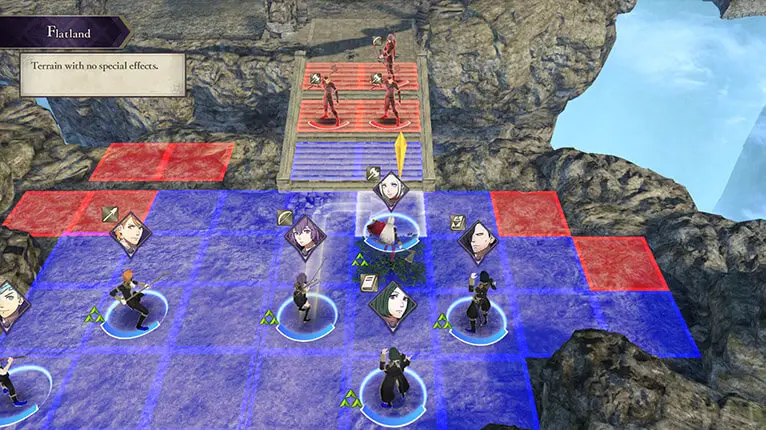
When Fire Emblem: Three Houses arrived, it surprised many by adapting a calendar and monastery life-sim to a pure tactical format.
Every month, you balance lessons, training, and conversations before deploying your class into turn-based warfare. The “support” bonds not only shape dialogue but directly improve battlefield coordination, showing how the social-link idea can thrive even in a long-running strategy series.
The strength here is the predictability you can plan around. Lectures map to stat growth, chores nudge affinities, and tea times turn into extra actions, small gains that add up when a late-map gambit needs higher reliability.
It’s less about urban routine and more about mentorship, but the same Persona impulse applies: invest in people today to widen your tactical margin tomorrow.
- Borrows: schedule + bonds as power.
- Changes: a pure tactics backbone where mentorship replaces urban slice-of-life.
It’s a 2019 Nintendo Switch exclusive.
The Caligula Effect 1-2

The Caligula Effect and its sequel dive into virtual-reality escapism. Set in Mobius, a simulated school world created by a digital idol, you befriend dozens of NPCs through the massive Causality Link system while fighting distorted classmates in predictive turn-based battles.
Thematically, it’s one of the closest experiences to Persona 3 and 4, focusing on isolation, delusion, and the cost of living in false happiness.
Its combat twist lets you preview turn outcomes, then braid abilities into a timeline that feels like arranging a music track.
Social ties are more systemic than intimate; you’re mapping a web rather than deepening a handful of confidants, but that breadth suits the theme. You’re not just saving friends; you’re tugging at a whole simulation’s threads to see what unravels.
- Borrows: school routine, bonds that unlock perks.
- Changes: predictive timeline battles and a massive, systemic social web.
Overdose and 2 are available on PC/PlayStation/Switch.
The Legend of Heroes: Trails of Cold Steel I & II

Falcom’s The Legend of Heroes: Trails of Cold Steel brings the school-year rhythm to a grand political epic.
Between field studies and exams, you choose how to spend your free days, deepening ties that unlock joint attacks in its meticulous turn-based system. It’s less stylized but far richer in world-building, proving the model can support long-form storytelling without losing its intimacy.
Because the saga stretches across multiple entries, the social payoffs compound. Bonds shift into advanced link crafts and contextual bonuses, while story arcs echo choices made semesters ago.
The cadence is calmer than Persona’s urban sprint, yet it rewards the same discipline: plan your calendar, invest in your squad, and the hardest encounters start to look manageable.
- Borrows: calendar blocks and relationship links.
- Changes: long-form worldbuilding where bonds echo across sequels.
The series spans PlayStation, PC, and later Switch ports.
The Hundred Line: Last Defense Academy

The Hundred Line: Last Defense Academy may become the next major reinterpretation. Set in a school under siege, players live through a fixed hundred-day countdown; every free-time choice matters, every bond formed changes who survives.
Its grid-based tactical battles tie directly to social progress, fusing structure and emotion in a way few titles attempt.
The countdown is the hook. You’re not just optimizing a build; you’re triaging a crisis where lost time stings. Short, focused interactions translate into concrete upgrades for specific missions, so the loop feels sharper and more fatalistic than a typical semester.
- Borrows: countdown calendar, student bonds into tactics.
- Changes: a hard clock and VN-style structure with dozens of endings.
It launched on April 24, 2025, on Switch and PC.
Loop 8: Summer of Gods

Last one on my list of Persona-like JRPGs is Loop 8: Summer of Gods, which captures the feeling of fleeting youth and regret.
Trapped in a looping August, you relive the same month to strengthen friendships and confront corrupted versions of people you care about. The turn-based combat uses emotion-driven decisions, and your relationships determine how allies behave, a literalization of the bond-as-mechanic idea that Persona helped define.
Its structure turns repetition into authorship. Each loop edits the month’s rhythm, new routes open, different scenes surface, and battles shift as characters respond to who you’ve become.
It can be uneven, but when it clicks, the loop makes small choices feel heavy, as if the calendar itself remembers.
- Borrows: calendar and bonds shaping combat.
- Changes: a time-loop that turns repetition into authorship.
It was released on June 6, 2023, on Switch/PS4/Xbox One/PC.
What unites all these games isn’t just their turn order or school settings, but the way they treat relationships as gameplay systems.
Some lean into strategy, others into story, but each understands that the quiet moments, conversations, choices, and days passing give weight to every battle. The Persona blueprint may have started in Shibuya, but it has clearly found new homes across worlds, timelines, and genres.

