


When your game doesn’t just kill you But it sends you a bill for the funeral
You know that moment when you fire up a “turn-based strategy game” thinking you’re in for a relaxed brain workout, and ten minutes later you’re rage-googling whether the devs intentionally designed it to ruin your self-esteem? That’s this list.
After weeks of wading through forums, old-school message boards, Steam reviews written like war diaries, and long therapy sessions disguised as Reddit posts, I pulled together the games that the community keeps screaming about whenever the word “brutal” shows up. These aren’t cute “challenging but fair” titles where the marketing department pats you on the head and calls you a hardcore gamer.
These are the games that punch you in the teeth, kick you while you’re down, and then ask if you want to play on “Hardcore Ironman” for fun. This is not my personal Hall of Pain. This isn’t your list of childhood trauma either.
This is the collective cry of the turn-based hive mind: the games people describe with phrases like “unfair,” “sadistic,” and “I swear the AI cheats.” I’ve changed the order on purpose because ranking suffering is a fool’s game. They’re in no special order because once you’re getting demolished this hard, arguing who hurts more is just masochist semantics. If you’ve ever lost a 40-hour save because you misclicked once, welcome home, you’re among your people now.
Battle Brothers

This is the one that doesn’t just kill your dudes; it kills your illusions about being “good at tactics games.” Battle Brothers is basically a medieval HR simulator where your employees can have their heads torn off on turn two by a drunk goblin with a butter knife.
You don’t play a hero, you run a mercenary company held together with cheap armor, bad decisions, and debt. Every brother has a name, a backstory, and just enough personality for you to get attached right before a brigand caves in his skull with a lucky crit. The difficulty doesn’t just come from the fights; it’s the whole ecosystem.
You’re juggling injuries, morale, salaries, food, equipment degradation, and contracts that sometimes feel like invitations to a mass funeral. You will be punished for overextending, for under-preparing, for getting greedy, and occasionally for daring to exist.
And the game doesn’t care how long you’ve spent nurturing that level 16 duelist with perfect traits; if the dice go bad and the positioning sucks, he’s gone. Permanent. No phoenix downs, no magic priest, no “second chance” skill. Just an empty spot in the roster and a permanent dent in your soul.
Battle Brothers doesn’t just demand smart tactics; it demands emotional detachment and a high tolerance for watching your own plans explode in slow motion.
Darkest Dungeon

If you’ve ever wondered what it would feel like to manage a gothic adventuring agency powered entirely by anxiety, here you go. Darkest Dungeon isn’t difficult in the usual “big numbers, scary bosses” way. Its true brutality is psychological. Your heroes don’t just take damage, they crack.
They develop phobias, obsessions, compulsions, and nervous breakdowns like they’re collecting Pokémon. One bad string of RNG, one greedy decision to “push a little farther,” and suddenly your confident party dissolves into a screaming train wreck of stress nukes, heart attacks, and party wipes.
The game gleefully punishes optimism. You see a treasure chest? Trap. You enter a room? Surprise ambush. You camp? Someone has a meltdown mid-pep talk. The turn-based combat is already lethal, but it’s the constant attrition, on health, sanity, and resources, that makes the difficulty feel suffocating.
The game is a slow grind where you sacrifice heroes you invested in just to inch your way deeper into that hellish estate. Your reward for success? A slightly worse dungeon with slightly more unhinged enemies. Darkest Dungeon is less “beat the game” and more “survive the relationship.”
XCOM 2

This is the game that taught an entire generation of players to scream at 95% hit chances like they’d just been personally betrayed.
XCOM 2 is brutal not just because it’s hard, but because it’s petty. The aliens don’t just win, they humiliate you. Soldiers you’ve carefully nurtured through dozens of missions get crit sniped from the fog of war, panicked rookies blow your cover, timers force you to sprint into danger, and suddenly your glorious flanking maneuver becomes a slow-motion car crash.
The turn-based combat itself is lethal and swingy, with line-of-sight nonsense and elevation advantages turning minor mistakes into full squad funerals. But the real brutality is strategic.
Missions pop up faster than you can respond. You constantly feel behind. The Avatar Project ticks upward like an anxiety bar, and even your victories feel like you’re just buying another week of breathing room before the next disaster.
Ironman mode isn’t just “hardcore”; it’s a psychological experiment in watching how far a human can go before alt-F4-ing to protect their sanity. XCOM 2 doesn’t just make you think, it makes you suffer for every decision you make and a few you didn’t.
Wizardry (especially the old monsters)

The older Wizardry entries don’t just predate modern game design; they predate the concept of “fairness.” These games are from an era when developers assumed you had nothing but free time and a binder full of graph paper.
Brutal doesn’t even begin to cover it. You’ve got dungeons that feel like Escher drew them while drunk, enemies that can instantly kill or permanently petrify your best characters, and traps that don’t just hurt, they erase progress.
It’s possible to wander into areas you are absolutely not prepared for, with no warning except the sound of your entire party being obliterated on turn one. Saving isn’t a get-out-of-jail card; sometimes you’re just locked in your own doom.
The game lets you make world-ending mistakes casually, like clicking “yes” on terms and conditions. Party death isn’t a dramatic story moment; it’s Tuesday. Wizardry’s brutality is structural: opaque mechanics, zero handholding, and a design philosophy that basically says, “If you didn’t enjoy starting over, you don’t really love RPGs.”
Pathfinder: Wrath of the Righteous (on Unfair)
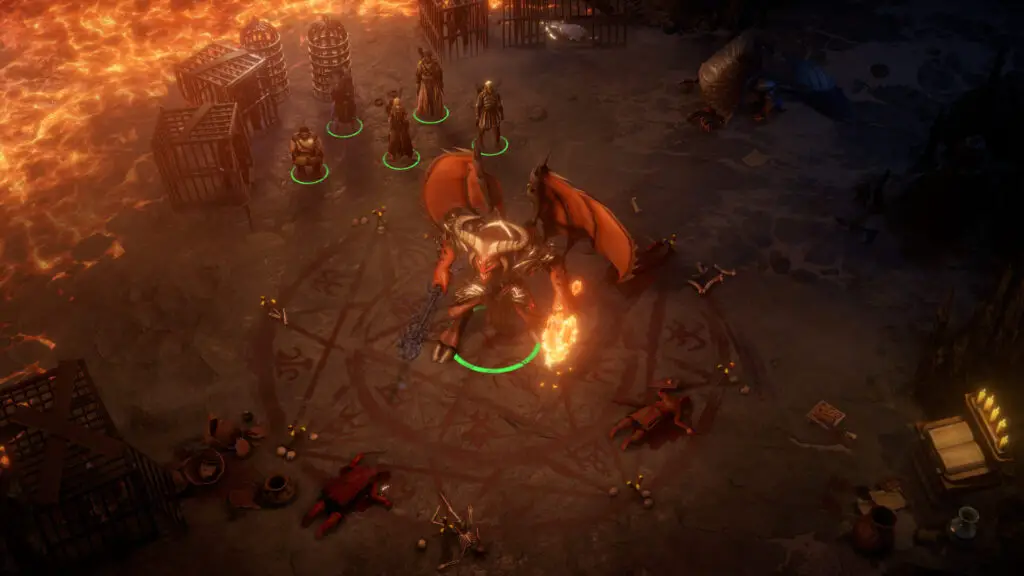
On normal difficulties, Wrath of the Righteous is already a deep, crunchy, complex CRPG built on the Pathfinder ruleset, which alone is enough to give most casual players a migraine.
On Unfair mode, this thing turns into a legal document written by a demon. Enemies get ridiculous stat buffs, save bonuses, AC levels, and damage numbers that make your once-proud “optimized” build feel like a wet noodle.
You don’t just need a good party; you need a party built around exploiting every rule, loophole, and cheesy synergy the system allows. Misunderstand one interaction? Party wipe. Misjudge one fight? Reload. Forget to pre-buff because you blinked? Congratulations, you’re past.
Positioning, spell selection, buff stacking, debuff timing, action economy, if you don’t squeeze every ounce of advantage out of the rules, you’re done. This isn’t a difficulty mode; it’s a trial by fire for people who read build guides the way other people read romance novels. The game doesn’t just test knowledge; it tests obsession.
Divinity: Original Sin 2 (on Tactician)

Divinity 2 on Tactician is a masterclass in reminding you that everything in the environment hates you. Fire, oil, poison, water, blood, every surface is a trap waiting to be weaponized, and if you don’t do it first, the AI happily will.
Playing on Tactician means every encounter is tuned to punish laziness. Enemies hit harder, live longer, focus-fire your squishiest characters, and abuse the elemental system with a creativity that would make a Bond villain proud.
Difficulty here is less about raw numbers and more about the insane complexity of the systems. If you walk into a fight without a plan, you’re done. If you don’t control the battlefield, you’re done. If you don’t chain knockdowns, teleports, stuns, freezes, and armor shredding like a deranged chess grandmaster, you’re done.
Even early encounters can turn into bloodbaths if you misread the terrain or underestimate the enemy composition. Divinity 2 on Tactician doesn’t just expect you to know the mechanics; it expects you to weaponize them like a psychopath.
Shin Megami Tensei III: Nocturne

Nocturne is what happens when a JRPG decides to become a hostile puzzle box. The famous Press Turn system is gorgeous and cruel in equal measure: exploit enemy weaknesses, and you get extra actions; let them exploit yours, and you watch them chain turns into your annihilation.
Boss fights feel less like battles and more like exams where the teacher is actively rooting for you to fail. Show up with the wrong demons? Dead. Forgot to cover a certain elemental weakness? Dead. Didn’t have the right buffs or debuffs? Dead and humiliated.
The game doesn’t scale itself to you; it expects you to climb to its level. Recruiting and fusing demons becomes a form of hardcore deckbuilding, where every resist, null, and drain matters. And it never apologizes. There’s no “story mode” for people who just want to see the plot; you either learn, adapt, and suffer, or you bounce.
Etrian Odyssey (series)
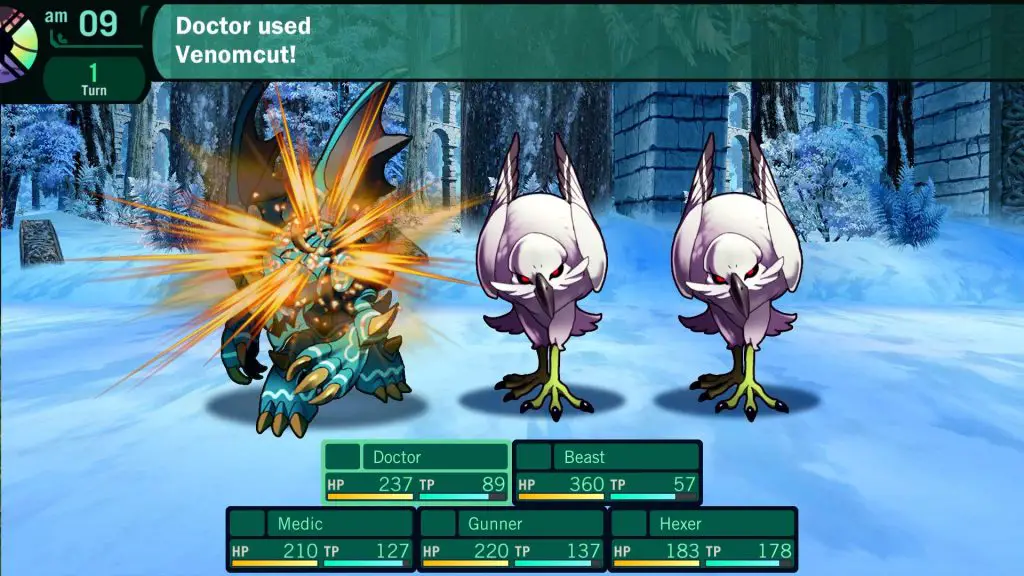
Etrian Odyssey looks cute at a glance. You’re mapping dungeons! Drawing little lines! Making your own party! How adorable. Then the game slaps you across the face with a random encounter that wipes your levelled squad in three turns because you dared to underestimate a glowing enemy icon.
The brutality here is all about attrition and planning. You manage resources like your life depends on it, because it does. Every trip into the labyrinth is a calculated risk. Do you push deeper for more loot and XP, or retreat before your healing items and TP run dry? FOEs, the roaming minibosses, act like moving environmental hazards, and picking the wrong route can turn a simple outing into an unwinnable chase.
The game doesn’t care if you mis-mapped a corridor or forgot a door—you’ll pay for it when you get cornered. Etrian Odyssey is an old-school slap in the face to anyone raised on minimaps and quest markers.
The 7th Saga

This one is legendary in a very specific way: it feels like someone made a solid JRPG, then cranked all the numbers on enemy stats out of sheer malice. The 7th Saga is the JRPG equivalent of sandpaper.
Random encounters can be lethally over-tuned, bosses hit like trucks, and rival characters can show up and absolutely steamroll you because the scaling is out of whack. Grinding isn’t just recommended, it’s practically mandatory, and even then, a bad roll or unfortunate encounter composition can send you back to the title screen.
The game loves to throw you into situations where you’re underlevelled, underprepared, and one crit away from disaster. The brutality isn’t smart or subtle; it’s blunt-force trauma. And somehow, that’s part of its charm. Beating The 7th Saga feels less like finishing a game and more like surviving an abusive relationship and walking away with the emotional receipts.
Age of Decadence / Dungeon Rats

These two games are like a joint love letter to old-school cruelty. Age of Decadence is a low-fantasy RPG that treats combat like a last resort for people who enjoy getting kicked in the teeth.
Dungeon Rats says, “Oh, you thought that was harsh? Here’s a spin-off that’s basically a combat gauntlet.” The difficulty comes from a mix of punishing systems and an unforgiving worldview. Make a bad build? You’re dead. Walk into the wrong fight? Dead. Mismanage your resources? Dead.
These games demand you understand their mechanics on a granular level: positioning, turn order, weapon reach, armor penalties, skill point allocation, there’s no room for sloppy thinking. They’re brutally honest about what they are: systems-first, story-second, and entirely unapologetic about their expectations. The fail state isn’t just possible; it’s common. You don’t bend these games to your will—you slowly, painfully learn the rules and adapt.
And that’s the twisted beauty of this whole list: none of these games care about your feelings. They don’t hold your hand, they don’t scale down to your level, and they don’t send you a participation trophy for showing up.
They are brutal on purpose. Sometimes smart-brutal, sometimes janky-brutal, but always honest about what they are. They remind us that failure can be exhilarating when it’s earned, that victory means more when you’ve been steamrolled twenty times first, and that sometimes the best gaming stories come from disaster, not triumph.
Anyone can brag about beating an easy campaign on normal difficulty. But the people who survive these games? They don’t brag. They just stare into the middle distance, whisper Battle Brothers” or “Nocturne,” and you know they’ve seen some things.
So if you’re tired of games that treat you like a fragile customer and you want something that treats you like a willing victim, pick any one of these and step into the ring. Just don’t come crying when the game hits back harder than you expected—you were the one who asked for brutal.

