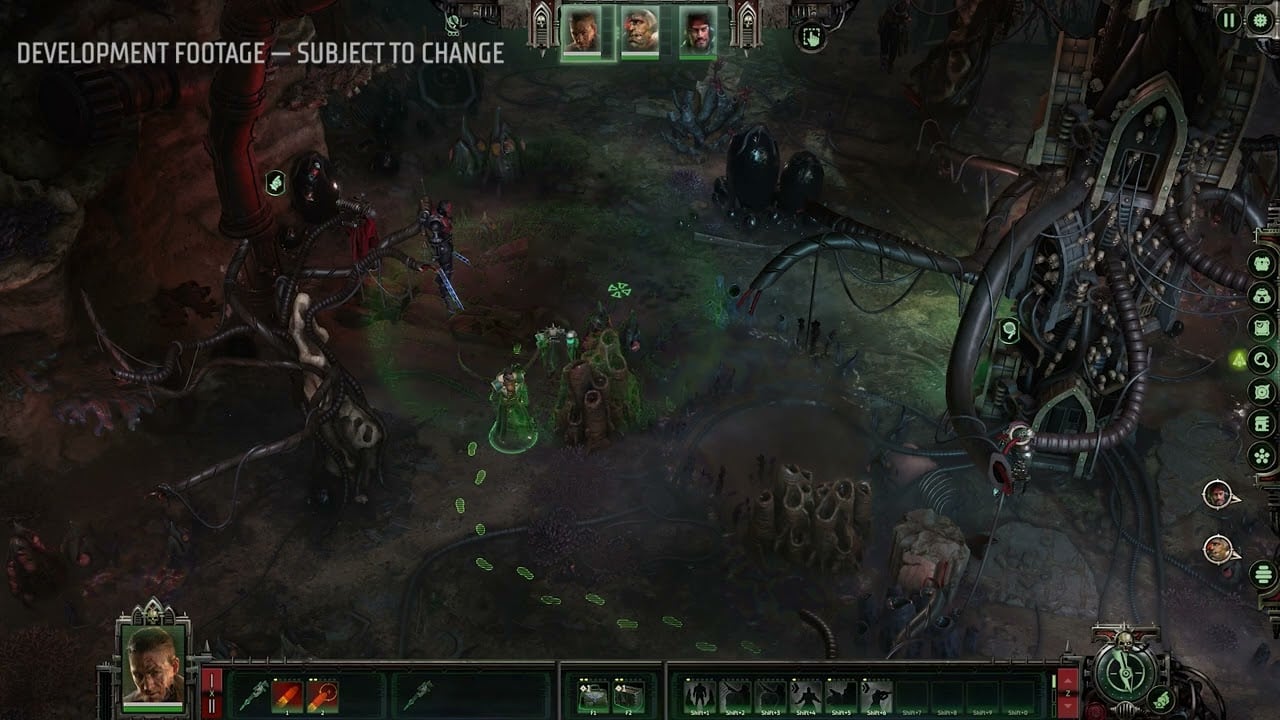


The latest Warhammer 40,000: Dark Heresy devlog pulls back the curtain on one of the game’s key systems: investigations. Owlcat Games is building Dark Heresy as a grimdark, party-based cRPG where you serve the Inquisition in the Calixis Sector, leading a warband, making harsh decisions, and fighting turn-based battles across PC, PlayStation 5, and Xbox Series X|S.

With this update, the studio explains how detective work actually plays out between firefights, and how easy it will be to condemn the wrong person in the Emperor’s name.
Investigations start from scraps: a rumour, a bloodied bolter, a burned ledger fragment, a suspicious sigil on a wall. Each case is treated as its own scenario, with players combing crime scenes, questioning witnesses, and chasing down leads that might be misleading, incomplete, or outright fabricated.
Some clues are visible at a glance, others demand specialist skills or tools to uncover: tracking footprints, using a terrain analyser to highlight things the eye would miss, reconstructing the order of events from scattered evidence, or matching appearances to known suspects and informants.
Not every lead is honest; testimonies can contradict each other, and part of the challenge is spotting those inconsistencies before they send the investigation off the rails.
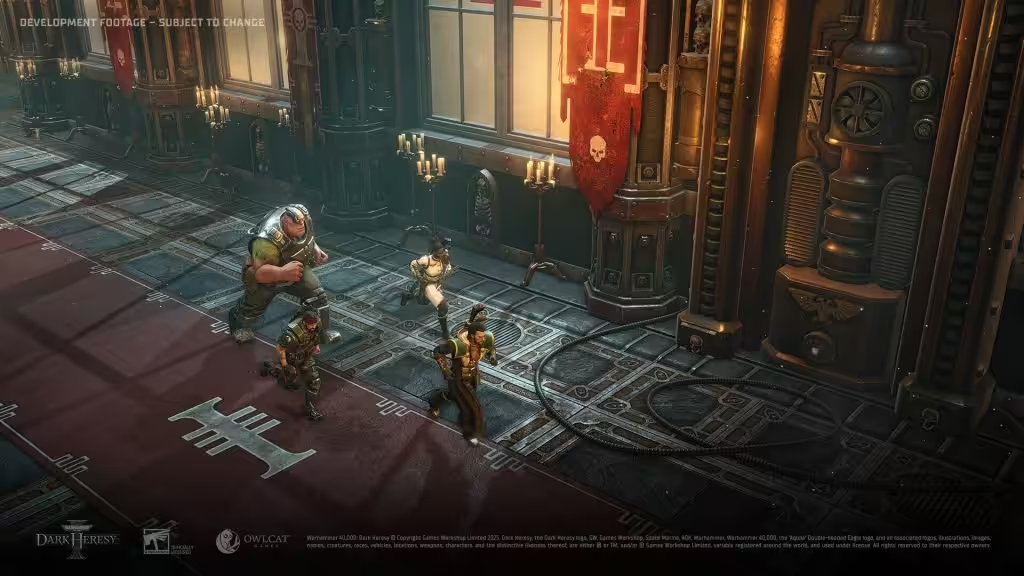
To support that work, the Inquisition arms your acolyte with a suite of tools, most notably a swarm of servo-skulls that function as floating utility platforms.
In Dark Heresy, you can command multiple specialised skulls. Some act as moving light sources, others perform Auspex scans, record picts, synthesise speech, analyse strange substances, or detect psyker activity in the area.
In practice, they’re a mobile toolkit that helps you probe scenes more deeply, cross-check evidence, and uncover hidden interactions that a basic “inspect” prompt wouldn’t surface.
All of this feeds into the Detective Journal, a dedicated interface where each active case gets its own workspace. Here, every clue, testimony, and deduction is catalogued across separate tabs so you can see the web of information at a glance.

Instead of automatically highlighting the correct answer, the system expects you to connect the dots yourself: a single clue might reasonably support several different theories, and the journal leaves room for those branching interpretations.
Companions, drawn from the wider warband of Imperial and xenos allies that Dark Heresy is known for (this was the latest ally introduced), can occasionally comment on findings, offering expertise or alternative readings that nudge you toward (or away from) certain conclusions.
Crucially, an investigation in Dark Heresy does not end when you’ve clicked the right node on a logic board; it ends when you pass judgement. Once you’re satisfied, or simply out of time or patience, you file a formal report to your Inquisitor, naming your culprit, summarising the evidence, and effectively deciding how the Imperium will remember the case.

The devlog stresses that these reports can be flawed. You can misinterpret data, miss key details, or deliberately twist testimony to damn someone you personally deem deserving.
The game will accept those outcomes as valid; there’s no pop-up telling you that you were wrong, only consequences that play out later as NPCs react to your rulings and the sector quietly shifts around your choices.
That approach echoes Owlcat’s broader design goal for Dark Heresy: a shorter, more reactive RPG where the studio avoids labelling player decisions as correct or incorrect, leaning instead into the moral ambiguity of the Inquisition.
Dark Heresy continues to build on lessons from Warhammer 40,000: Rogue Trader. Combat remains turn-based and viewed from an isometric perspective, but now incorporates revamped cover and line-of-sight rules, a morale mechanic that can drive enemies to panic or surrender, and targeted shots that maim specific body parts to degrade enemy effectiveness.
Each mission is a mix of tactical engagements, evidence-gathering, and hard calls about who lives, who dies, and who disappears into an Inquisitorial archive.
For now, Warhammer 40,000: Dark Heresy has no release date, but it’s in development for PC (Steam, GOG, Epic Games Store), PlayStation 5, and Xbox Series X|S and with an alpha test that should arrive on December 16, 2025. Players can wishlist the game on Steam and, if they want earlier access and extras, buy a Founder’s Pack directly from Owlcat.