

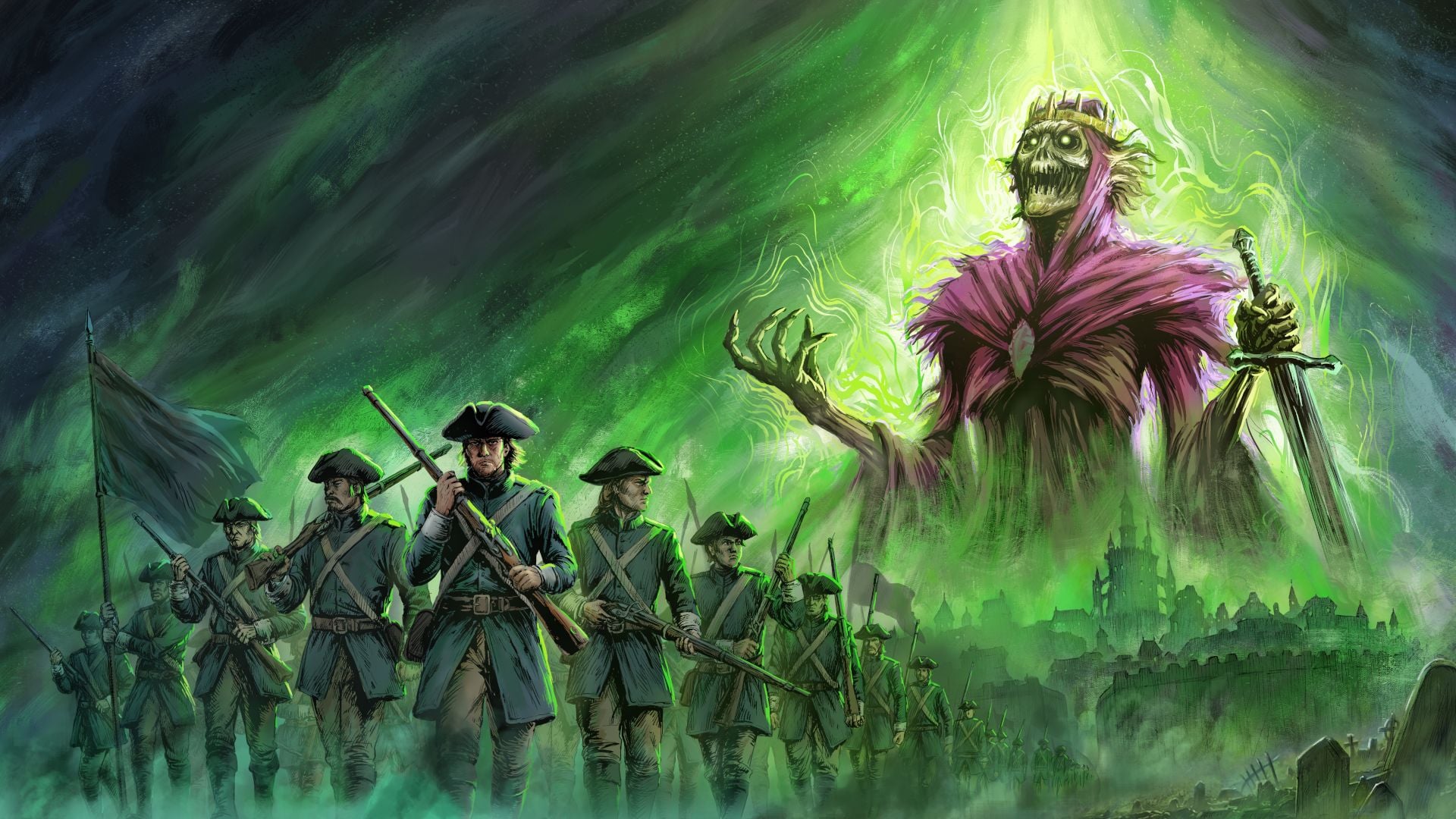
The makers of The Necromancer’s Tale are back with a standalone prequel covering two undead wars and three different career paths
The Lich Wars follows a musketeer through some 30 years of military service. It’s a standalone prequel to The Necromancer’s Tale and takes a rather more text-based approach to its gothic setting, tracking a soldier through war, an uneasy peace, and the fallout of introducing necromancy into national affairs. But now I’m telling you more.
Three Career Paths Between Two Wars
The story is set in Rulsthen (an alternate history kingdom just north of Venice) between 1700 and 1728. You start off as a recruit in the 7th Company of the Rychva Musketeers, establishing your background and making some friends before being plunged into war with Venice. That war is eventually won by raising the dead, and the country is left to deal with the consequences of its victory. Winning the war and making the right decision are two very different things.
After that, your soldier goes down three main career paths over the intervening years. The choices you make will affect promotions, assignments, optional stories, relationships, and survival.
The friends you make in the first war can stay with you through the years; romance is also possible before the Civil War breaks out in 1727. It’s that extended timeline that interests me most. An early friendship or professional decision has years to develop before the next national catastrophe comes along and puts it under strain.
There’s also a wrinkle with the people who are telling this story. The announcement refers to Aleks and three lifelong friends who go through the same events but remember them in very different ways (and sometimes in a distinctly untruthful way).
Lead dev and narrative lead Sam Redfern talks about the ways in which characters find themselves coping with their wartime actions. It would be unsettling to have an old friend insist something never happened, rather than just have another skeleton appear over the hill.
RPG Skills and Battles Told Through Prose
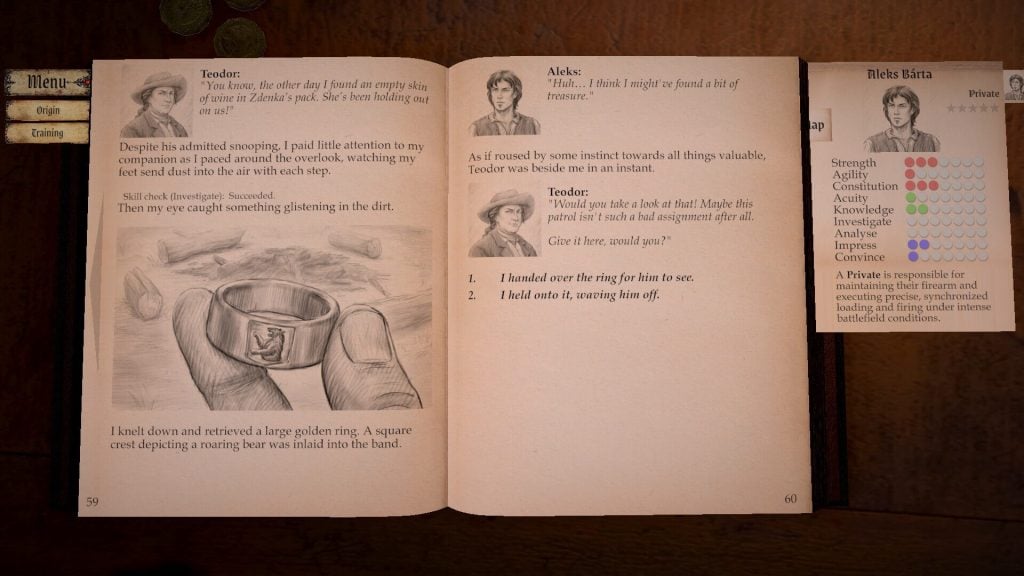
The underlying structure is branching interactive fiction, powered by RPG skills and skill checks. Psychic Software has approximately 300,000 words of narrative authored.

There are nine skills feeding into the RPG systems. This is very much a project for the reader who wants to spend time with the character and the consequences of their decisions. The writing is very much the experience of the project.
Combat takes that literary route. Encounters are in the form of written prose and involve the use of random critical hit tables. The scope of the encounters is explicitly stated to range from individual combats and small-scale skirmishes to full-scale naval battles and large-scale battlefield operations.
There’s a useful hint as to the game’s direction in Redfern’s chat with the community. He singles out The Life and Suffering of Sir Brante as one of the key influences. He also confirms that the writing team from The Necromancer’s Tale are returning. For anyone trying to work out where this particular RPG fits in, that stated influence is far more useful than simply assuming that a military setting means you’re going to get a traditional tactical campaign.
A Gothic History Book With Tabletop Miniatures
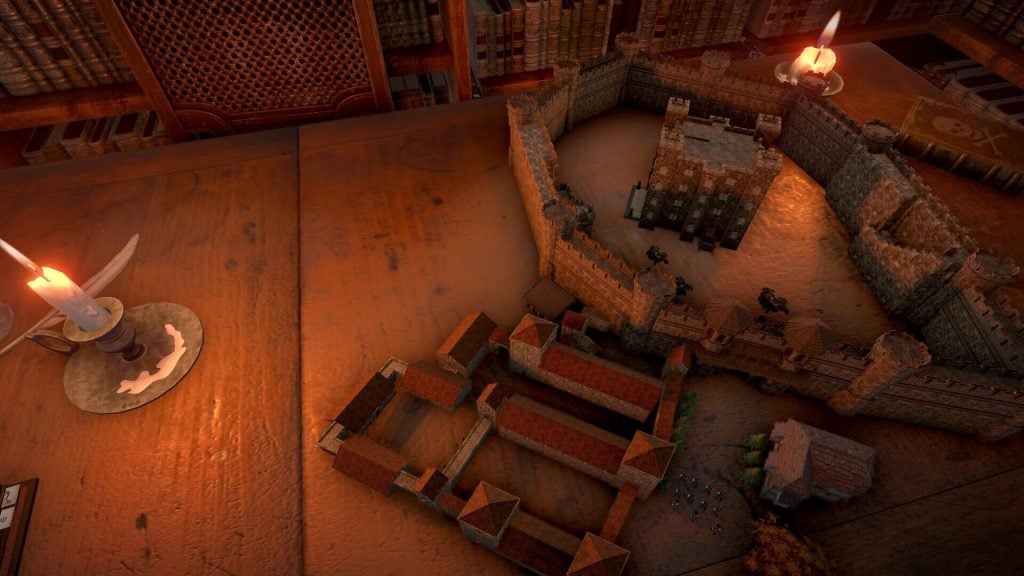
The presentation is a 3D book with the key scenes presented as hand-painted miniatures on the tabletop. There are illustrations, character portraits, and maps throughout, with some of the characters and the narration being given partial voice acting.

It’s the kind of presentation that would be perfectly suited to a military history where the witnesses aren’t entirely to be trusted. It’s a carefully constructed narrative, with tensions between the people who were actually there.
The Lich Wars is currently targeted for late 2028, though the Steam page still has ‘Coming soon’. PC is listed on Steam. The plan is to use the initial Steam release to fund the subsequent console ports (which will therefore be a longer-term goal). There is no requirement to have played The Necromancer’s Tale first, as this prequel is intended to be a standalone.

