

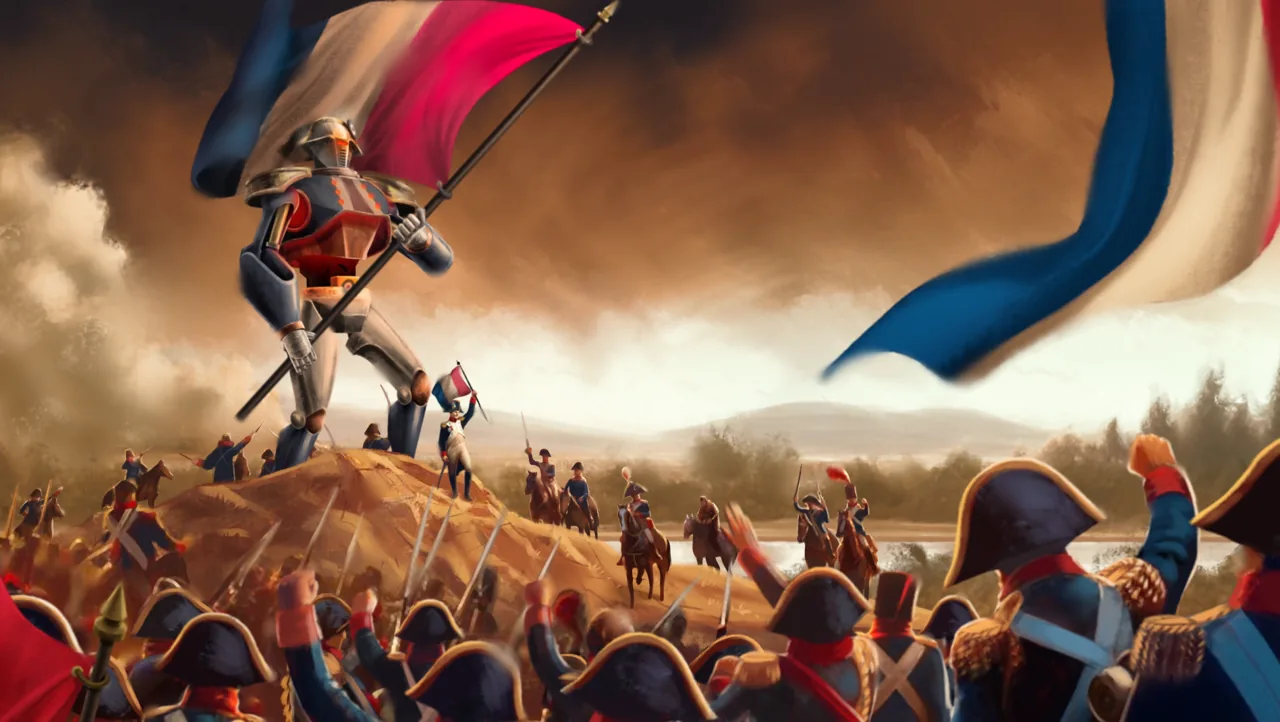
The French Revolution was a pivotal period. There were lots of public beheadings, riots in the streets, and some miserable peasants stealing bread. Things were balanced on a knife’s edge; could the monarchy pull it together, would the mob overthrow the ancien régime, or would something entirely new emerge from all the turmoil?

The gloves were off. King Louis XVI was fighting for his life along with the rest of the French nobility. They had the money and the backing of most of the French army and private forces bankrolled by loyal nobles. On the other hand, the masses of the French people were ready for a change. A series of wars had led to sky-high taxes, and a couple of bad harvests left the poor starving in the streets.
It was not a hopeless situation. There were policy changes that could have fixed things. In particular, the French bureaucracy was disorganized, leading to charges of corruption and an inability to coordinate action. There were many who thought that bureaucratic reform could avert the coming crisis. Perhaps a rational tax code, along with some redistribution of wealth, could right the ship of state without overthrowing the monarchy.
Your job in Bonaparte: A Mechanized Revolution is to join one of the three sides in this conflict. As a general in the King’s court, you are provided the opportunity to pick your own side. You start with the storming of the Bastille and pick your side through your actions.
The first side is the Royalists. They would like to maintain the status quo as an absolute monarchy. They view the unrest as the result of disloyal rabble-rousers and the King as the only valid unifying force.

The second side is the Moderates. They are reformers who would like to see the rulership modified from an absolute monarchy to a constitutional monarchy along the lines of England’s. They see the unrest as an opportunity to apply pressure to the current system in order to move it in this direction.
The third side is the Jacobins. They represent the masses of peasants who are broke and starving, and are looking to fix things by overthrowing the King and implementing a democracy. They see the unrest as an opportunity for a revolution, similar to what America just had.
If it seems like this review is spending a lot of time on the political background of the game, it is because the game itself spends a lot of time on it. Each of the factions has sub-factions with associated leaders, agendas, and goals. You will spend a decent chunk of time getting to know the factions with the goal of allying, converting, or crushing them.
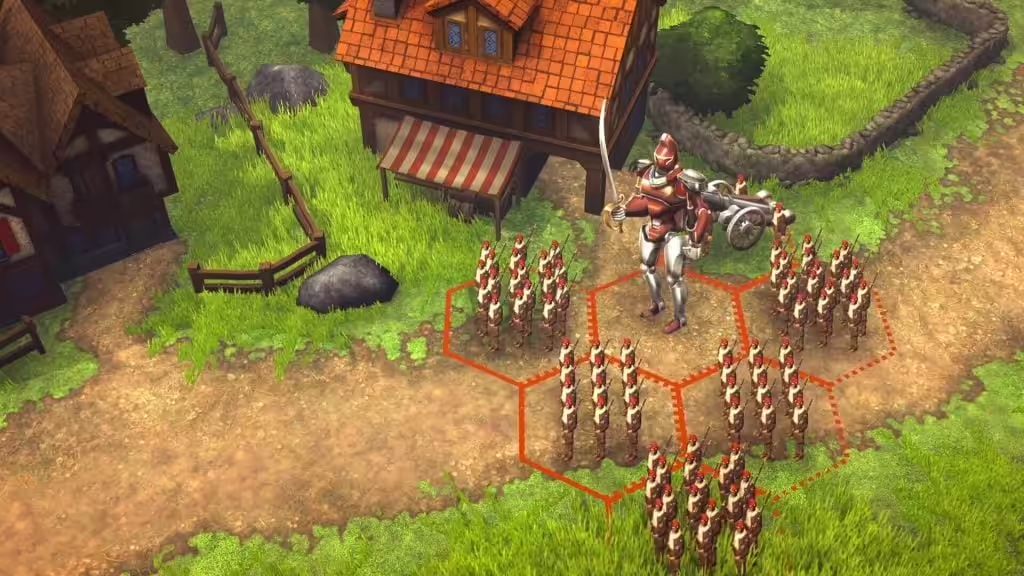
To this end, the game works in three layers. Each layer presents different mechanisms by which to pursue your faction’s ultimate goal: to reshape France into your ideal.
The first layer is a tactical, turn-based combat system. You can command various types of units: peasant mobs, sharpshooters, large mechanical robots, and engage in battle with other groups of units. The various unit types have their own strengths and weaknesses, a pattern familiar to veterans of XCOM and many other turn-based tactics games. Yes, there are mechanical robots that fought in the French Revolution. No, the author does not know why. They are neat, however, and very powerful. You will want some of them on your side.
The second layer is more strategic. In this layer, you are presented with a map of France, broken into counties. Each county has three loyalties – one for each side. In addition, they have various buildings that either exist already or can be built and/or upgraded.

These buildings provide resources (money, political influence, recruits) to whichever side controls the county. Each turn, you will be provided the opportunity to build buildings in your various counties (if you have the money), receive the benefits of the buildings you have, or move an army into a county you would like to own.
The third layer is more political. Elections happen at regular intervals, and each election involves passing or repealing laws. Each law benefits/hurts various factions, either directly or indirectly. You will have the opportunity to discuss the laws with representatives of the various sides before the vote. These discussions take the form of text boxes, which describe how each faction feels about the law and why. Your goal is to pass laws that benefit your faction and stop those that would harm it.
The effect of the layers is to present a more complete picture of what the French Revolution was like. After all, a revolution is not just a matter of winning battles or gathering support or controlling the government. All of these modes must work together for a revolutionary movement to succeed.

This leads to the trickiest part of playing the game, the skills involved in each layer are different. Most games pick a playstyle and run with it. XCOM specializes in tactical combat. Europa Universalis is all about seizing and exploiting small areas of land.
Crusader Kings delves into politics and personal relations. In Bonaparte, one must be good at all these play styles to do well. This can take some getting used to, but this reviewer believes that the reward of better understanding the conflict at hand will be worth the effort.
At present, Bonaparte is in early access. In addition to the usual bugs and crashes, many aspects of the game are still under development. The graphics are serviceable. The game mechanics of the various layers are straightforward. This sort of multi-layered game can be difficult to balance, so expect that to be an ongoing focus of development.
To summarize, this appears to be a promising game that adopts an intriguing, multi-layered approach to its subject. Beyond being just a game, playing Bonaparte will lead the gamer to appreciate an interesting slice of history and gain a deeper understanding of how revolutions can be conducted.

