
The time has finally come. There has been a lot of hype building up for STAR WARS Zero Company over the last couple of months. We personally featured a brief hands on demo that the developer sent over.
There were even fan-made Twitter accounts dedicated to the game just to keep us all up to date on the latest and greatest. Finally, it is here. Is the game worth all the hype? Join me as we jump in and find out.
Zero Company is a squad-focused turn-based tactics game, similar to XCOM 2. From what I can tell, this is the first Star Wars game in this gameplay style. What better team to introduce the Star Wars IP to this genre than the team from Bit Reactor, who has a pedigree in this exact thing?
The game is set during the Clone Wars, and you are in command of a group of riff-raff just trying to get by.
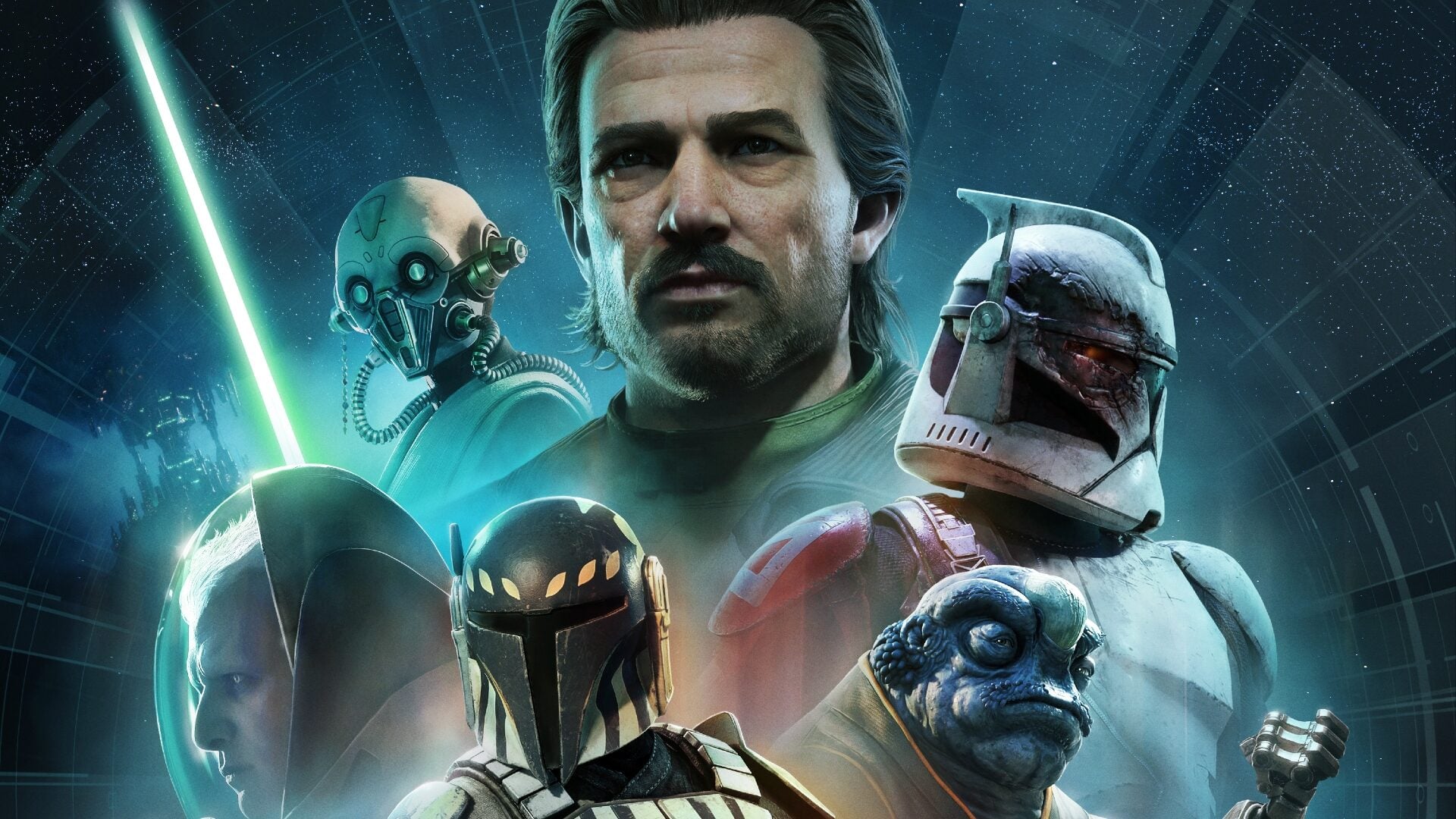
You are Hawks, a former officer of the Republic. You are joined by a discharged clone, a Separatist loyalist, and several other colorful operators. Each with their own interesting background. Just when you think you are down on your luck, the Republic reaches out to recruit you for an operation off the books. They need your help to eliminate a threat before it becomes a major problem for the entire galaxy.
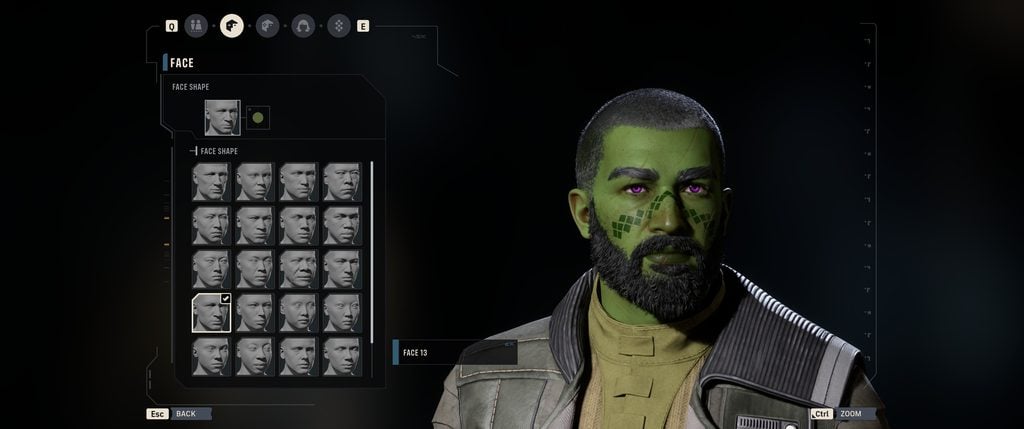
When you start the game, the first thing you get to do is create your character, Hawks. You will decide what race they are from a selection of six different races.
Then you get more specific and pick their body type, hair, face shape, and even some facial features. Once you are happy with that, then it is time to move on to your outfit. There is a huge range of things to pick from in each of the categories: hats, tops, pants, boots, and gloves. All of which have a full range of color options to pick from.
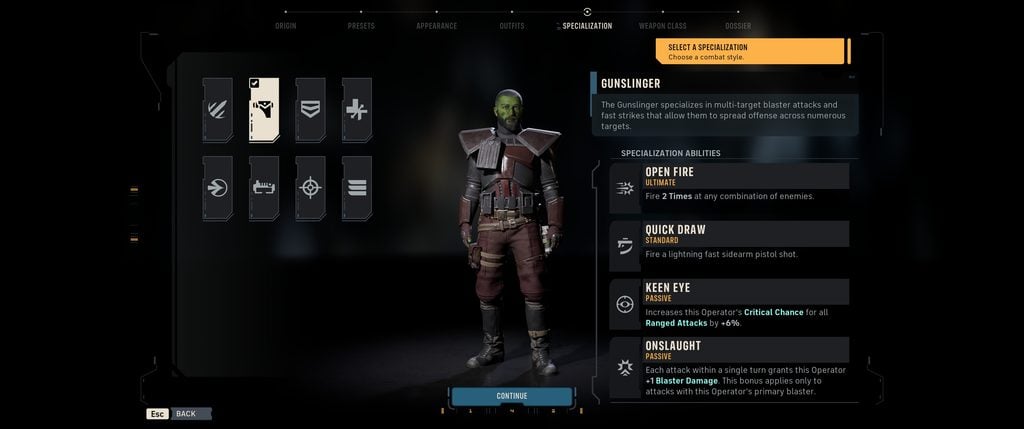
Once you are done with all the cosmetics, then it’s time to get into the tactical side of things by picking your specialization and weapon class.
You can choose from eight different specializations. Each of which fits a different play style and feels unique to play. Assault focuses on frontline combat, with abilities for getting up close. Gunslinger focuses on quick, multi-target attacks. Heavy is for those who want to run to the front and take all the hits for their team. The Medic specialization is all about boosting your allies and keeping them alive.
Then you have the Scoundrel, who focuses on marking targets and finding their weaknesses. Scouts boost the party’s Advantage in battle. Something we will talk about more later. Sharpshooters are ideal for long-range engagement.
Lastly, Soldiers are a pretty universal unit with a tough melee, a strong grenade arm, and even a rocket launcher for those special situations.
Once you have your specialization locked in, you can pick which weapon you want to carry. There are four different options to pick from: Longarm Blaster, Blaster Pistol, Repeater, and Blaster Rifle. Weapons are not locked to specializations. However, I probably would not recommend selecting a longarm blaster if you have the Gunslinger specialization since those blasters take 2 action points to use, but you certainly could if you wanted to.
After you have finalized your personal version of Hawks, you jump straight into combat to learn the system. The tutorial was quite nice. It eases you into the combat system one step at a time. Even as an avid player of this genre, it felt familiar but still fresh in its presentation. There are similarities to games like XCOM, but also some nice changes and improvements.
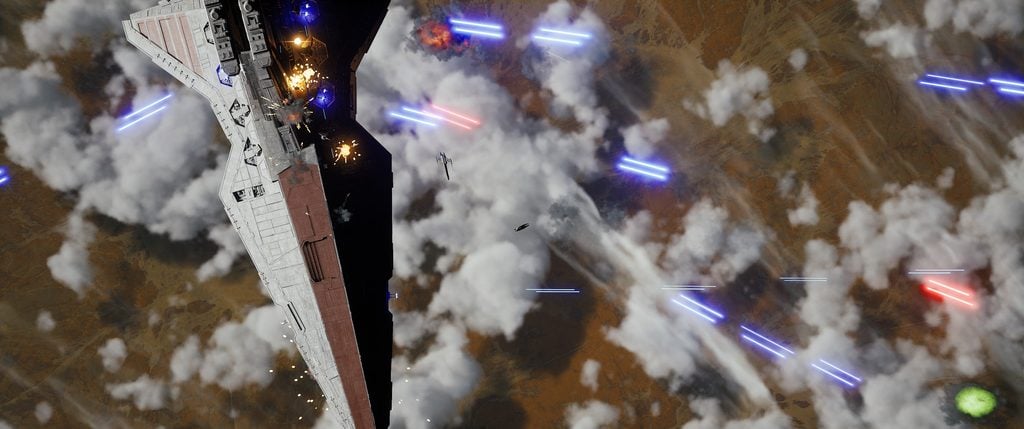
Each character has three action points. You can use these to move, shoot, and use other abilities. All of the actions are found in the action wheel around the active character.
The action wheel can be closed to get an unobstructed view of the map. The action wheel idea felt very intuitive, especially when using an analog stick with a controller or on my Steam Deck. Of course, when using a keyboard, you can just use the number hotkeys if you want to.
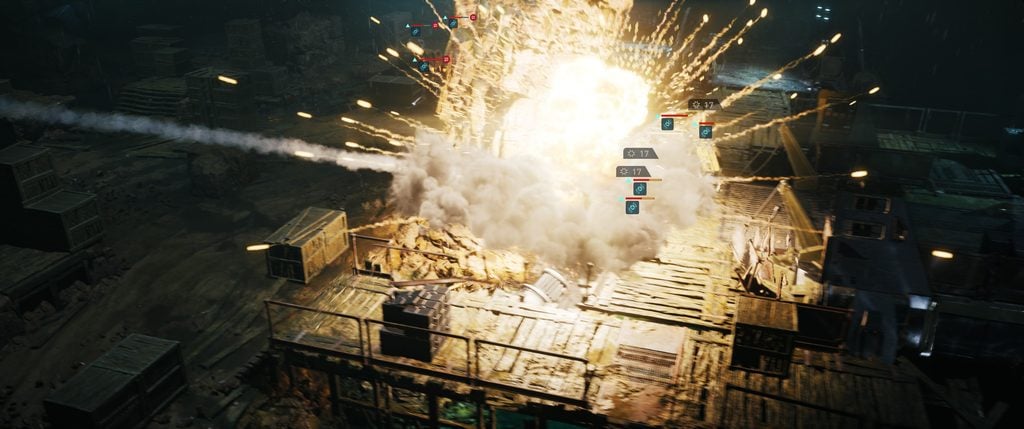
Attacks are percentage-based, which is mostly affected by distance and cover. Cover is an interesting thing in Zero Company because most cover is destructible. This means a unit that looks safe behind cover might not be all that safe after the first missed shot in their direction destroys the crate they were hiding behind.
This is something that you can take advantage of, but know that the enemy will also be destroying your cover. This creates some very dynamic battle scenes. Units on both sides are constantly on their toes, moving to a new position because the one they thought was safe doesn’t even exist on their next turn.
Zero Company uses the type of overwatch that I wish every game in this genre would use. There are a handful of games that do, and it really gives the control back to the player. When you set up for overwatch, you set the reaction zone size and depth.
The percentage to hit on the overwatch depends on the depth of the zone. In other words, you get to choose where you want the overwatch to be and how likely your unit is to hit if something steps into that zone. So, you could always set your overwatches to 100%, or you could lock it in at an 80-90% chance to hit. No more; shoot the next thing that moves even if it’s only a 10% chance to hit.
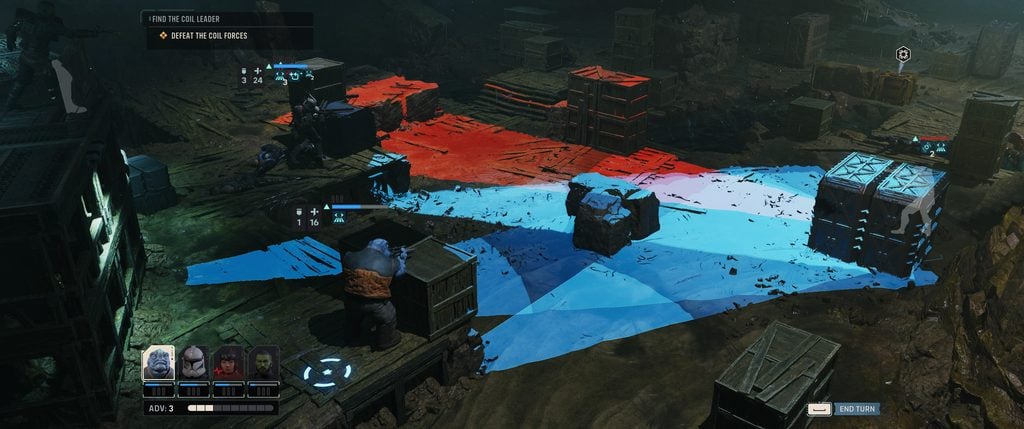
Two important combat features that make Zero Company stand out are Call for Backup and Advantage.
Each turn, a random character on your team will get the ability to call a teammate for backup. That teammate will automatically shoot the same target that you shoot at, if they can see it. Most importantly, the assisting teammate never misses. This can create some very powerful attacks if used correctly. Especially since the teammate won’t miss even if you do.
Advantage is a resource that is required for your characters to use their special abilities. It is a party-shared resource that is used instead of action points. Advantage is gained each time that one of your units damages an enemy.
This means you can use your special abilities at the end of a turn even if everyone has already spent all their action points for the round. It also means it can build up quite quickly in a round where all of your units hit their targets. Using Advantage separate from action points really makes the special abilities feel earned and valuable.
Despite all of your best efforts, some of your squad is going to take damage in combat. When an operator loses all of their health, they are Downed. This means they suffer an injury and must be rallied to fight again.
If they take a third injury, they will be killed in action. With permadeath on, that means they won’t be coming back. This applies to all of your characters other than Hawks. If Hawks dies, then you have to restart the mission. This can be tough, especially if it is one of the story characters on your team that you have really started to know and love.
When you aren’t dodging blaster fire in combat, you will be spending time at the Den, your base of operations. It is a decommissioned cargo freighter permanently docked at a deep-space mining colony.
Here you will spend time getting to know your crew, upgrading the facilities, and planning for your next mission. There are several stations you will want to visit each time before jumping straight into the next mission, though.
The medbay is where you will want to send any of your injured characters to have some time to recover from their near-death experience. Personnel is where you manage each of your characters. You can view stats, track their bonds with other operators, and allocate Focus Points to boost stats and abilities.
Bonds are a very important part of Zero Company. As the bond strengthens between two characters, they will be able to do some cross-training and even teach each other unique tricks and abilities. Cross training allows you to boost the stats that you can’t normally boost with Focus Points. You can even gain additional Focus Points through cross-training.
The Armory is where you will go to equip your operators before combat. You can change their weapons, add weapon modifications, equip utility items, and even shop at the Black Market for new gear.
At the Upgrade Facility, you will be able to unlock additional features around the Den. These include things like improving the medbay with more beds, improving roster-wide combat stats for weapons, or even increasing your crew size to be able to recruit more characters to the team. New Recruits all come with an assigned talent and specialization. You can change their specialization at any time to better fit your needs or playstyle.
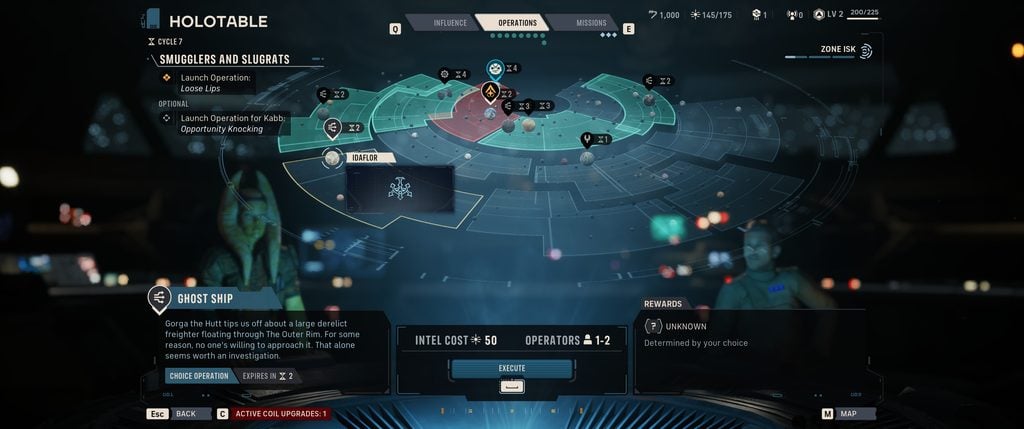
Lastly is the Holotable. Here you will manage your operations, missions, and influence over the different regions in the galaxy. Operations will use Intel and resolve instantly. The rewards are usually credits, influence, or a random item. Missions are the in person combat encounters.
They usually have similar rewards but can only be performed once per cycle (day). Most missions also progress the story. Lastly, influence gained from operations and missions builds up in different regions. As your influence grows, you will unlock special rewards for that specific region.
There is so much more to Zero Company. I feel like I have only just scratched the surface for you in this review. Just wait until you start fighting members of the Infinite Coil or when you unlock more of the story characters to play.
They each have such unique talents to master. It feels like Zero Company continues adding something new the longer you play. Between the new enemies, new characters, and the in-depth story, the game continues to feel fresh the whole way through.
With all that being said, is the game worth checking out? Absolutely! STAR WARS Zero Company will most likely be Game of the Year for me. I have played a lot of games so far this year and some of them I am pretty passionate about, but this is a genre and an IP that I have been waiting a very long time to finally be put together. I am really grateful that Bit Reactor did such a good job with this opportunity and I hope that it leads to even more Star Wars games in this style of game.
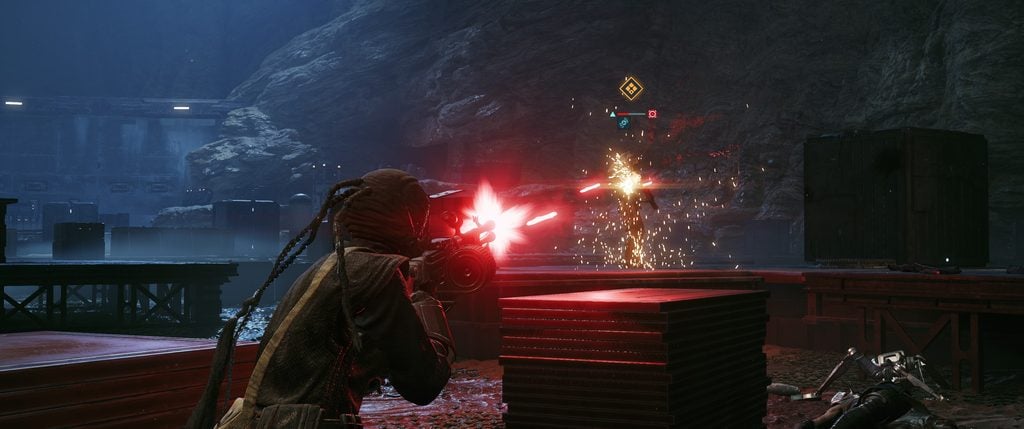
My biggest fear going into this game was that it was going to just be another XCOM 2 with a Star Wars skin. Which technically already exists thanks to the modding community. My best comparison would be XCOM 2 combat meshed with Marvel’s Midnight Suns home base. The team at Bit Reactor was able to take the combat style that we love to the next level and combine it with an in-depth, character-driven story, which still has permadeath.
I don’t know how they did it, but I am sure glad they did. STAR WARS Zero Company is a must-play for any turn-based fans, Star Wars fans, or just anyone looking for a great new game to get into. I can see myself spending many more hours in this game as soon as we publish this review.
If you want to get the game for yourself, go check out their Steam page. The game is also on PlayStation 5 and Xbox Series X|S.
A review copy was provided by the developers at Bit Reactor.
