

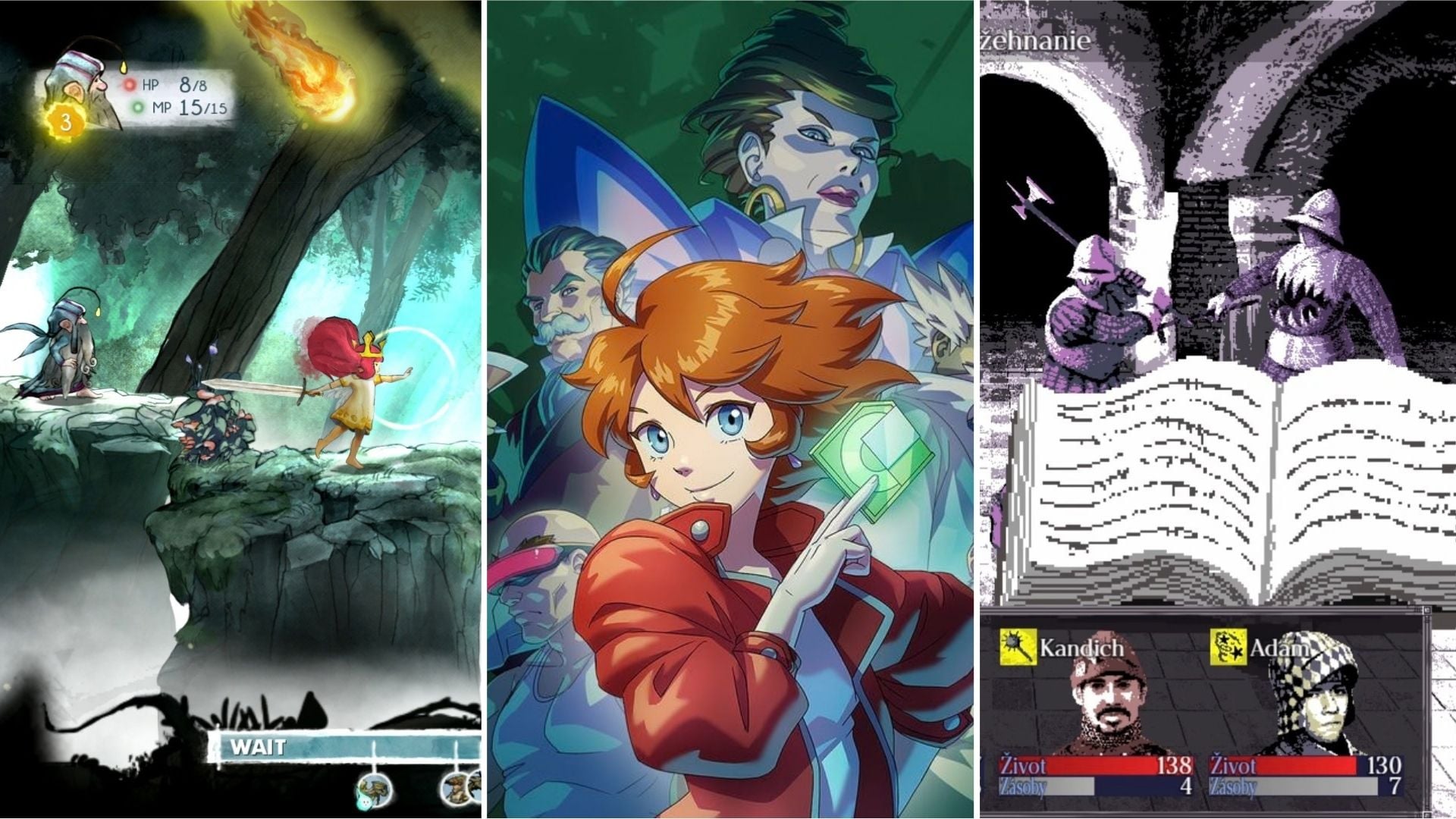
Starting a new RPG is easy. Finding the time to finish it is usually the harder part. You can love long adventures, complicated party builds, and lengthy dungeon crawls while still wishing that, occasionally, the credits would arrive before your next month of free time disappears.
That’s where shorter RPGs come in. Sometimes, a few evenings are all you need to meet a memorable cast, figure out an interesting combat system, and see a story through to its conclusion. For this list, I’ve picked ten turn-based RPGs with compact main campaigns, ranging from a few hours to around fifteen.
There’s a fair amount of variety here, too: traditional fantasy adventures, cyberpunk hacking, card-based battles, and some wonderfully strange alternatives. The longer entries require a fairly dedicated gaming weekend, while the shorter ones leave considerably more room for everything else. The games are arranged roughly by duration, not ranked from best to worst.
1. Felvidek
- Developer: Jozef Pavelka and Vlado Ganaj
- Platforms: PC
- Approx. Main Story: 3-4 hours
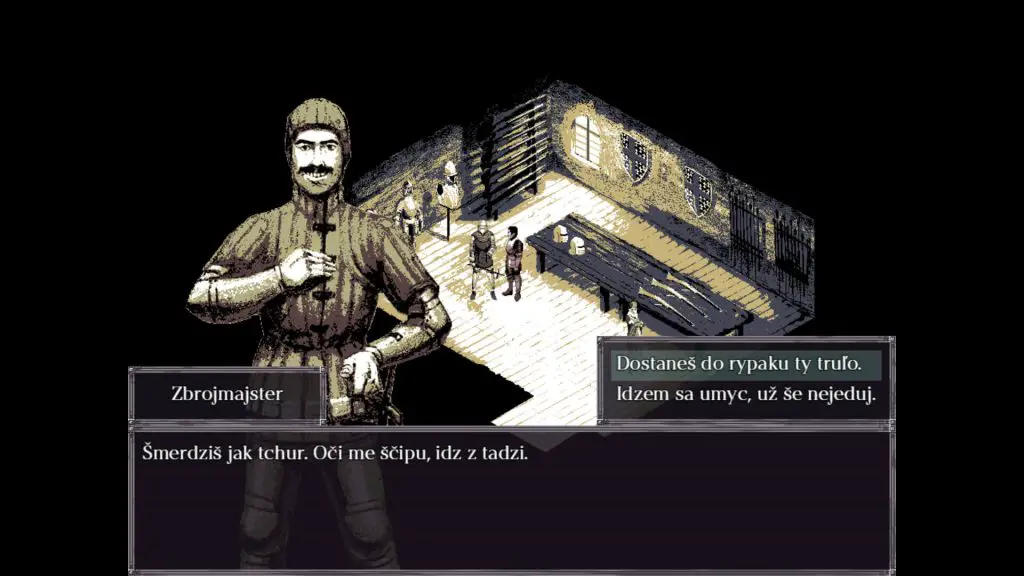
Felvidek takes the premise of a knight with problems with alcohol investigating odd occurrences in the fifteenth-century Slovakian highlands and places it in an alternative-history setting, where all of these (medieval communities, religious tensions, an increasing number of strange occurrences) take place in a relatively small area.
The RPG structure is very familiar. There are the same things you do in all RPGs, like exploring villages, towns, and castles; looking around inside places; finding weapons and other items needed to complete objectives; and battling enemies in turn-based battles.
There are secret passageways and hidden rooms, so there’s an incentive to pay attention to where you’re going (even in this super short campaign). I think what makes this game so attractive is you get to enjoy some of the most common RPG elements in a style that feels completely different.
This would probably be the best suggestion if you have only enough time on a “Free Weekend” for one full evening and possibly another hour on Sunday. Just know to expect some really morbid, darkly humorous elements, along with graphic images of death, etc., because, unlike typical medieval-themed RPGs, this one is not comfortable. It also has a shorter length, which makes it perfect to play when you want something different from longer RPGs.
2. This Way Madness Lies
- Developer: Zeboyd Games
- Platforms: PC, Nintendo Switch, PlayStation 5
- Approx. Main Story: 6-7 hours
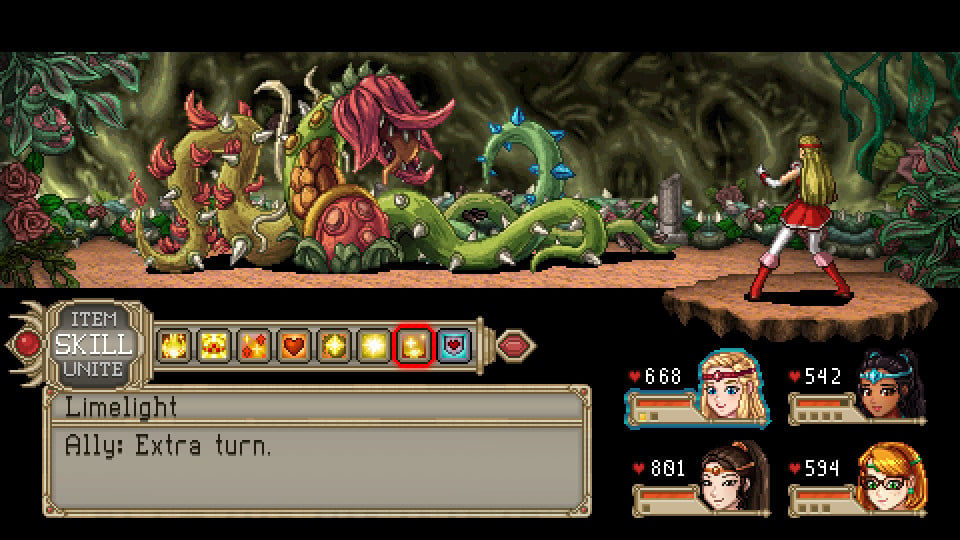
You may have never thought of the combination of Shakespeare and Magical Girls. The show “In This Way Madness Lies” is about two friends (Imogen and her drama group) who are transported through different worlds based on some of Shakespeare’s famous plays.
In these worlds, they become magical heroes as they try to defeat the nightmares haunting their own world. They can also choose to have one of their characters speak in Modern English rather than Shakespearean English.
Combat establishes a somewhat thought-provoking basis for the game’s absurdity. The majority of the characters’ active abilities can be used once before they need to recharge on the character’s turn.
Additionally, the game does away with much of the “housekeeping” associated with other RPGs. Players experience character growth and leveling simultaneously; therefore, they do not have to manage inventory or purchase equipment. This allows more gameplay time to be dedicated to combat, character interactions, and the next installment in the series’ comedic disaster theater.
3. Jack Move
- Developer: So Romantic
- Platforms: PC, Nintendo Switch, PlayStation 4, Xbox One
- Approx. Main Story: 7-10 hours
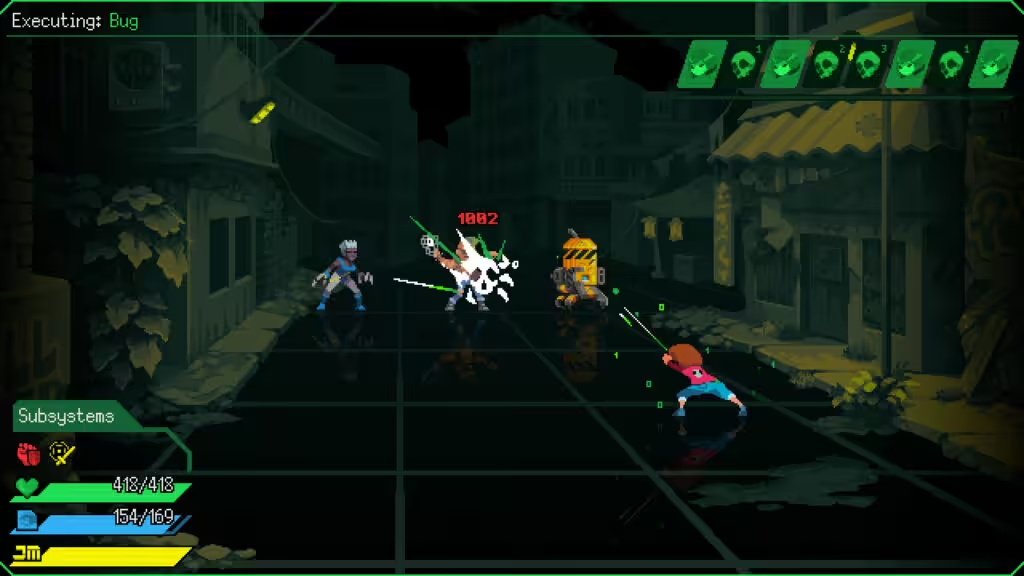
Jack Move takes the compact JRPG approach into a cyberpunk city, following vigilante hacker Noa Solares after a corporation kidnaps her estranged father. Its pixel-art streets and cyberspace battles provide a very different atmosphere from most RPGs.
The key distinction in combat is that Noa fights alone. Instead of assigning offensive, defensive, and support duties to several party members, you adjust her capabilities via the software installed on her Cyber Deck. Changing software during an encounter lets you adapt her role, while hardware upgrades improve her capabilities and the programs she can support.
A seven-to-ten-hour range is a more comfortable basis for planning a first playthrough, especially when you want time to explore and experiment with the software system.
4. West of Loathing
- Developer: Asymmetric
- Platforms: PC, Nintendo Switch
- Approx. Main Story: 8 hours
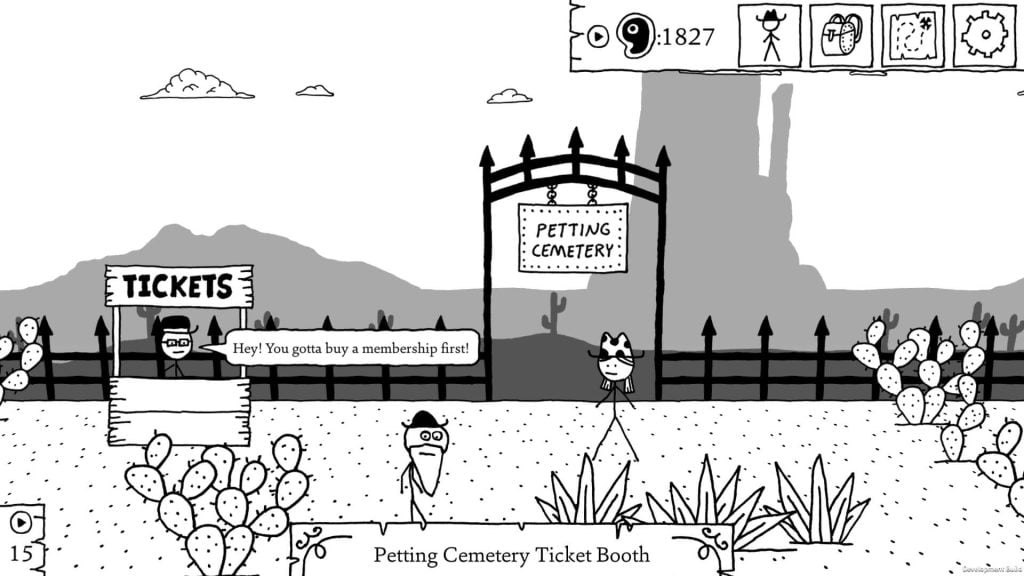
Those stick figures are hiding a substantial amount of RPG underneath them. West of Loathing sends you through a ridiculous version of the American frontier, with classes such as Cow Puncher, Beanslinger, and Snake Oiler setting the tone before the adventure has properly started. Expect strange towns, questionable discoveries, and plenty of opportunities to get yourself into trouble.
Turn-based combat is part of the experience, but exploration, conversations, and puzzles deserve just as much attention. You can talk your way out of certain situations, investigate the world’s oddities, and follow distractions that have very little to do with being an efficient frontier adventurer. The appeal comes as much from the writing and the freedom to poke around as from winning battles.
There’s one important caveat for a weekend list: rushing directly to the end isn’t necessarily the most enjoyable way to approach a comedy RPG. Estimates put a main-story run at around eight hours, but a playthrough with additional activities closer to twelve and a half. I’d leave some space for those detours. Finding another ridiculous situation is a big part of why I’m here.
5. Hylics 2
- Developer: Mason Lindroth
- Platforms: PC
- Approx. Main Story: 8-9 hours.
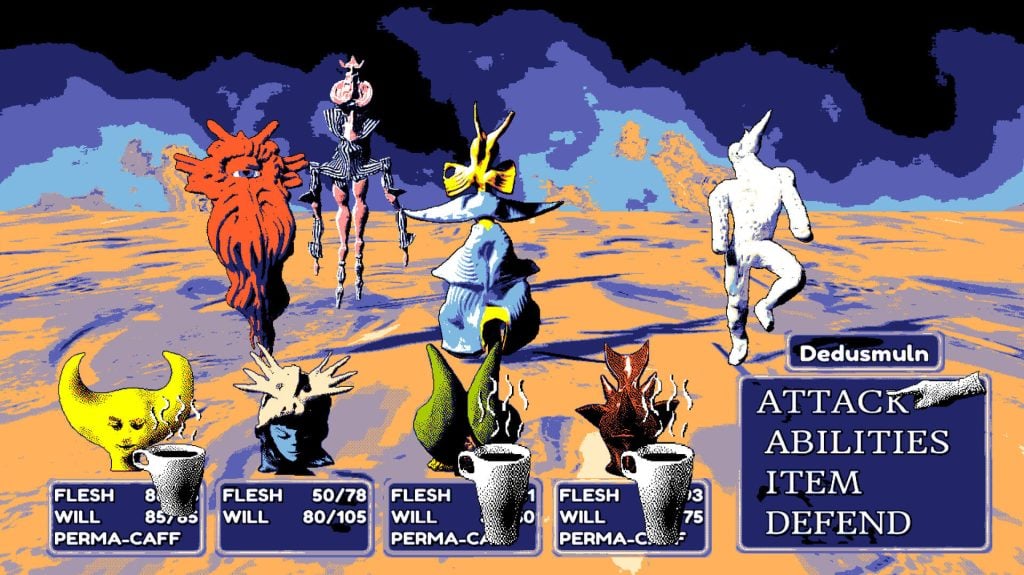
A few RPGs have an introductory sequence as unique as Hylics 2’s. Combining elements such as stop-motion animation, clay model scans, pixel art, and 3D worlds creates an environment that can look unusual nearly wherever you go. As the crescent-headed protagonist, Wayne leads a group attempting to keep the tyrannical Gibby from returning.
Beneath this surreal presentation lies a traditional turn-based RPG system where you’ll need to manage your party and acquire abilities. Abilities can be learned by watching television shows that teach combat techniques, whereas the ability to explore involves dashing, rolling, and gliding through the environment.
Worth noting is the physical aspect of movement (in addition to being able to run and jump), although the battle sequences are turn-based, getting around involves some form of platforming rather than simply walking back and forth between menu-driven encounters.
Don’t let the number in the title deter anyone interested in playing. No experience or knowledge of the previous game is needed to appreciate the sequel.
I think I’d recommend this one to someone looking to play a short RPG that feels unfamiliar. You’re still learning your way around acquiring abilities and navigating encounters, but the world, the movement, and the overall style of presentation combine to create an experience unlike many other fantasy adventures.
6. Child of Light
- Developer: Ubisoft Montréal
- Platforms: PC, Nintendo Switch, PlayStation 4, Xbox One; also released on PlayStation 3, Xbox 360, PlayStation Vita, and Wii U
- Approx. Main Story: 11 hours
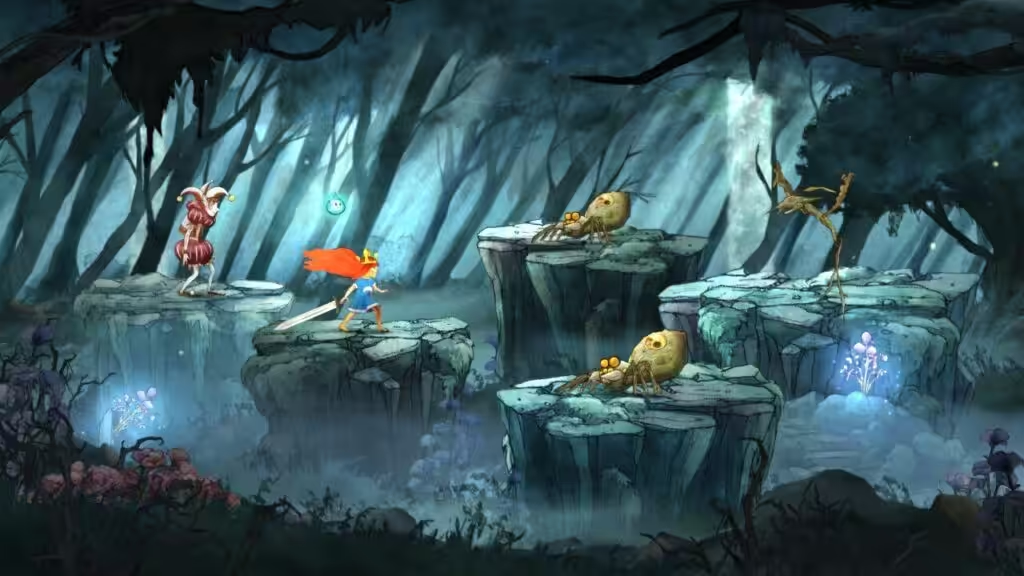
There are many reasons to like Aurora’s story in Child of Light as she attempts to restore the lost sun, moon, and stars of her homeland, Lemuria.
The childlike illustrations that form the background of your adventure, combined with the rhyme scheme in the dialogue, give this game a fairytale quality. So if you’re looking for a lighter, less intense experience than some of the other RPGs mentioned here, then this could be the one for you.
One of the things that will matter most to players using a turn-based approach to their gameplay is its use of an Active-Time Battle system.
The main storyline in Child of Light takes about 11 hours to complete; however, additional exploration beyond completing all available quests can extend your average play session to 13-14 hours.
Because it offers a substantial adventure you can enjoy without a huge time commitment, I would consider it a good choice for anyone wanting something longer than a short little adventure, yet too small to feel like starting another large-scale campaign.
7. South Park: The Stick of Truth
- Developer: Obsidian Entertainment
- Platforms: PC, Nintendo Switch, PlayStation 4, Xbox One; originally also released on PlayStation 3 and Xbox 360
- Approx. Main Story: 11-12 hours
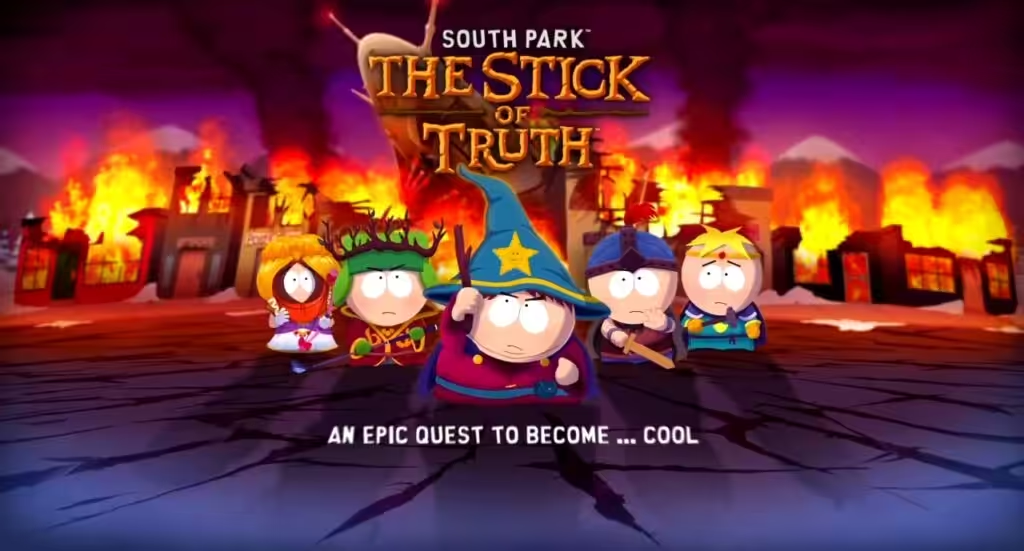
Your tolerance for South Park is the first thing to consider here. The Stick of Truth follows the New Kid into a neighborhood fantasy war involving Cartman, Kyle, Stan, Kenny, and the rest of the town. Its presentation closely follows the television series, and its humor is every bit as crude as that premise suggests.
The combat has a clear Paper Mario-style influence. You choose actions from menus, then use timed inputs to improve attacks and defend against incoming hits. One companion fights alongside the New Kid, while class abilities, equipment, and status effects provide the character-building side. Exploration also creates opportunities to deal with enemies before a conventional battle begins.
The main story is short enough, though exploring the town and completing extra quests can bring the total closer to 14 or 15 hours.
The recommendation comes with an obvious condition: the comedy needs to work for you. A manageable running time won’t change your mind about an entire adventure’s worth of South Park humor.
8. Cosmic Star Heroine
- Developer: Zeboyd Games
- Platforms: PC, Nintendo Switch, PlayStation 4, PlayStation Vita
- Approx. Main Story: 12 hours.
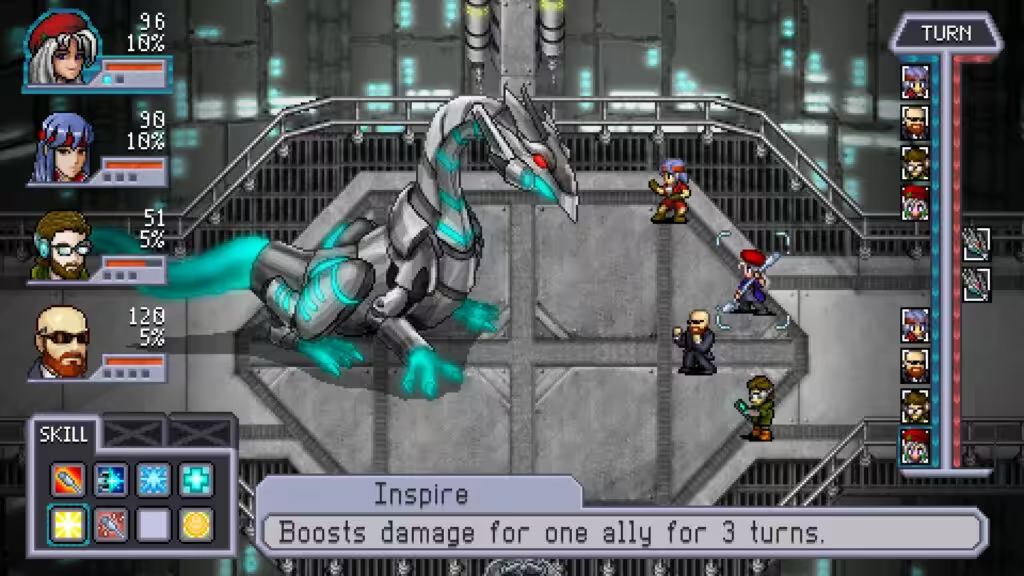
Cosmic Star Heroine is a game of secret-agent missions, space travel, conspiracy theories, and an entire spaceship as your headquarters.
It has all the elements for a much larger RPG. However, it places these elements within a relatively small-scale science fiction experience centered on a former operative named Alyssa L’Salle, who uncovers a conspiracy theory while working outside her former agency.
All battles are fought by placing yourself inside the environment you will be exploring. Instead of going from one location to another, your exploration and battling occur simultaneously.
Much can be said about the battle system in Cosmic Star Heroine. Many abilities are unusable immediately after using them. This means that each ability becomes “on cooldown” until you defend yourself at least once so that it may be used again.
Thus, planning what to do per turn (spending a usable attack/ability now limits the use of other attacks/abilities in future turns) and defending to better plan your subsequent attacks/supports are both vital components of a successful strategy.
9. Shadows of Adam
- Developer: Something Classic Games
- Platforms: PC, Nintendo Switch
- Approx. Main Story: 10-12 hours
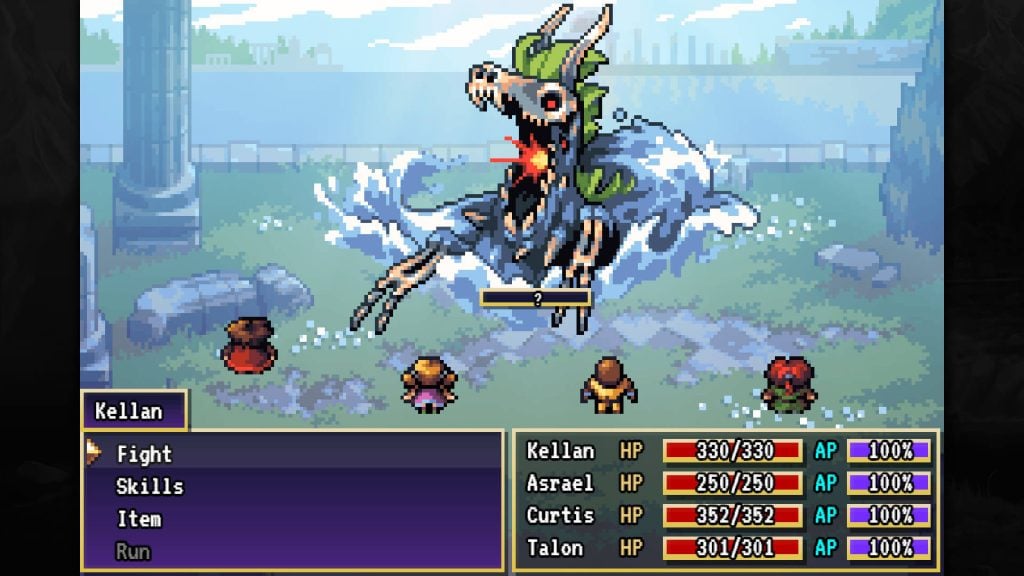
While sometimes cravings have a lot of specificity: parties, pixelated towns, puzzles in dungeons, and stories that grow into something much larger than the village where they began their journey.
The perfect game for your particular mood would be Shadows of Adam. This is because Shadows of Adam tells the story of 4 main characters as they search for information about a legendary figure from their area who has gone missing. Along the way, they find out what kind of secrets were left behind. The overall design of the game will feel directly influenced by the 16-bit era.
It has a combat system that does one thing differently than the usual formula that most games follow. As you spend AP points each round during combat, and after defeating all enemies, your AP points regenerate. This means you should try to use your abilities so you don’t have to worry about saving AP for a later encounter.
As far as why I listed Shadows of Adam, there isn’t anything too complicated. It keeps the structure of a traditional fantasy JRPG. But it makes the experience more compact. That is exactly the type of game I would recommend to someone who likes traditional fantasy JRPGs but doesn’t want to commit themselves to playing for months on end.
10. SteamWorld Quest: Hand of Gilgamech
- Developer: Image & Form Games
- Platforms: PC, Nintendo Switch
- Approx. Main Story: 14-15 hours

SteamWorld Quest has to be the most significant time investment here, so if you are looking for a weekend with multiple extended gaming sessions, this is the one to choose.
The game unfolds across a series of chapters, following a band of mechanical adventurers through a fantasy world. The gameplay is divided into exploration segments, turn-based battles, and a customizable card system to connect these elements.
Each party member will contribute unique punchcards to the battle deck; some create steam pressure while others consume all or part of the same resource. Therefore, finding an effective balance between establishing your position in a battle and exploiting it is key to success.
A player can change the punchcards associated with a specific character and, in turn, completely alter their functional role within the team, allowing them to determine how the team provides damage, healing, and support during a fight.
Decisions occur throughout the game, both before each battle, when selecting cards to play from your deck, and after drawing a new hand.
That wraps up my recommendations. I know there are plenty of games out there that work well for relatively short play sessions. If you want to raise the bar a little without going overboard, take a look at this other list, then let me know your favorite turn-based RPG that fits comfortably into a weekend. Share your recommendations in the Reddit community. See you at the next one. Ciao

