Starting an RPG for the second time requires a pretty good reason. There are other games out there, new games coming in all the time, and a backlog that has effectively become a long-term financial commitment. If you’re going to spend another few dozen hours in a world you already know, it needs to be something more than just a different haircut and slightly better gear.
For this list, I don’t want you to spend money (since you own these games, right?), so I’ve chosen turn-based RPGs that give you a good reason to come back. That might be continuing a conflict down a different path, playing a protagonist with a different background story, or just discovering what happens when the decisions you previously turned down become the basis of a new campaign.

These are eight choices rather than a ranking (one entry actually covers the entire trilogy). The key point is the difference between simply reliving an adventure you enjoyed and having a genuinely different experience within it. Both are perfectly legitimate ways to spend your time, but it’s the latter that we’re looking for here.
Baldur’s Gate 3
Probably, even two playthroughs might not be enough.
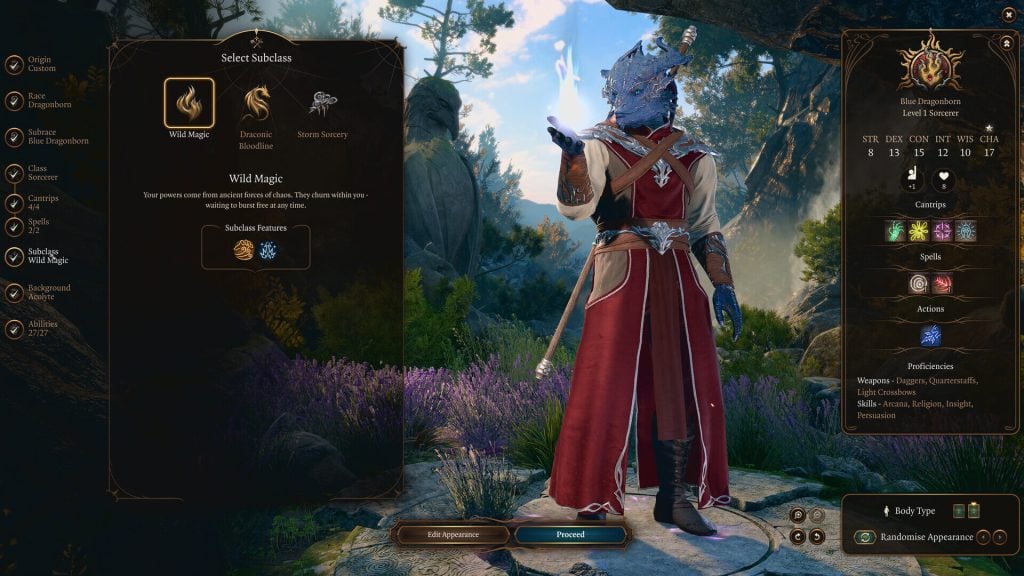
For anyone who’s finished Baldur’s Gate 3, my top pick for a second campaign is very specific: go with The Dark Urge and try to resist the urges. That Origin gives you the option to customize your character’s look, race, and class, as well as a pre-existing backstory. You start with missing memories and violent urges, which is a completely separate narrative thread that a standard custom character doesn’t have.
I think this makes the return far more interesting than just swapping your fighter out for a sorcerer. Larian absolutely allows you to resist those impulses rather than just having the Origin be your mandatory villain campaign. Doing the right thing becomes a very different roleplaying proposition when your own instincts are actively working against you.
I’d pair that change with companions you overlooked the first time. Their individual backstories give you another reason to go back to a situation you’ve already been through, without having to invent a challenge run or make it any harder. The point isn’t to pretend the whole adventure has been turned on its head. It’s simply to give that adventure a protagonist and a party to travel with whose own personal concerns you haven’t already looked at.
The Banner Saga Trilogy
Different choices, different fates.

The best reason to go back to The Banner Saga is if you didn’t make it through your first run. Stoic‘s tactical RPGs are all about making difficult leadership decisions and the consequences of those decisions really do have a bearing on the people you’re leading. You can actually lose characters permanently, and that has a huge impact.
This is why I’d treat the trilogy as a single entry rather than recommend replaying any one chapter in isolation. Your saves get imported, so the decisions you make in one game carry forward into the next, meaning a different outcome in the first game can become part of the circumstances you inherit in the second and third.
For the second run, start at the beginning and go a different way. Reassess who you trust, what risks you’re willing to take and how you manage the caravan’s resources. It’s a good idea to try and protect a character you’ve previously lost, but there’s also merit in going down a different set of paths and accepting the consequences. All of it comes down to resource management, leadership and the battles you fight.
The appeal is in the accumulation of differences across the three games, which by the end you can have a very different set of people to protect and a very different set of decisions to carry forward, which can in turn lead to different outcomes.
Triangle Strategy
One Decision Can Change Everything.

Triangle Strategy saves the useful explanation for after you’ve already done the story. New Game Plus makes the Conviction system a lot more transparent, showing you the numbers that were previously hidden during the first run-through. Coming back to the game means you have a much better understanding of a system that previously just asked you to make judgments without actually showing you how it was scoring you.
Those beliefs feed into a political venture in which you don’t make the key decisions on your own. With the Scales of Conviction, your companions will vote on the course the group should take, and convincing them is part of your role as Serenoa. Your actions will build up the ideals of Utility, Morality, and Liberty, and your choices will have an impact on the direction of the story and who will come to your side.
On the return trip, back a decision you previously opposed and see what happens as a result rather than just steering everything towards the outcomes you’re used to. The branching paths lead to different story missions; some recruitment options will conflict with others, and later decisions have a massive impact on the final chapters.
You’ll still go through the common bits, but there’s a practical reason for doing so: one campaign will allow you to go through the consequences of decisions you would have otherwise been unable to make in your initial playthrough. It’s far more significant than simply reloading just before the credits to pick a different final answer.
Fire Emblem: Three Houses
Every House Has Its Side of the Story.
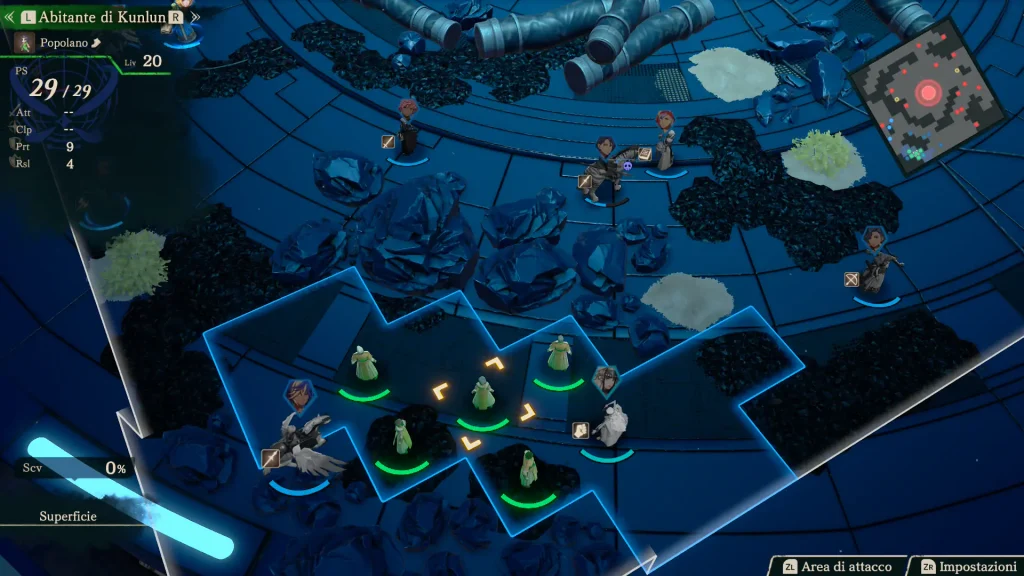
Choose another house, then resist the temptation to rebuild exactly the same team. That would be where I’d start with a replay of Fire Emblem: Three Houses. You’re a professor at the Officers Academy and you lead one of the three groups of students, each group being associated with a different territory and a different house leader. Making that choice gives you a different central cast to teach, to develop, and to take into the tactical battles.
The bigger reward comes in as those school relationships get entangled in the conflict beyond the monastery. Your allegiance has an effect on the later campaign, giving you a different position in the war. Time spent with another faction can also have the effect of complicating the picture you’ve previously had of characters who were outside your immediate circle. The people you’ve previously only known as opponents now get the chance to explain themselves. You don’t have to find their explanation convincing.
There’s a big caveat on that: the academy section is pretty much the same in terms of structure from house to house, so a second playthrough is going to involve a lot of the same early material before the major narrative differences kick in. For that reason, I’d look at the replay as much more a case of a change in perspective and relationships than as a completely new set of missions from the very first scene.
The Age of Decadence
A Different Background Opens Different Doors.

A very focused first playthrough on the combat path is in fact a very good argument for putting the weapon down on your second. Probably a lot of you missed out on Age of Decadence, which is bad because we are talking about one of the deepest RPGs out there.
It does support the non-combat path (and indeed the diplomatic path) with skills such as Persuasion, Disguise and Lore to enable you to deal with all manner of problems without resorting to violence. You can pick from a range of backgrounds (merchant, grifter, mercenary, loremaster) to give you a very different starting identity in the unstable, Roman-inspired world of the game.
More importantly, Iron Tower‘s RPG (yes, the guys behind Colony Ship and Dungeon Rats) has mutually exclusive questlines and faction choices. A character built on negotiation and knowledge can therefore go down a completely different path to the same series of fights. Changing your affiliations and your capabilities gives you access to a different route through the world of competing factions.
The contrast between a former mercenary who is now a convincing merchant is a particularly good example of this. The second character should be built around the opportunities that the first would have been completely unable to see or take advantage of.
I’d treat that limitation as the very point of the replay. Rather than attempting to create one person who’s qualified for every conceivable role, let the blind spots of the first character be the very thing that defines the strengths of the second. In this case, leaving content behind can be an invitation to come back as someone else.
Shin Megami Tensei V: Vengeance
Two paths, two versions of the truth.

The case for Shin Megami Tensei V: Vengeance is actually pretty simple. There are two main story paths to take. Canon of Creation is the path that follows the original Shin Megami Tensei V narrative while Canon of Vengeance is a completely different story path which involves Yoko Hiromine and the Qadištu. This path diverges significantly from the original in the middle of the game and leads to a very different ending.
A player who’s completed a path can then go on to do the other one to explore the new character dynamics and the central conflict of that route. Those who’ve already done the original release have a very clear reason to go for the Vengeance route and vice versa.
It’s worth having sensible expectations. This isn’t two completely separate RPGs just shoved into the same package, there’s a fair amount of overlap in the journey. The recommendation is based on taking the other major narrative path, not on the promise that every single familiar location and situation will be gone.
Pathfinder: Wrath of the Righteous
A different Mythic Path changes everything.
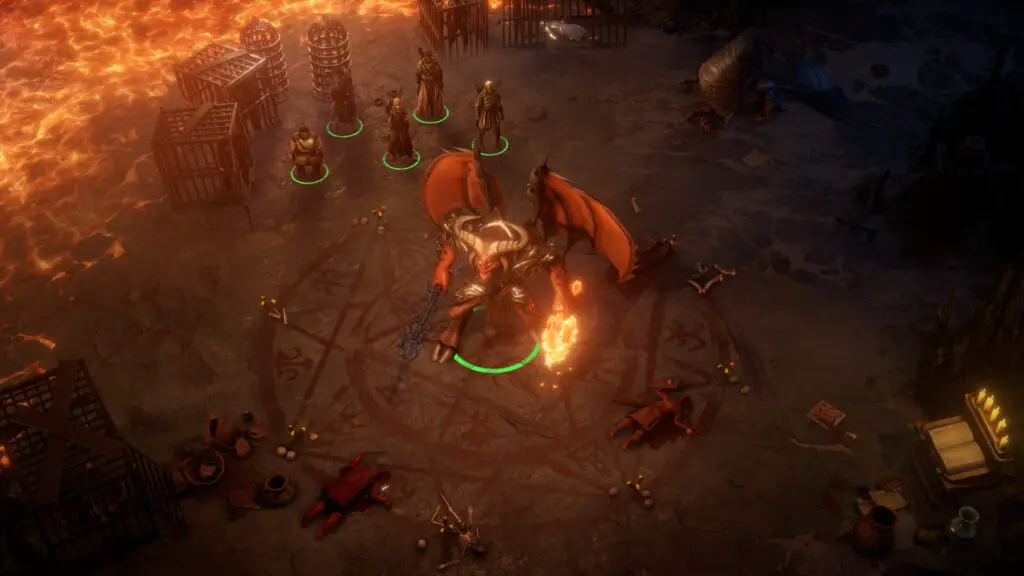
Going from an Angel to a Lich is a far more significant career change than going from a sword to a bow. In Pathfinder: Wrath of the Righteous, your Mythic Path determines both your powers and the persona you take on during the Crusade. One path is that of Celestial aid and Divine Judgement; the other is that of commanding the Undead. Human resources would probably be very pleased to get a heads-up.
This is why you’d go back to Owlcat’s RPG. Mythic progression ties character progression to the story with certain paths requiring specific story triggers and narrative decisions before you can fully commit to them. A different path will alter how the other characters react to your transformation and what kind of figure you end up as at the heart of the campaign.
For the most stark contrast, pick a path completely at odds with your original one and build the new character around that. An Angel to Lich replay is a perfect example of this, though the principle is broader in scope and is about rethinking your protagonist’s values and the way they use their power.
SaGa Emerald Beyond
One playthrough is only the beginning.

When talking about SaGa Emerald Beyond, “worth playing twice” is probably a bit of an understatement. The game has six protagonists across five story arcs, but selecting another lead is only one way to discover something different. Replaying the same protagonist can introduce new events and developments, while decisions and visits to its various worlds affect how their stories unfold. The first ending does not necessarily exhaust what that character’s journey has to offer. That makes Mido a very useful starting point for a second playthrough.
Rather than just jump straight to another protagonist, go back to his route and see what the variations are. The dev team obviously put a lot of effort into creating enough of the alternate paths and developments to allow for multiple runs.
There’s a very pragmatic reason to keep going as well. Battles are all about the timeline, with formations, new techniques learned, and United Attacks providing the opportunity to coordinate the party’s actions. Going back to the narrative with a better understanding of those systems gives you something to bring to the next run in terms of story variation. That’s what I’d recommend to people who are prepared to revisit an RPG.
These are my top picks for anyone wanting to go in for a second playthrough of an RPG. I know there are loads of games out there and loads of others that would have their own merits and reasons for being on such a list. I’m always up for suggestions in that regard. In the meantime, I hope you’ve had a great day. See you at the next one. Ciao
