


Here’s a list of some RPG and strategy classics that still hold up perfectly today and that, in my opinion, absolutely deserve a spot in every genre fan’s library.
Before anyone charges in with a flaming keyboard and a Wikipedia link, let me say this loud and slow: these picks are in no special order. None. Nada. Zero. I didn’t rank them. I didn’t consult a committee of nerd monks hidden in a mountain temple.
These are simply my personal turn-based classics, the ones that still slap harder than my old math teacher when I forgot homework. You might have your own holy list. Fantastic. Go ahead and drop your favorites, your rants, your childhood trauma stories, whatever you want, in the comments.
We all bond over shared suffering anyway. But for now, let me walk you through ten timeless games that still hold up today, even if your GPU doesn’t understand why you’re booting half of them.
Divinity: Original Sin 2: The Tactical Sandbox That Lets You Burn the World

Let’s start with the one that basically turned turn-based combat into a physics experiment. Divinity: Original Sin 2 is what happens when a team wakes up one morning and says, “What if we made a game where absolutely everything can explode?” It is chaos wrapped in brilliance.
Fire mixes with oil, poison clouds mix with sparks, blood turns into ice, and ice turns into broken femurs. You get the idea. Every fight feels like you’re MacGyver trapped in a fantasy murder pit with barrels rigged to blow at any moment. You can’t button-mash your way out of this.
You either think, plan, manipulate terrain like a deranged architect, or get turned into barbecue. And somehow the story keeps pace, dark, funny, dramatic, and full of characters who talk like they’ve been through ten divorces and one cult. It’s messy in the best way, and it holds up because nothing has dared to be this creatively dangerous.
Invisible Inc: Stealth, Style, and Stress in Perfect Turn-Based Harmony

Now let’s talk about a game that took stealth, ripped out all the bloated cinematic nonsense, and refined it into pure tactical cocaine. Invisible, Inc. is a cold, sleek, high-pressure masterpiece where every turn feels like you’re breaking into the Pentagon using only duct tape, caffeine, and sheer panic.
The art style is sharp, clean, almost comic-book noir, the kind of look that ages like Jennifer Lopez, meaning it doesn’t. You could show this game to someone today, and they wouldn’t even guess it’s years old.
Missions are tight, unpredictable, and cruel in that “come on, I can totally do better next time” way that ruins your sleep schedule. You sneak, hack, distract, teleport, stun, and disguise; every move is deliberate, every tile matters, and every guard patrol feels like they trained specifically to ruin your night.
And the best part? When you fail, it’s not because the game cheated. It’s because you got greedy. Invisible, Inc. is turn-based espionage perfection: stylish, smart, and constantly judging your mistakes like a disappointed parent.
XCOM 2: The Game That Lets You Miss a Shot From Three Inches Away
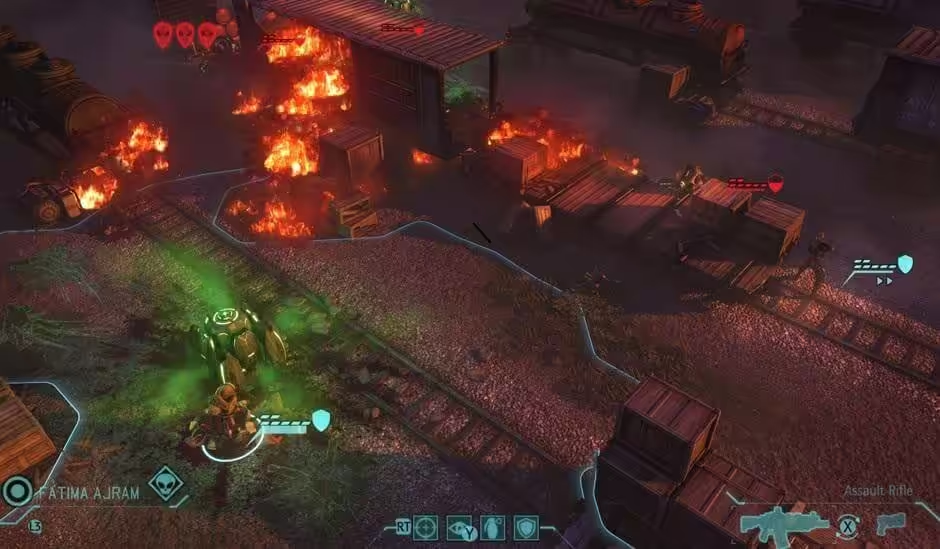
Veteran turn-based players don’t have PTSD; they have XCOM-STD: Sudden Tactical Disappointment.
If there’s a game that defines “punishing but you keep coming back anyway,” it’s XCOM 2. You name your squad. You get attached. You start believing in them. Then BOOM, your best soldier whiffs a 95% shot and gets turned into alien salad.
The game’s real enemy isn’t the aliens. It’s math. The tension is unmatched: concealment ambushes, desperate last stands, and missions where you’re one tile away from extracting your team, but the game says, “Nah, let’s make you sweat a little more.”
Base-building feels like managing the world’s most depressing underground startup. The AI plays dirty. You cry. You reload the save like a coward. And yet XCOM 2 still holds up, because no one does “strategic pain but make it entertaining” better.
Dragon Quest XI: Proof That Classic Turn-Based Combat Never Needed Fixing

People love to say turn-based games are “outdated.” Those people have clearly never touched Dragon Quest XI. This game walks in wearing a perfectly ironed suit and says, “You want classic turn-based? Fine. I’ll do it better than everyone.” And guess what? It does.
Clean menu-based combat. Clear roles for every character. Buffs that actually matter. Debuffs that don’t feel like a waste of a turn. And a world so bright and colorful it could cure seasonal depression.
The charm is off the charts, slimes smiling like they know something you don’t, goofy monsters doing ballet kicks, and a cast you actually care about. If turn-based combat were a religion, this game would be its polished cathedral, complete with stained glass slimes.
Persona 5 Royal: The Game with So Much Style It Should Be Illegal

Persona 5 Royal shouldn’t even be allowed to look this good. The menus have more swagger than half the protagonists of modern games. Every transition, every attack animation, every crit, boom, flair, zip, pop, like a graphic designer overdosing on espresso.
But beneath the flash is a turn-based system that demands brains. Exploit weaknesses or get slapped. Plan ahead or get erased. And meanwhile, you’re juggling school life, friendships, exams, part-time jobs, demons in bondage gear, and a talking cat telling you to go to sleep.
The social sim ties directly into combat, making every relationship feel like part of your tactical engine. It’s stylish, smart, funny, emotional, and still the gold standard of modern turn-based RPGs.
Endless Legend: A Fantasy 4X So Beautiful It’s Basically Digital Art
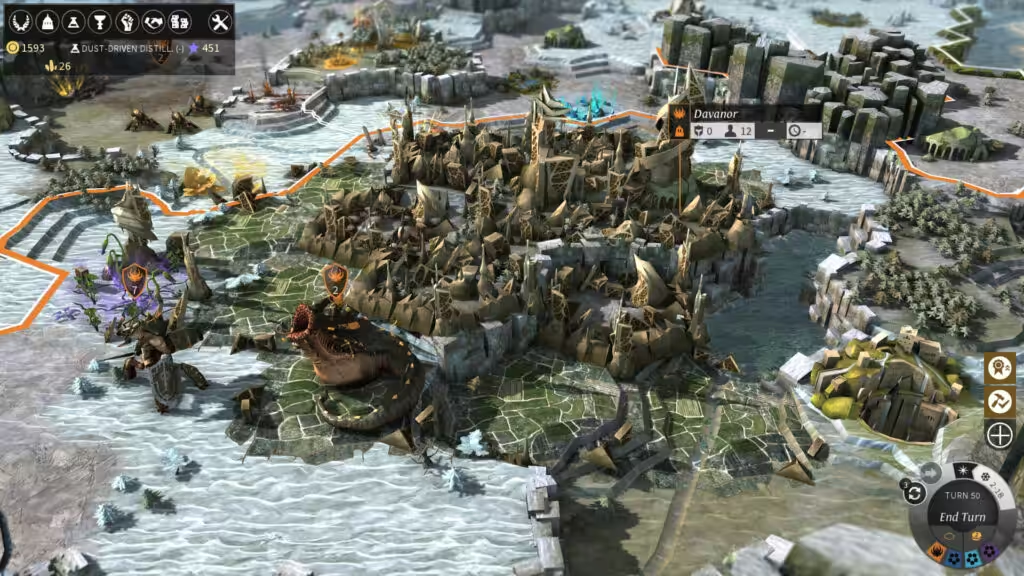
Endless Legend isn’t just a game, it’s a painting someone accidentally made playable. When it launched, it looked so good that people assumed their PCs were lying to them. And a decade later? It STILL looks like it was released yesterday.
The biomes are lush, alien, strange, and gorgeous. The colors pop. The faction designs look like they were handmade by a studio that said, “Let’s make everything absurdly beautiful just to flex.” Even the UI looks good, how often can you say that about a 4X game? Mechanically, it’s a bold take on the genre: asymmetric factions that actually feel different, tactical battles with positioning and unit synergy, and a world that evolves like it’s alive.
Endless Legend holds up because it didn’t chase realism. It chased style. And style doesn’t age, it just waits for everyone else to catch up.
Final Fantasy X: The Last Glorious Era Before Square Enix Went Full Action Movie

Final Fantasy X is the moment turn-based combat peaked in the series. The conditional turn-based system shows you exactly who’s acting when, letting you manipulate the timeline like a diet version of Doctor Strange.
Swap characters mid-battle, shut down enemy turns, stack debuffs, and summon gods to vaporize whatever insulted you. The Sphere Grid still feels great, a progression system that respects your time and doesn’t drown you in twelve trees of glittery garbage. The story? Emotional.
Dramatic. Sometimes cringe, sometimes brilliant, always memorable. And yes, the laughing scene is still weird. But the combat? Untouchable. This is turn-based comfort food done with expert-level seasoning.
Phantom Doctrine: Cold War Turn-Based Espionage Aged Like a Perfect VHS Tape
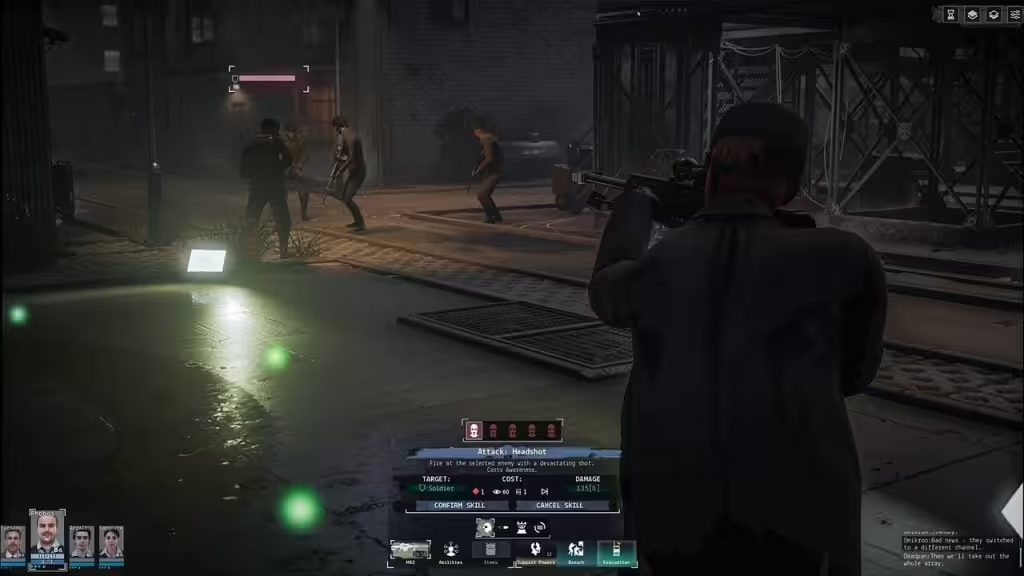
Phantom Doctrine is turn-based tactics with a nicotine-stained Cold War soul. It’s a grimy, paranoid, cigarette-smoke strategy game set in the 1980s, back when spies wore bad suits, listened to worse music, and trusted absolutely no one.
And because the whole aesthetic is rooted in that retro espionage vibe, the graphics never age. They’re not trying to look realistic. They’re trying to look Cold War, and they nail it so hard you can practically smell the rotary phones and stale office coffee.
Gameplay-wise, it’s all about infiltration, disguises, paperwork conspiracies, long-range surveillance, silent takedowns, and missions where you feel like you’re one turn away from being burned by your own agency.
It’s slower, more cerebral, and more methodical than XCOM, like the chess-playing cousin who smokes a pack a day and talks about dossiers at dinner. Phantom Doctrine holds up because the style is eternal, the tension is delicious, and the world is dripping with 1980s paranoia you can slice with a butter knife.
Baldur’s Gate: When Turn-Based Combat Goes to the Gym and Gets Shredded

Baldur’s Gate 3 didn’t just raise the bar for turn-based RPGs; it welded the bar to a rocket and launched it into orbit. Everything is interactive. You can shove people off cliffs, blow up barrels, electrify puddles, charm enemies, and steal pants mid-fight; it’s glorious.
Every encounter feels like a puzzle box where the solution is usually “violence but creative.” Companions have enough personality to run their own spinoff shows, and the voice acting could make a grocery list sound dramatic.
The game gives you freedom, chaos, and fireworks in equal measure. It’s the kind of turn-based game that makes real-time combat look like a tantrum. This game will stand the test of time forever.
Civilization Series: The Franchise That Invented “One More Turn” Insomnia

No list of turn-based classics survives without Civilization. Pick your favorite entry; they all share one universal truth: you will tell yourself “Just one more turn” until the sun rises and your coffee mug files for divorce.
You guide a sad little tribe into an empire that crushes nations through science, culture, religion, tourism, or overwhelming passive-aggressive diplomacy. Every turn is a dopamine drip—build this, research that, upgrade this, panic because Gandhi declared war on you again.
Civilization holds up because nothing else scratches that exact itch: slow-burn strategy, long-term planning, and the joy of bullying history into your personal sandbox.
Turn-based games are not old. They’re not outdated. They’re not relics. They are strategy, storytelling, tension, comedy, heartbreak, and brainpower all taking turns to slap you around.
These ten are the ones that still hold up for me, but now it’s your turn. You think I missed something? You think Tactics Ogre deserves a seat? Or maybe Advance Wars? Fire Emblem? Whatever your list is, drop it in the comments. Argue. Debate. Flex your nostalgia. That’s the beauty of this genre: we all play at our own pace, then meet back here to compare the bodies.

