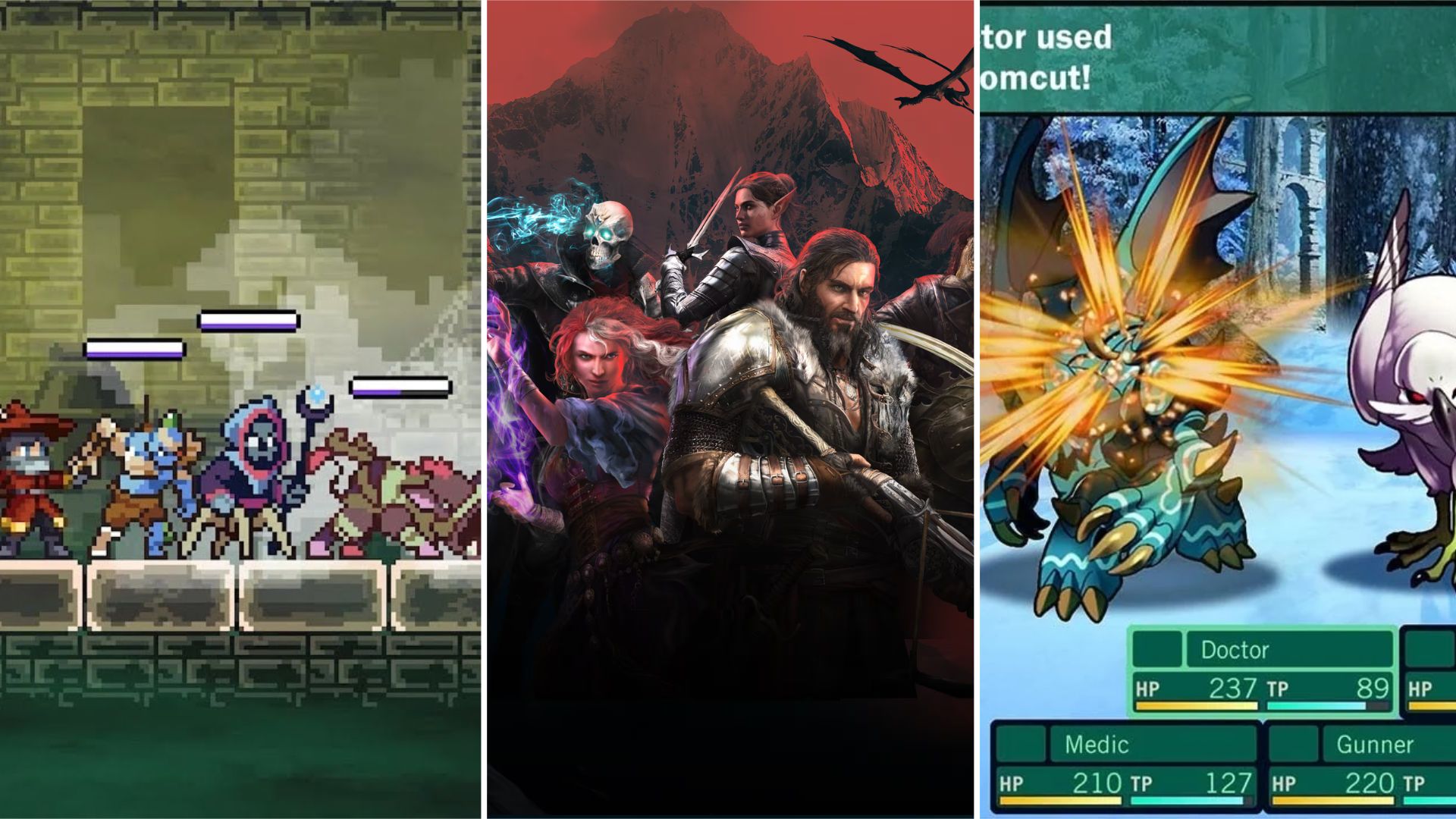
These top-tier RPGs feature combat systems that make excellent use of status effects, often turning them into an essential part of the experience
You’ve definitely been there, haven’t you? In the middle of an RPG fight and you’re just relying on physical attacks and damage spells pretty much exclusively, ignoring the status effect abilities entirely. It’s not necessarily down to the fact that you just don’t care about status effects. Sometimes RPGs just don’t give you enough of a reward for using them at all, or indeed there’s just never any situation in the game where you actually need to use a status effect.
Well, today I’ve decided to have a proper look at the RPGs that do things differently. The RPGs where the various debuffs (poisoning, stunning, putting the enemy to sleep etc) can actually make a difference in the course of battle. In some cases it’s not just a viable option to use these so-called secondary abilities, it’s absolutely essential if you want to survive at all.

I’ve picked 10 turn-based RPGs that are first and foremost great games, but which also have combat systems where status effects are absolutely central. These are the games where you’re not just encouraged to go for the maximum damage, but where actually finding the right way to weaken or disable an enemy can be every bit as satisfying as landing a massive critical.
Status effects are worth a turn when they change what happens next. Poison can keep dealing damage while a party recovers, a bind can prevent a dangerous skill, and paralysis can create an opening for other characters. These ten turn-based RPGs give those decisions a substantial role in combat. Each handles resistance and timing differently, so an effective strategy starts with understanding which conditions a target can suffer and what the party can do with that opportunity.
Monster Sanctuary
Building Teams Around Chill and Congeal

Aside from being one of my very favorite games, Monster Sanctuary from Moi Rai Games has a combat system which really rewards the player who builds their teams around debuffs and status effects.
Monster skill trees contain passives which will enhance a particular condition, allow for additional stacks or even give you a new benefit when the condition is applied. Selecting the right monsters can turn an ailment into a continual source of damage and give your support actions a real role in the kill.
Chill and Congeal are a good example. Chill reduces an enemy’s mana regen and Congeal’s passive has the effect that a chilled enemy takes damage equal to the amount of mana they’re missing at the start of their turn. With passives that give you extra Chill stacks you can really drive that mana deficit and then use your other actions to heal and/or raise shields. A pretty clear example of what I mean by a system that rewards the use of status effects.
Etrian Odyssey II HD
Disabling Enemy Skills With Targeted Binds

Etrian Odyssey II HD gives status specialists a very clear role in party building, and it’s probably something you don’t find in your average JRPG. Hexers can of course put ailments on enemies, Dark Hunters can bind an enemy’s head, arms or legs. Each bind will prevent the use of any skills that are associated with that body part so knowing what skills your enemy has is useful in terms of deciding what to bind.
If you’re up against an enemy that relies on a head skill then a head bind will remove that threat whilst the party are attacking or recovering. A more complex set up is to bind all three body parts prior to using the Dark Hunter’s Ecstasy for some serious damage. These are all set-ups which depend on you successfully applying the relevant binds, so target resistance and the time it takes to get the bind in will be important.
A surprisingly deep system (you wouldn’t expect it from a Japanese dungeon crawler really), but there it is, and it’s absolutely excellent. I would definitely recommend giving it a go.
Darkest Dungeon
Combining Blight Damage With Enemy Stuns

I think one of the reasons Darkest Dungeon became such a huge success is just how central status effects are to the combat system (Bleed, Blight, Stun etc). They’re absolutely fundamental to the way the game works and have a massive impact on how efficiently your party can get through the fights.
They can often be the difference between a fight you can actually win and one that’s just going to end in disaster. Bleed and Blight can stack, and their damage is Protection-bypassing, so they’re useful against the sorts of enemies that just ignore direct damage. Stuns are useful in that they take an enemy action away from them, which in turn can prevent the damage or stress that action would have otherwise caused.
A Plague Doctor can apply Blight to a heavily protected enemy and then another hero can stun it prior to it acting. The enemy still takes its scheduled Blight damage when its turn comes around, even if it can’t attack. Resistances do matter in this scenario, though, and the temporary Stun resistance you gain upon recovering makes repeated lockdown a bit less reliable. Another excellent example of how you can add in altering status effects to a combat system.
SaGa Scarlet Grace: Ambitions
Poison Damage and Carefully Timed Stuns

Another excellent example of a well-thought-out status effect system is found in SaGa Scarlet Grace: Ambitions, where status effects are part of a shared pool of battle points and a visible turn timer. Stun is particularly useful if it lands prior to the opponent’s action, and Poison can be a very effective way of slowly whittling down enemies with large health pools. The value of a move is in part dependent on what enemy action it prevents or makes it easier to survive.
Poison a tough target early on and then use your later turns to interrupt a dangerous enemy or kill their allies. As Poison does damage based on maximum HP, it can continue to contribute even as the party is spending its limited resources elsewhere. Enemy weaknesses still drive the plan: if you’re going in with a Poison or paralysis strategy, you need a target that can actually be Poisoned.
Chained Echoes
Preparing Stronger Fire Attacks With Oil

Another game I absolutely adored, and one I really hope gets a sequel at some point in the future, is Chained Echoes. It’s an indie JRPG-style title which really encourages you to chain up status effects across your party in order to get the most out of combat.
Blind can nullify physical attacks, and elemental conditions will set the enemy up for a much more damaging follow-up. Repeated control effects also require some planning as resistance can increase the number of times you’ll need to apply the effect, making the timing of the ailment important over the course of a much longer fight.
One simple combo is Glenn’s Oil Slash to apply Oil, then a fire attack from Lenne. Oil boosts the damage of the next fire attack and is used up when that attack lands. The actual job is to sequence the turns so that the attack you want to boost actually gets the bonus rather than the Oil being used up on a much weaker fire attack first.
Crystal Project
Managing Threat to Disable Physical Attacks

Let’s move on to another game that some of you may have never even heard of: Crystal Project. The dev is already working on a sequel and that’s excellent news as the game is absolutely brilliant and the combat system is absolutely fantastic in terms of the amount of combat information it gives you. You get a huge amount of information about enemy intent so you can plan your disabling effects.
You can have a party of damage dealers and people who can disrupt enemy actions. Blind, Sleep and interrupts all work to create space in which you can recover or simply stop a particularly nasty attack from connecting.
Against an enemy that’s got a physical attack on the cards a Rogue right at the bottom of their threat list can use Eye Gouge. The Blind effect causes physical attacks to miss for one turn, giving the rest of the party a chance to get in. The threat list is of course crucial here as you need to have that Rogue right at the bottom of the list as part of your setup for that defensive action.
Divinity: Original Sin 2
Breaking Armor to Enable Control Combinations

You’re probably thinking, “Right, he’s definitely going to leave out one of the absolute best RPGs ever made when it comes to experimentation with elemental interactions and status effects.” Well, of course he won’t! Here it is: Divinity: Original Sin 2.
One of the best examples when it comes to status effects and battlefield manipulation. Armor is key when it comes to applying status effects. Physical and magical armor will block different conditions so reducing the appropriate armor will often be the way to prepare an enemy for a control. Party members can be arranged to attack in such a way as to expose a target, then use that opening for a knockdown, stun or transformation.
After you’ve stripped the enemy’s physical armor, combine Rupture Tendons with Chicken Claw. The transformation will prevent the normal action, Rupture Tendons will do damage on movement and if the chicken runs that will in itself produce additional damage. It’s all dependent on having stripped the armor first and the enemy moving, so it rewards setup but doesn’t guarantee the same result against every opponent.
Epic Battle Fantasy 5
Increasing Poison Damage Through Tired

I honestly don’t know how to praise the Epic Battle Fantasy series enough. It’s full of funny moments, loads of clever references, a great world to get stuck into, and an absolutely staggering amount of depth under the surface, especially in terms of the combat system.
For this one, I’ve gone with Epic Battle Fantasy 5 as it’s the one that really encourages you to mix and match status effects with the appropriate damage types to get the most out of the combat system. Wet can be used to prime a target for Thunder damage, and various other status effects will alter which damage types are most effective. That gives support spells a very clear offensive raison d’etre, particularly when you have several members of the party that can be involved in the same setup.
Poison and Tired work very well together against a vulnerable enemy. Tired increases incoming Bio damage (which includes the damage from Poison’s DoT). The Poison ticks get that benefit without using up any of the Tired stacks, so both effects can continue to contribute while the party goes and does other things. It’s a good reason to apply an extra condition even if you’ve already got Poison on. A game you should try besides its great combat system.
Cassette Beasts
Turning Elemental Matchups Into Status Effects

Cassette Beasts has status effects baked into its elemental interactions. Type matchups can apply buffs and debuffs and can even change a creature’s type. So when you pick an attack you’re also picking the reaction that will follow. That makes the moves available to a monster very much a function of how the team as a whole will be managing the fight.
Using a Poison-type move against a Plant-type opponent will trigger Poisoned via the type interaction. The condition deals damage equal to the victim’s max HP at the end of its turn, providing a continuing source of damage to the team. Carrying a Poison move therefore gives you a way of setting up the condition via a type matchup and makes the type chart a useful tool when it comes to planning your status strategy.
Baldur’s Gate 3
Paralyzing Humanoids to Set Up Critical Hits

If Divinity: Original Sin 2 is on that list, then there’s absolutely no way in hell I’m leaving out Baldur’s Gate 3. The combat system is just phenomenal in terms of freedom and control, with a huge number of opportunities to swing a battle in your favor through the use of status effects and crowd control.
Of course, their effectiveness is going to be contingent on a number of factors: saving throws, creature type, and quite frequently whether your spellcaster can maintain concentration. That’s what makes playing with the mechanics so fun in the first place. A successful disabling spell will deny the enemy its action and leave it more vulnerable to the characters who go next.
Hold Person is the perfect example of the payoff. If the target fails its saving throw it becomes completely immobile and unable to act, and any attacks made from within 10 feet of it will be critical hits. Allies can therefore rush in and deal a lot of damage in that window. The caster has to keep concentration and the target gets another Wisdom save at the end of each turn so the party should make the most of that opportunity.
And there you go, 10 RPGs that in my book are definitely the ones to go to if you’re after some real experimentation with status effects, elemental interactions and all manner of nasty combinations. Now I’m interested to hear what you think. Have I missed any games that should be on this list? I’m always on the lookout for interesting game suggestions, so please do throw in your own if you have any. You can find me on my social media channels, on Discord and in our Reddit community. Until next time, happy turn-based gaming! Ciao
