

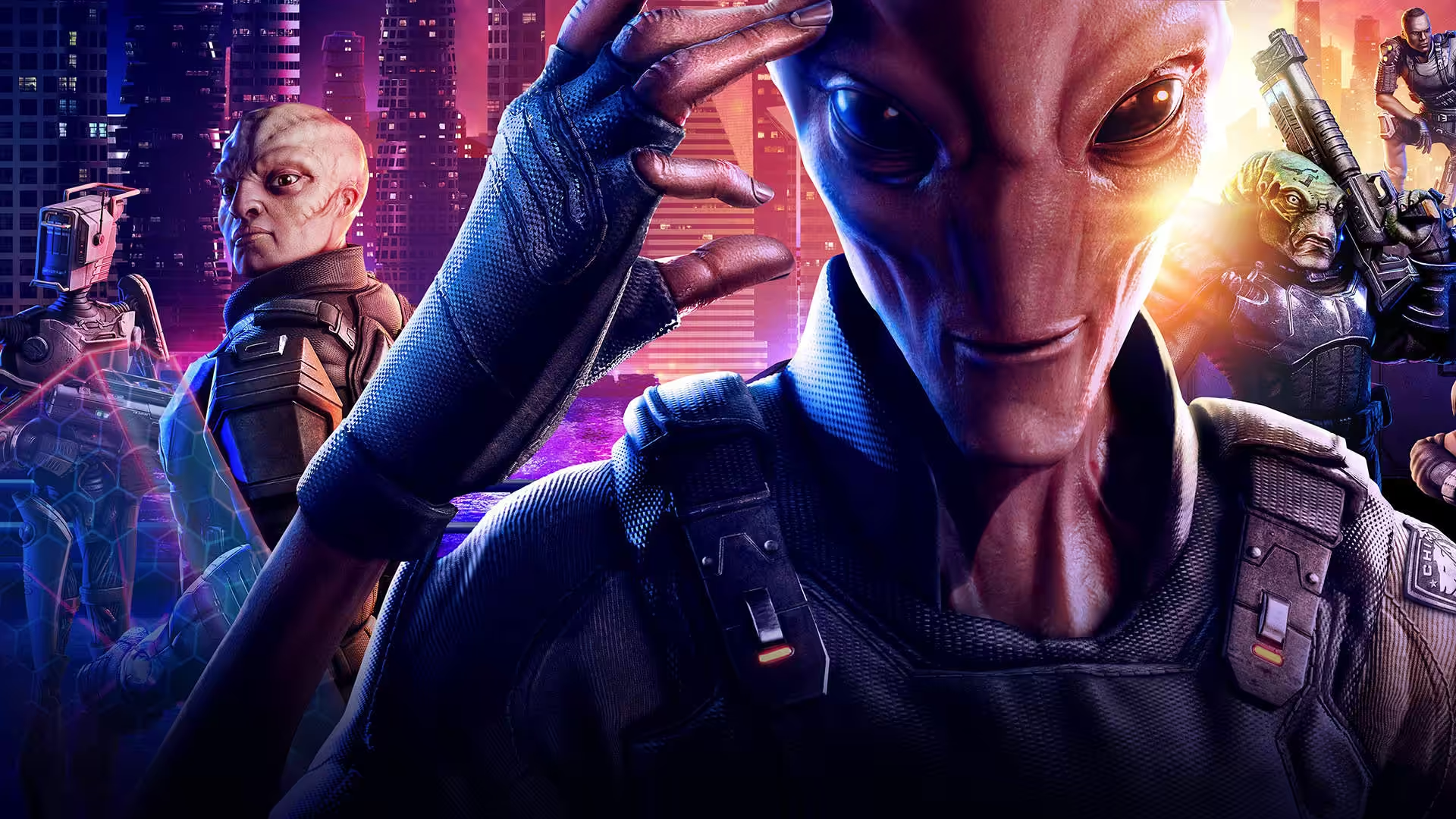
Every gamer thinks they know what makes a great turn-based game. They’ll spout the usual sermon: “good mechanics, balanced gameplay, immersive story.” Yeah, thanks, “Captain Cliché”.
The truth is, a real gem has a cocktail of elements that grab you by the neurons, lock you in your chair, and whisper, “Sleep? Shower? Relationship? Forget that noise. You belong to me now.” Let’s break it down.
Gameplay & Mechanics
A great turn-based game is basically chess on steroids with explosions. Every move should feel like it’s pulling the strings on destiny, screw up, and your veteran sniper eats a plasma bolt to the face. But the beauty is, when you lose, you know it’s your fault. Not the game’s. It punishes stupidity, not loyalty.
Meaningful Choices
If your decisions don’t make you sweat like you’re signing divorce papers, the game’s a fraud. Do you sacrifice the rookie to save the medic? Do you build a tank or pay your starving citizens? These choices aren’t cosmetic, they’re gut punches wrapped in pixels.
Challenge That’s Fair (Sort Of)
A masterpiece doesn’t hand out victories like participation trophies, but it also doesn’t treat you like a lab rat in a sadistic puzzle dungeon. It’s that razor’s edge: you’ll curse the devs, swear you’re uninstalling, and then… two minutes later, you’re back for another hit. That’s balance.
Strategic Depth
Good turn-based games make you feel like Napoleon, except instead of marching armies across Europe, you’re shoving little dudes into cover, juggling grenades, and screaming at “RNGesus.” Positioning, terrain, unit combos, all of it matters. If you’re not calculating three turns ahead, you’re already dead.
Satisfying Rewards
Kill an enemy, complete a mission, survive by the skin of your teeth, there better be loot, XP, or at least a shiny new toy to play with. Nothing fuels an addiction like the dopamine hit of a bigger gun, a perk that breaks the game, or watching your soldier level up from “useless meat shield” to “alien-slaying demigod.”
User Interface
A good UI is invisible. A bad one is like trying to read IKEA instructions while blindfolded. The best games let you juggle a dozen menus and five spreadsheets while still feeling like you’re playing a game—not filing your taxes.
Presentation & Style
Even though it’s turn-based, it should feel like a goddamn action movie. The screen shakes, the soundtrack slaps, and every critical hit makes you want to high-five yourself. If the game looks like a PowerPoint presentation, burn it.
Progression That Matters
Whether it’s leveling up characters, unlocking new abilities, or building a base, the best games make you feel like you’re climbing a mountain, not walking a treadmill. Growth must feel earned, not like grinding coffee beans for six hours to unlock “Slightly Bigger Gun +1.”
Story & Characters
Turn-based games don’t need a story, but when they have one, it adds another layer of realism. Strong narratives and memorable characters are like emotional landmines—you’re invested, and when the game rips them away, you actually care. The difference between “meh” and “holy crap” is when you remember your squad’s names 10 years later.
Replayability
If the game ends and you don’t immediately think, “Okay, but what if I try it this way,” then it’s disposable. True gems give you alternate paths, customizable teams, or story branches that keep you crawling back like an addict who swears this time they’ll quit. Spoiler: you won’t.
So how do you know your favorite turn-based game checks all these boxes? Simple, you don’t. Because checklists are boring, and no gamer ever admitted they’re hooked by mechanics or UI.
You know when the symptoms hit. When your life starts bending around the game, when the lines blur between reality and turns, that’s when you’ve got a true classic on your hands. And yes, sometimes those symptoms require therapy.
Now, let’s diagnose the twelve signs that prove your turn-based game isn’t just good, it’s terminal
The Blind Date Symptom
You know a turn-based game is peak perfection when you’re on a blind date and the girl is hotter than a centerfold in yoga pants, but instead of paying attention, you start explaining why the AI in XCOM 2 missing a 95% shot is basically a metaphor for life.
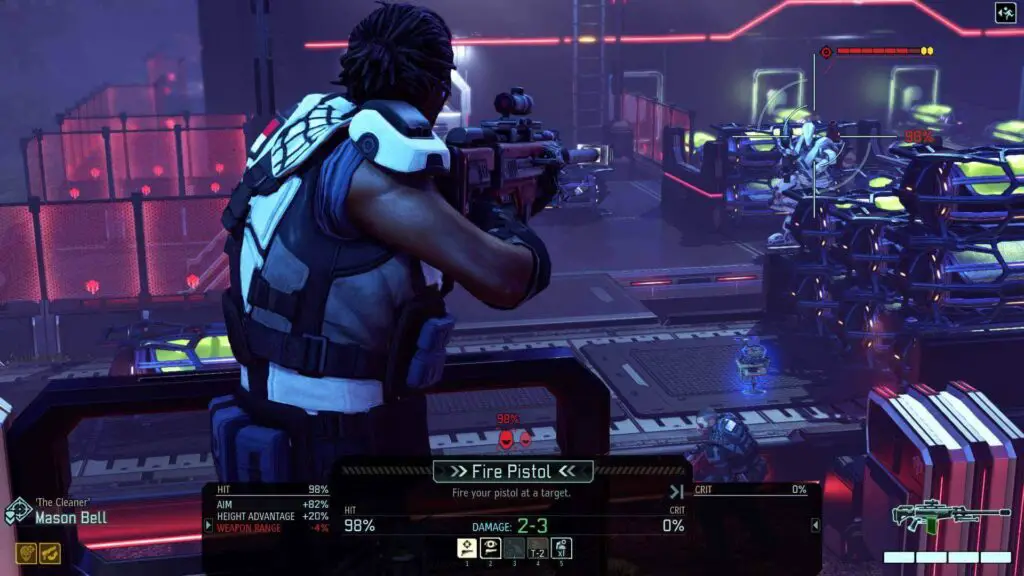
By dessert, she’s rolling her eyes, until you slide your laptop across the table like a drug deal, and suddenly she’s asking, “So wait, can I customize my squad’s armor?” If the night ends with her on your couch, not with you trying to flank her, but you, teaching her how to flank the enemy, you know the game’s a certified masterpiece.
Treatment: Prescribe one night of eye contact, three compliments, and dessert without mentioning hit percentages. If symptoms persist, uninstall XCOM before the second date.
The Marriage Holiday Symptom
When you’ve been married long enough that your wife announces she’s going away with her girlfriends, and instead of sulking like you usually do, you shout, “God bless! Want me to upgrade your flight to first class?”
You’re not being generous; you’re making sure she’s out of Wi-Fi range so you can deep-dive 200 uninterrupted hours into Civilization VI. And when she calls from Cancun saying, “I’m thinking of extending the trip another week,” you don’t hesitate; you already wired her the cash. That’s not love for her. That’s devotion to your turn-based overlords.

Treatment: Prescribe one reality check, two bouquets of apology flowers, and mandatory phone calls where you pretend to miss her more than your empire. Side effects may include actual divorce if you forget the “pretend” part.
The Dreamworld Symptom
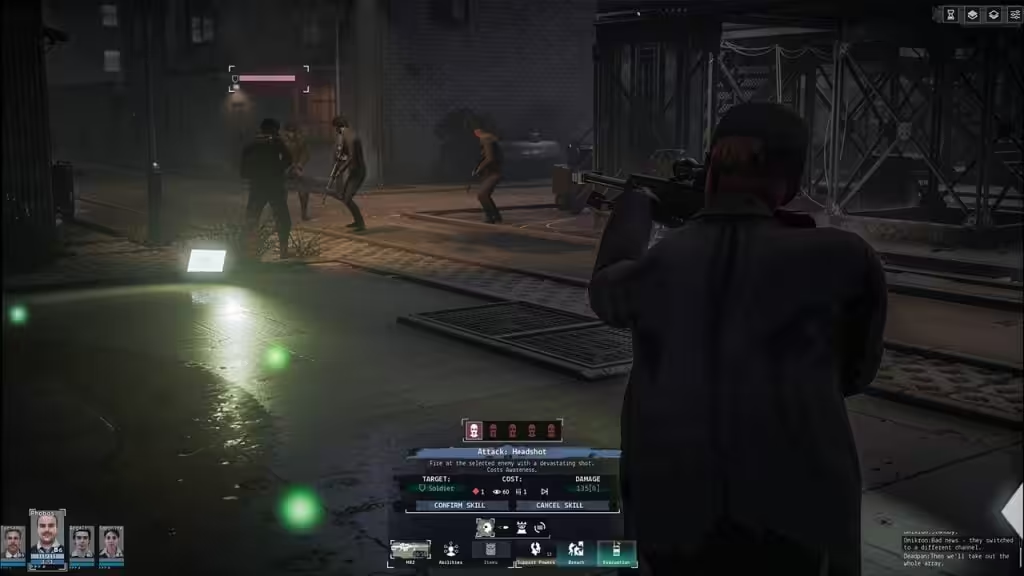
When a game worms so far into your skull that you don’t dream about women, money, or even food anymore, you dream about Phantom Doctrine.
Your subconscious recruits spies in your sleep, you wake up exhausted with bruises from thrashing in imaginary firefights, and your wife is convinced you’re having seizures. But here’s the kicker: she also notices the smug little smile on your face mid-spasm.
Because even in your sleep, you nailed that perfect flanking maneuver. That’s when you know it’s not just a game, it’s your second life.
Treatment: Nightly injections of melatonin, or a weighted blanket shaped like Kevlar armor. Warning: may increase tactical dreams.
The Bathroom Break Symptom
You tell yourself it’s just a quick mission on the toilet, five minutes tops. But then the mission goes sideways, reinforcements arrive, and before you know it, three hours have passed.
When you finally stand up, your legs give out like a rookie sniper under fire. You crawl out of the bathroom, half-crippled, while your family wonders if you’ve developed a rare medical condition. Nope. Just turn-based greatness.
Treatment: One squat rack, two blood circulation exercises, and a gaming bidet with lumbar support.
The Work Email Symptom
You’re drafting a professional, serious email to your boss. Something about quarterly projections or next week’s client call. You hit send and only afterward realize you signed off with your in-game faction’s war cry: “For the glory of the Reapers.” HR schedules a meeting. You don’t even care, you’re secretly proud.
Treatment: Install Grammarly with a “Nerd Mode” filter. Or just hire your boss into your squad, instant immunity.
The Kid Neglect Symptom
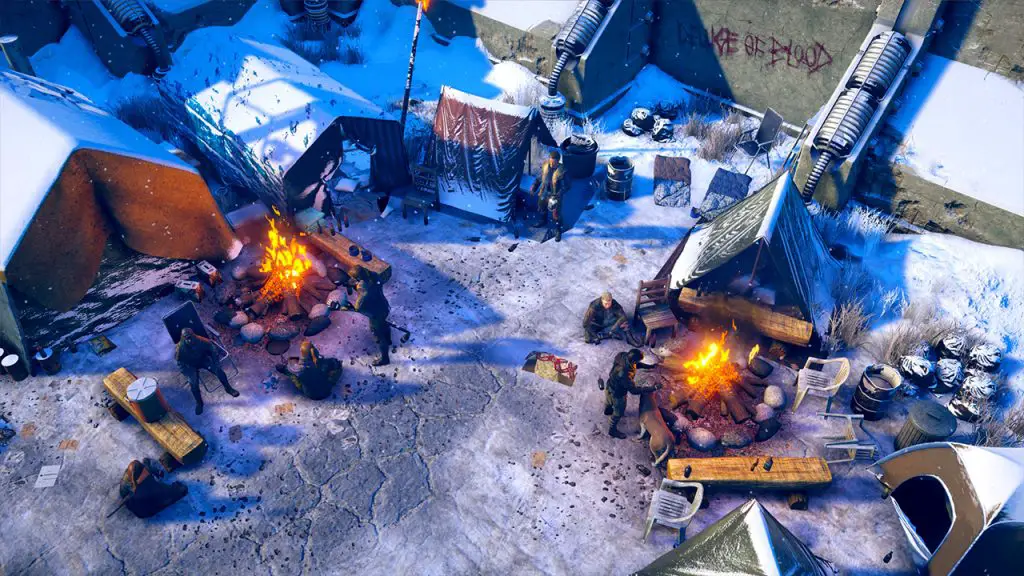
Your kid brings you math homework. Long division, fractions, decimals, the usual parental gauntlet. But you wave him off with, “Figure it out, daddy’s busy managing troop morale in Wasteland 3.” His grades tank, his teacher calls, and you think: he’s learning real strategy. Isn’t that more important?
Treatment: Enroll the kid in a STEM program disguised as a LAN party. Side effect: your 10-year-old beats you at your own game.
The Funeral Symptom
You’re sitting at a funeral, black tie, somber music, the whole deal. Everyone else is mourning, but in your head, you’re renaming the deceased after your favorite XCOM soldier.
You imagine the little barracks memorial screen popping up. You suppress a smile, which makes everyone think you’re heartless. You’re not, you’re just giving the dead a heroic send-off in your squad.
Treatment: Prescribe one firm slap from a grieving relative and a forced week offline. Side effects may include finally crying, but only when your Steam backlog reminds you of all the fallen heroes.
The Sex Replacement Symptom
Your partner leans in, whispers, and makes the move. But you’re in the middle of a siege, three units from victory. You respond with, “Baby, I can’t. The city walls are about to fall.” She storms off. You don’t chase her. You’re already climaxing, digitally, when the enemy stronghold collapses under your iron will.
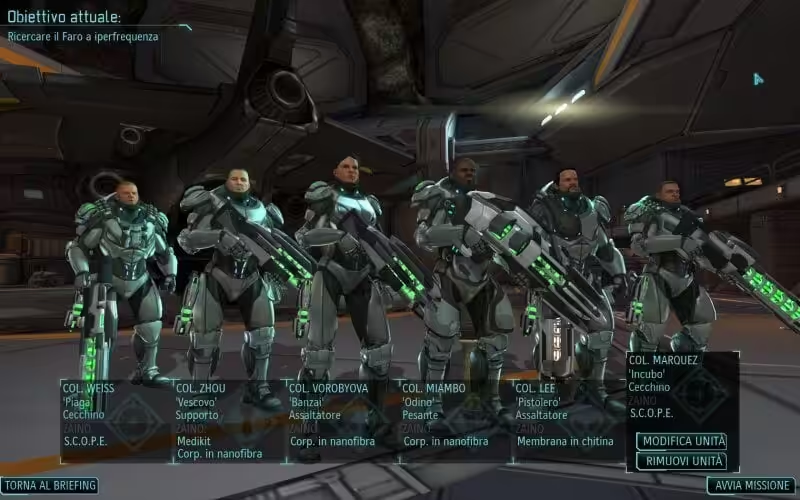
Treatment: Win her back with a new kind of co-op; she takes cover under the desk while you keep commanding troops. Warning: unexpected multiplayer climax may sync with the fall of the enemy stronghold.
The Alarm Clock Symptom
You set your alarm for 7 a.m., convinced you’ll stop gaming and get some sleep. But it’s 6:57 a.m. and you’re still glued to the screen, eyes bloodshot, one hand on the mouse, the other on a lukewarm coffee. The alarm goes off, and instead of sleeping, you hit snooze on your actual life.
Treatment: Forget sleep, mainline a triple-shot espresso, slap on sunglasses like you’re hiding from paparazzi, and shuffle into work looking like a hungover rockstar who just lost a fight with a Red Bull truck. Warning: side effects may include confusing your boss’s PowerPoint with a tactical battle map and calling in sick by turn three.
The Relationship Breaker Symptom
You try to explain to your girlfriend why you’ve been sulking for three days straight. It’s not about her. It’s about Corporal Ramirez, your veteran sniper, who got one-shotted after surviving 40 missions. She doesn’t understand. You tell her losing him hurts more than losing her. She walks out. You barely notice, you’re too busy recruiting Ramirez Jr.
Treatment: Couples therapy with squad-based exercises. If that fails, recruit a new girlfriend with higher hit points.
The Time Dilation Symptom
Normal people measure life in years. Gamers infected by turn-based classics measure it in campaigns. “I was 23 campaigns old when I met my wife. We divorced around campaign 41.” Birthdays, anniversaries, holidays, they’re all background noise. The real calendar is your save file.
Treatment: Calendar app synced to Steam achievements. Warning: may erase your actual sense of time.
The Vaccine Symptom (Extreme Case File)
Every now and then, you find a case so far gone it makes the Funeral Symptom look like a common cold. Meet the guy who mainlined XCOM 2: War of the Chosen until his DNA started spelling out turn orders.
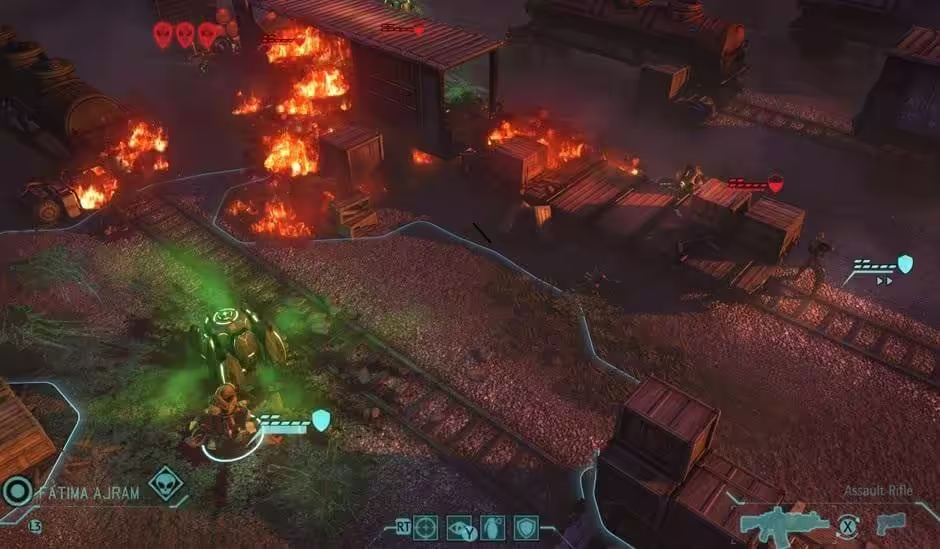
His obsession went beyond late nights and neglected family dinners; he actually built a spaceship in his backyard. Not a toy model. Not a drone. A full-on “call the feds” spacecraft with duct tape thrusters. And sex with his wife? That became turn-based, too.
She had to wait for her Action Points while he roleplayed as a Ranger. He’d trigger “Bladestorm” every time he gave her tingles, his turn again, and again, and again. Foreplay became a chain reaction of endless turns until she begged the devs of life itself for a hotfix.
Things got so dire that the couple sought medical intervention. Enter the experimental vaccine. Problem: It backfired. Instead of curing him, it cranked the paranoia slider to 11.
Every time his wife came home from work, he’d pull out a toy plasma gun and demand she wipe off her makeup, because what if she was one of the Thin Men infiltrators? Dinner turned into interrogation, romance into resistance ops.
And that, my friends, is why researchers are still in the lab, sweating over the impossible: a vaccine for terminal turn-based addiction. Until then? The only cure is another campaign.
Last Words
So, there you have it, what really makes turn-based games great, and the ten symptoms that prove you’ve caught a true winner.
You can deny it all you want, but when you’re skipping funerals, sabotaging marriages, and developing blood clots on the toilet, it’s not a hobby anymore, it’s a lifestyle. And let’s be honest: you wouldn’t trade it for anything, not for sleep, not for sex, not for sanity.
Because the truth is, the greatest turn-based classics don’t just sit on your hard drive; they move into your bloodstream, set up a base in your frontal lobe, and start running side missions in your daily life. They make you laugh; they make you curse, they ruin your relationships and your REM cycles, but they also give you stories you’ll retell until the day you actually flatline.
So next time someone asks you why you’re tired, broke, or divorced, don’t mumble excuses. Stand tall, look them dead in the eye, and say, “Because I was defending Earth from aliens.” That’s not shame, that’s honor.
I’m Brad Deep. Satire’s my weapon, books are my ammo, and games are my therapy bills. Find my books wherever good books are sold, and remember, life’s just another campaign. Play hard, save often, and I’ll see you on the battlefield.

