

Today I’m back with another information-roundup article, much like the one I put together last week for Threads of Time. I always have fun digging up details on promising titles so that we can get the fullest possible picture of a project; its story, gameplay, release window, and any other facts worth knowing.
This week’s focus is Lost Hellden, a game I’ve been following closely ever since its announcement in February 2024.

I have been following Lost Hellden ever since Artisan Studios revealed it in February 2024, and every new trailer, interview, or tweet has only deepened my curiosity. Below, you’ll find the most comprehensive and up-to-date rundown I can compile, drawn from official press materials.
My goal is to provide you with a single, bookmark-worthy article that can evolve alongside the project.
Lost Hellden is marketed as a hand-painted action-JRPG that fuses real-time combat with tactical pauses. Artisan Studios touts an in-house graphical pipeline, Deep 2D, that layers traditional 2-D artwork onto 3-D geometry, complete with dynamic lights, shadows, and weather.
From a distance, the game looks like a living watercolor, but the camera can zoom, tilt, and pan like a modern 3-D title. The result is not quite Octopath Traveler’s diorama look nor Vanillaware’s flat parallax; it’s something in between, and it pops off the screen in 4K footage.
Era, Sin, and the Price of a Soul
The entire narrative unfolds on Era, a planet whose theocratic government forces every newborn through the Nexus Ritual, binding them to one of the Seven Deadly Sins.

A citizen who indulges their assigned Sin eventually mutates into a mindless beast; those who resist supposedly earn a place in the sacred land of Hellden after death. The religion that enforces these rules, Unio, fields an order of warrior-priests called Arkhons to police the population and euthanize the corrupted.
I love how the premise bakes systemic tension into everyday life; it’s not just evil empire oppression, but a metaphysical Sword of Damocles hanging over each character’s head. Thematically, it reminds me of Fullmetal Alchemist’s equivalent exchange combined with the Catholic notion of original sin.
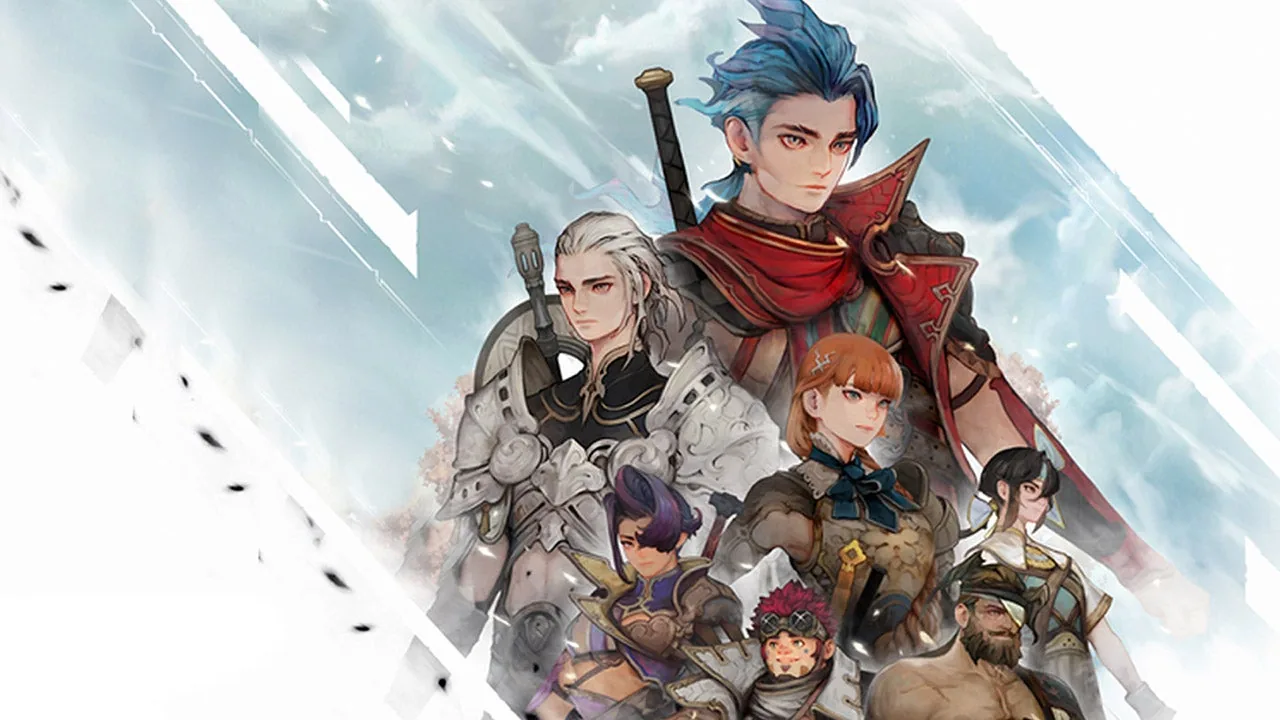
The plot hinges on Era’s first set of twins, Leht Fyrbrand and Cyphel Fyrbrand. The first brother, who inherited all seven deadly sins, is a charismatic trouble-maker; the second, by contrast, is free from any sin, an earnest straight-arrow who becomes our point-of-view character.
When teenage Leht escapes the sanctuary city of Avilah, the High Arkhon dispatches Cyphel, along with veteran mentors Gram Stoneheim and Enki Taillevent, to retrieve him. Artisan confirms eight playable characters in the final roster, but only these four are public for now. I suspect the remaining slots will cover the remaining sins to complete a thematic spread.
That imbalance fuels an arc about codependency, identity, and moral gray zones, territory JRPGs sometimes avoid in favor of stock anime tropes, so I’m cautiously optimistic.
Combat: Action-Phase Meets Reaction-Phase
Lost Hellden is fundamentally an action-RPG, but its combat system, besides being split into two distinct phases, also features a mechanic that effectively pauses the battle (that’s why it’s featured on TBL), giving you all the time you need to decide what to do and which moves to select. The two phases that make up the combat system are:
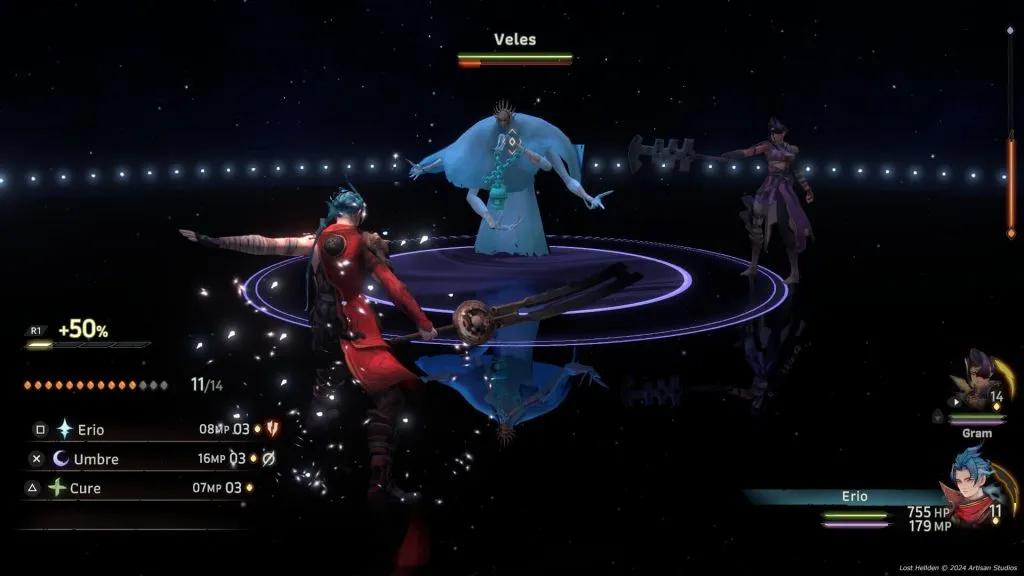
- Action Phase – I control movement, combos, and skill menus in real time (and pause when I want to choose an order) until my Action Pips run dry.
- Reaction Phase – The enemy counterattacks relentlessly; I can only dodge, parry, guard, or use time-limited counter-skills.
According to the gameplay diary, certain abilities are phase-locked, think Guard Break usable only while enemies swing at me, or Chain Assault that requires full momentum during Action mode.
This design forces a rhythm: go on offense while building resources, then survive the gauntlet you just provoked. It vaguely echoes Final Fantasy XIII’s paradigms but with manual evasion layered on top.
The Action/Reaction loop also mitigates the usual chaos of party-based ARPGs: because foes stay passive during Action, I can issue commands without worrying about surprise flanks; conversely, the Reaction window focuses entirely on defense, reducing mental load.

Another feature highlighted is the Pressured State. It’s essentially a mechanic built around finding the active enemy’s weak spot. Once you hit it, you can dish out extra damage, and the foe is unable to act on its turn.
Gameplay Details So Far
As for the nuts-and-bolts of exploration, party management, and the rest of what Artisan Studios’ promising RPG will actually let us do, solid information is still pretty thin.
From the trailers we can see a few things: we’ll roam hand-drawn environments that look a lot like the painted backdrops of late-PS1 classics, scooping up items, popping open chests, and chatting with NPCs along the way.
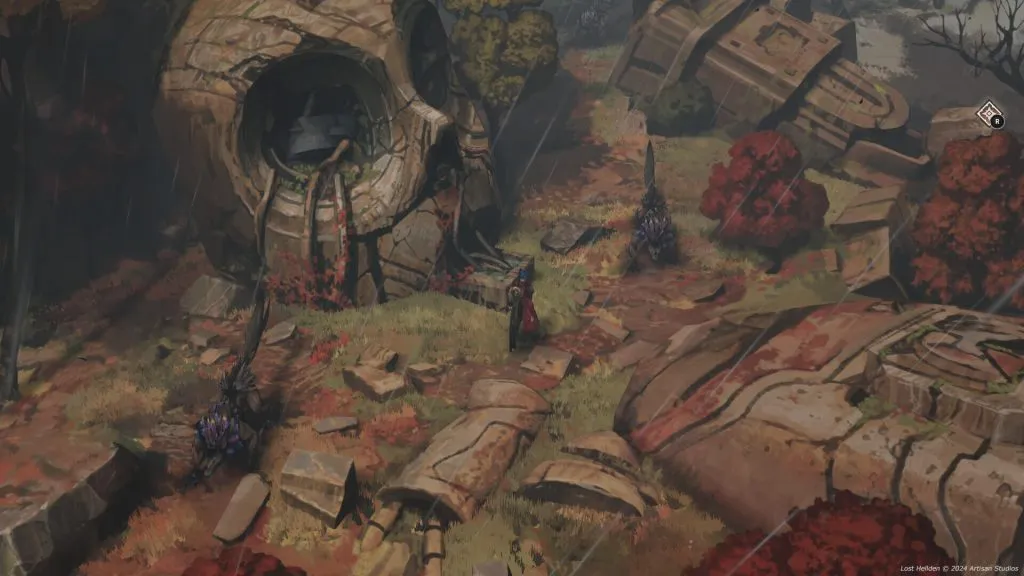
The footage also makes it clear that every enemy roams the field in plain sight. We can strike first with our great-sword to open the fight with some kind of advantage, or, if they jump us instead, we’ll start the battle at a disadvantage.
The only other tidbit on characters is the teaser phrase “highly customizable,” but the studio hasn’t yet specified what that actually means, which options we’ll get, or how the growth system will work.
Art and Audio Direction
Right now, the game’s biggest selling point is probably its visuals and audio, powered by two heavyweight names in the JRPG world.
Gravity Rush and Siren alumni Takeshi Oga provides concept illustrations and environment paint-overs. His signature pastel palettes and airy brushwork infuse Era with an ethereal vibe: sun-drenched plateaus, foggy marshlands, and gothic cathedrals floating above cloud cover.

In still images, the scenery could pass for a Studio Ghibli background, but the Deep 2D pipeline animates the skies, ripples puddles, and shifts shadows as time passes. The effect fooled me into thinking the assets were full 3-D until I froze the frame; edges are painterly, not polygonal.
Character sprites retain hand-inked outlines yet cast proper 3-D shadows. Even the UI reflects the theme.
When Artisan confirmed Hitoshi Sakimoto as composer and audio director, my ears perked up. Sakimoto’s symphonic layering defined Final Fantasy Tactics, Vagrant Story, and Final Fantasy XII; his work marries orchestral gravitas with staccato percussion that sells battlefield urgency.
Artisan’s First Fully Self-Funded IP
Artisan Studios previously delivered Super Neptunia RPG under Compile Heart’s supervision and Astria Ascending as a co-development with Dear Villagers. Both projects drew mixed reviews but showcased strong 2-D artistry.
Lost Hellden is different: it is 100 percent self-funded, giving the team autonomy over timeline, monetization, and platform parity.
A Reddit AMA confirmed the studio has expanded across Québec (Canada), Montpellier (France), London (UK), and Riyadh (Saudi Arabia), pooling about 65 staff plus contractors. That geographic spread explains the bilingual marketing pushes.
Financial independence sounds liberating, but it also means the burn rate sits squarely on Artisan’s shoulders. The team reassures fans that outside investors have not forced gacha elements, live-service hooks, or NFTs into the design. For now, Lost Hellden remains a premium, single-purchase title.
Platforms, Release Window, and Demo Plans
While countless indie JRPGs chase nostalgia, Lost Hellden shoots for something rarer: modern production values married to painterly aesthetics and fresh mechanical ideas. With confirmed information alone, Lost Hellden already promises a beautiful hand-painted world, a quite original plot, and a promising battle system.
Add Sakimoto’s orchestrations and Oga’s storybook visuals, and you have a cocktail that could rival the genre’s mid-2000s golden age.
When it comes to a release date, Artisan Studios has only committed to a broad 2025 launch window, available on PC (Steam, Epic, and GOG) as well as PlayStation, Xbox, and Nintendo Switch. They’ve also hinted that physical editions could be in the cards.
There’s a good chance we’ll get to try Lost Hellden sooner rather than later, though: the team has a form to request access to the demo when the time comes to give fans an early taste of the game. You’ll find the announcement trailer, which features various gameplay sequences below.

