

JRPG-Inspired Escape from Ever After Has A Set Release Date and New Trailer
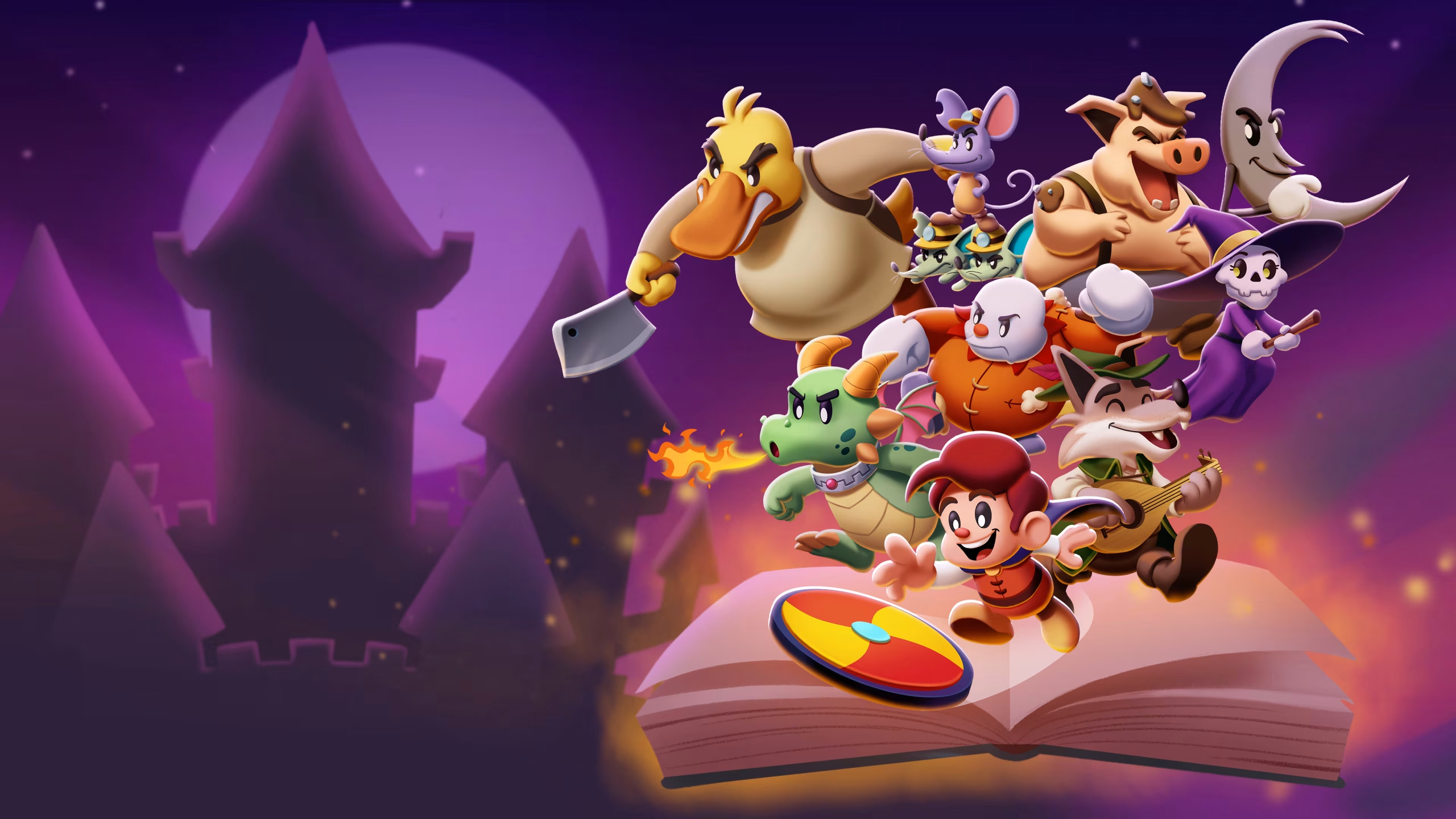
Escape from Ever After is a storybook-style turn-based RPG from Sleepy Castle Studio and HypeTrain Digital. It’s built very much in the vein of Paper Mario and Mario & Luigi, with timing-based combat, short but punchy dialogue, and a big focus on characters.

I’m here as usual to give you some details about what looks like an interesting RPG you should not miss.
A Fairy Tale Taken Over by Suits
The setting starts in a familiar place and twists it. Storybooks aren’t just stories anymore; they’re “undervalued assets.” A megacorporation from the real world, Ever After Inc., has figured out that these worlds are full of resources and cheap labor, so it moves in and starts treating fairy tales like projects on a spreadsheet.

You step into the role of Flynt Buckler, a classic sword-swinging hero who, instead of just slaying monsters, ends up working for the company.
His job, on paper, is to go into different storybooks and “optimize” them for profit. In practice, he slowly realizes how badly Ever After Inc. is warping these worlds and starts working with the people inside them to push back. The result is a fairy tale rebellion told from inside the office that’s running the show.
Storybooks as Chapters, Each With a Twist
The game is structured like a shelf of books. Each major chapter drops you into a different tale that’s been bent to fit corporate goals. One early example is its take on The Three Little Pigs: the pigs are now contractors with a contract to bulldoze a forest and replace it with prefab housing made of straw, sticks, and bricks.
You travel back and forth between these books and Ever After Inc.’s headquarters. In the books, you help locals, clear quests, deal with bosses, and try to nudge the story away from the company’s plans.

Back at HQ, you see how management talks about those same decisions in terms of KPIs and “growth opportunities.” The tone stays light and accessible, but if you’ve ever sat through a pointless meeting, a lot of the jokes will hit pretty close to home.
Turn-Based Battles With Timing Action
Combat follows a classic turn-based format, but you don’t just pick a move and watch it play out. Almost every action has a small input or timing element attached to it.
Attacks and skills come with mini prompts: hold a button until a bar hits the sweet spot, tap a sequence, or react quickly when a cue appears. Defending also uses timing to cut incoming damage or block it outright. Because different moves use different prompts, you’re not stuck repeating a single pattern for the whole game.

The design leans on reading enemy patterns, managing your skill points, and knowing when to go all-in and when to play safe. Mistimed inputs won’t end a run on their own, but doing well consistently makes fights smoother and gives boss encounters a bit of that “one more try, I can nail it this time” feel.
Building a Party That Actually Works Together
Flynt doesn’t head into these books alone. As you progress, you recruit companions pulled from across the storybook worlds, each with their own role and personality. In battle, they bring unique skills that can be combined in different ways.
Gear and badge-like modifiers let you tweak builds, adjusting stats or adding extra effects to specific abilities. Some skills inflict conditions or set enemies up, while others cash those setups in for big damage or control effects.

The idea is to build a party that feels like a real team, where one character’s moves create openings for another.
Because resources like SP and items are limited, especially in longer fights, choosing what to equip and when to unleash your stronger abilities actually matters.
Exploring Diorama Worlds and Hunting for Secrets
Outside of combat, Escape from Ever After plays like a 2.5D picture book you can walk around in. Areas are built as layered dioramas: you run, jump, and weave through forests, construction zones, castles, and more, talking to NPCs and picking up side quests along the way.
The game is generous with optional things to find. Sun Gems, ink, bestiary entries, and decorative items for your office are tucked in corners and off the main path.
Some are out in the open but easy to miss; others ask you to pay attention to the environment or revisit a spot from a different angle. If you enjoy combing areas for that last collectible or filling out in-game logbooks, this structure supports it without getting in the way of the main story.
Life Inside Ever After Inc.
Between trips into the books, you return to Ever After Inc.’s headquarters, a dragon’s old fortress that’s been turned into an open-plan office. This hub is where you catch your breath, talk to coworkers, pick up small tasks, and decorate your personal bit of workspace with items you’ve earned.

The HQ is also where the corporate satire is the loudest. You’ll overhear staff trying to make sense of absurd targets, see people stuck in roles that don’t really fit them, and deal with managers who care far more about metrics than the worlds they’re supposed to be supporting.
It’s a neat contrast: you spend one moment saving a forest from overdevelopment, then come back to an office where that same forest is discussed as “underperforming real estate.”
A Playable Picture Book With a Jazzy Edge
Visually, Escape from Ever After goes all-in on the storybook idea. Characters are big and expressive, built to sell slapstick jokes and quieter emotional moments. Backgrounds look like layered cardboard sets: bold lines, clear shapes, and bright colors that read well whether you’re playing on a monitor or a handheld console.
The soundtrack pushes things a bit further away from standard fantasy. The game leans into jazz and big-band flavors, which fit the office hub and give battles and set pieces a lot of energy. It helps the whole thing feel like a blend of kids’ book and office comedy instead of yet another straight medieval RPG.
Platforms, Controls, and Languages
Escape from Ever After has a free prologue to try while you wait for the release date set for January 23, 2026 on the following platforms:
- PC via Steam
- PlayStation 4 and PlayStation 5
- Xbox One and Xbox Series X|S
- Nintendo Switch
The game includes full audio and text in multiple languages, including English, Japanese, Brazilian Portuguese, Russian, and Simplified Chinese, which should make it accessible to a broad chunk of the global RPG crowd from day one.
If you grew up on Paper Mario or the Mario & Luigi series and you like the idea of those systems applied to a world where fairy tales are being squeezed by corporate greed, Escape from Ever After sits right in that space.
It mixes timing-based turn-based combat, party building, light platforming, and exploration with a setting that constantly plays with the idea of “happily ever after” as something that can be bought, sold, or ruined. Below is the latest trailer.


