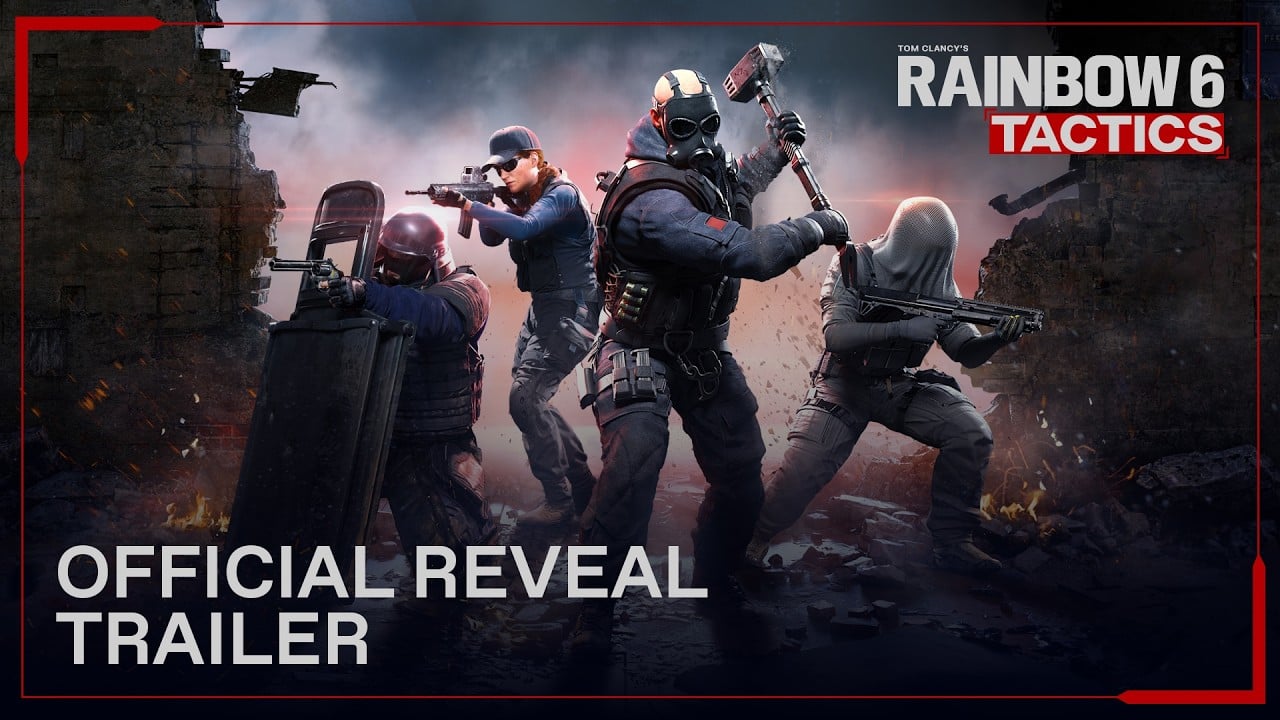
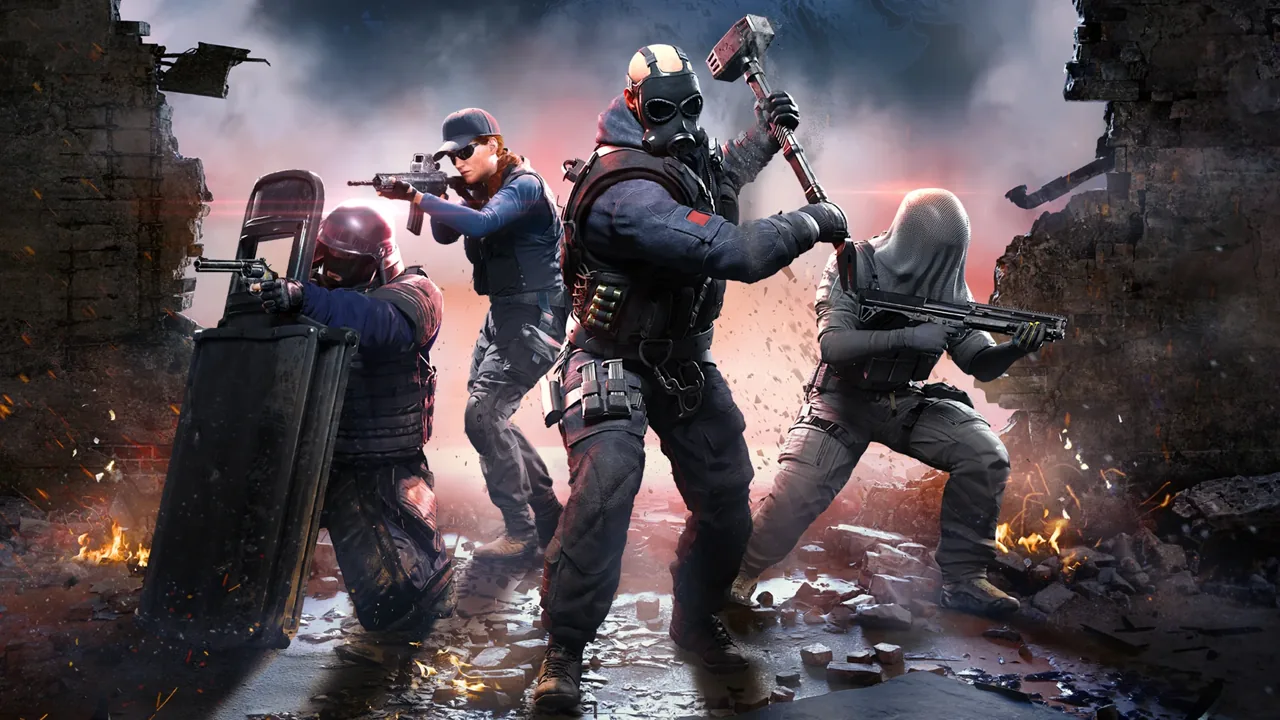
Siege operators, synchronized breaches, destructible environments, and a full single-player campaign come together in a tactical spin-off scheduled for 2027.
For years, Rainbow Six has largely been associated with competitive firefights, seasonal updates, and the expanding operator roster of Rainbow Six Siege. Rainbow Six Tactics takes that same world in a very different direction.
Announced during Gamescom Opening Night Live 2026, the new title is a single-player turn-based tactics game developed by Ubisoft Paris where instead of controlling one operator from a first-person perspective, the player becomes the commander of Rainbow, assembling four-person squads, gathering intelligence, and coordinating assaults against heavily defended locations around the world.

It is not simply Siege viewed from an isometric camera. Ubisoft is building a complete campaign around reconnaissance, environmental destruction, operator progression, headquarters management, and a breach system that temporarily allows the entire squad to act at once.
Here is everything we know about Rainbow Six Tactics so far.
Table of Contents
Rainbow Six Tactics at a Glance
Developer: Ubisoft Paris
Genre: Single-player turn-based tactical strategy
Release window: 2027
Platforms: PC, PlayStation 5, Xbox Series X|S
PC storefronts: Steam, Epic Games Store, Ubisoft Connect
Cloud services: GeForce Now and Blacknut
Squad size: Up to four operators
Operator roster: 15 playable characters
Multiplayer: None announced
Monetization: No in-game store, microtransactions, or live-service structure announced
Ubisoft+ is also listed as an access option. Nintendo Switch 2, PlayStation 4, and Xbox One versions have not been announced.
What Kind of Game Is Rainbow Six Tactics?
Rainbow Six Tactics places the player in the role of Six, the commander responsible for rebuilding and directing Team Rainbow. Before each deployment, you choose a squad from a roster of established Siege operators, prepare their equipment, and decide how the unit should approach the mission.
Once on the ground, operations move through several interconnected stages. There is an intelligence-gathering phase, a planning phase, the synchronized breach itself, and then more traditional turn-based combat after the team enters the hostile area.

The concept naturally invites comparisons with XCOM, but Ubisoft appears to be placing much greater importance on what happens before the shooting begins. Drone reconnaissance, entry points, destructible walls, operator gadgets, and coordinated opening moves are all intended to influence the shape of the battle before enemies can properly respond.
Game director Martial Potron has acknowledged XCOM: Chimera Squad as one of the inspirations behind the breach mechanic. At the same time, Ubisoft has connected the project to the older Rainbow Six games, particularly those that allowed players to study a map and plan an assault before taking direct control of the team.
That mixture could give Tactics its own identity. It has the named characters and gadgets of Siege, the squad management associated with turn-based strategy, and some of the deliberate mission planning that defined the franchise before it became primarily competitive.
The Story Takes Place Within the Rainbow Six Siege Timeline
Despite changing genres, Rainbow Six Tactics is part of the established Siege continuity rather than an unrelated spin-off.
The campaign is reportedly set between Year 10 and Year 11 of Rainbow Six Siege. Team Rainbow has fallen apart, and the player is tasked with restoring the organization while investigating a shadowy group that is supplying weapons and resources to hostile forces around the world.

Paul Bishop returns as Six, the operational commander of the reconstructed unit. Bishop previously appeared as the customizable protagonist of Rainbow Six Vegas 2, making his return a particularly interesting connection between the older campaign-driven games and Ubisoft’s modern Siege universe.
The story will unfold through missions and cinematic sequences presented between operations. Ubisoft has not yet identified the main enemy organization, its leadership, or precisely what caused Rainbow’s collapse, so a significant part of the campaign remains under wraps.
The basic premise nevertheless gives Ubisoft a sensible reason to begin with a relatively small roster. The commander will gradually rebuild Rainbow, recruit additional specialists, and restore the organization’s capabilities.
Each Mission Begins Before the First Turn
The reconnaissance stage may be one of the most important differences between Rainbow Six Tactics and a conventional turn-based strategy game.
Preview footage showed the player controlling a drone in real time, moving through parts of the mission area to mark enemies, study defensive positions, and locate potential objectives. Outdoor spaces may already be partially visible through aerial intelligence, while interiors remain concealed until the squad gathers information directly.

This means information is not simply handed to the player through a traditional fog-of-war system. You have to actively investigate the battlefield and decide how much reconnaissance is worth attempting before committing the squad.
A drone may reveal a dangerous guard covering the main doorway, for example, but that information is only useful if the team can exploit it. The player must then decide whether to eliminate the target during the breach, block the guard’s line of sight, enter through another room, or create an entirely new route through a wall.
Reconnaissance also carries the possibility of incomplete information. Ubisoft has not explained whether drones can be detected or destroyed, how long the scouting phase can last, or whether some enemies will remain hidden regardless of preparation.
Breach Planning Lets the Entire Squad Act Together
After gathering intelligence, the player selects entry points and assigns orders to individual operators.
A four-person squad might prepare to attack through several positions at once. One operator can place an explosive charge, another can target a specific enemy, while the remaining members cover doorways or prepare their signature gadgets. Once the plan is ready, the breach command activates those actions simultaneously.

This synchronized assault deliberately interrupts the ordinary turn-based rhythm. The player creates a short sequence in which the entire team executes coordinated orders before the battle settles into its standard structure.
It is easy to see why this system could become the centerpiece of the game. A successful opening plan may neutralize several threats before they can react, while a poorly judged breach could leave operators exposed, separated, or trapped inside a room filled with enemies.
The mechanic also appears to extend beyond the initial entrance. Larger missions contain multiple rooms and restricted areas, potentially creating further opportunities to regroup, gather information, and prepare another synchronized push.
Ubisoft has not yet explained how generous the planning system will be. We do not know whether commands can be freely revised, whether operators can perform several actions during a breach, or whether unsuccessful orders can be interrupted once execution begins.
Combat Becomes Fully Turn-Based After the Breach
Once the opening assault is resolved, Rainbow Six Tactics transitions into more recognizable turn-based combat.
The gameplay shown so far includes cover, line-of-sight calculations, overwatch-style reactions, percentage-based attacks, operator abilities, and environmental interactions. Positioning remains important because enemies can approach from unexplored rooms, reinforce defended areas, or take advantage of an exposed operator.

What remains unclear is exactly how turns are structured. Ubisoft has not revealed whether each operator receives a fixed number of action points, whether entire teams alternate turns, or whether characters act according to an initiative order.
Movement also appears relatively free rather than locked to an obvious square grid, although Ubisoft has not formally described the underlying system. The camera uses a tactical overhead perspective during planning and combat, shifting closer to the action for certain abilities, attacks, and breach sequences.
The result looks readable without losing the physical feeling associated with Rainbow Six. Operators still lean around cover, aim through doorways, and use recognizable firearms. The difference is that every decision can be considered before the order is given.
Destruction Is Part of the Tactical System
Environmental destruction has been one of Siege’s defining ideas, and Ubisoft is carrying it directly into Tactics.
Walls, defensive positions, and pieces of cover can be destroyed to create entrances or open new lines of sight. Sledge can break through vulnerable surfaces, while explosives and other operator tools can change how rooms connect to one another.
This is more than a visual flourish. A destructible wall can become an alternative doorway, an improvised firing position, or a way of attacking a defended room without using the obvious entrance. Destroying cover may expose an enemy, but it could also remove protection the squad needs later.
That creates an important relationship between reconnaissance and destruction. The player is not only trying to discover where enemies are standing. The real question is how the environment can be manipulated to reach them safely.
It could also help distinguish missions that reuse the same broad battlefield. Different objective placements, enemy positions, and available entry routes may dramatically change how a familiar location is approached.
Squads Are Built From 15 Rainbow Six Siege Operators
Each deployment allows the commander to select up to four operators from a roster of 15.
Ubisoft has shown or identified several familiar faces, including Ash, Doc, Glaz, Montagne, Nøkk, Sledge, and Twitch. Additional footage and preview demonstrations have also included operators such as Smoke, Zofia, and Finka, although Ubisoft has not yet published the complete final roster.

Every operator has a distinct ability, tactical gadget, and individual skill tree. Their equipment is being adapted from a competitive shooter into a single-player strategy framework, which means some familiar tools may behave differently from their Siege counterparts.
Montagne’s shield could be valuable for advancing through exposed spaces. Doc brings obvious medical support, while Glaz can exploit long sightlines and potentially attack multiple targets positioned along the same line. Nøkk appears suited to infiltration and rapid movement, and Sledge provides a straightforward answer to walls that stand between the squad and its objective.
The most interesting squads may not necessarily consist of the four strongest operators individually. Because breaches require several actions to work together, team composition should depend heavily on the mission. A squad built for rescuing hostages inside a compact building may look very different from one attacking an offshore platform or pursuing a protected target through an industrial complex.
Ubisoft has not clarified whether every operator is available throughout the entire campaign. Injury, recovery time, mission assignments, and the gradual recruitment of new personnel could force players to rotate the roster instead of relying on the same four specialists.
Missions Include Hostage Rescues, Bombs, and High-Value Targets
Ubisoft has confirmed several familiar Rainbow objectives:
- Hostage Rescue
- Bomb Disposal
- Target Elimination
- High-Value Target operations
These assignments will take the squad through city centers, airports, remote warehouses, offshore oil installations, and other international locations. Preview material has also referred to Egyptian ruins and a high-security prison in Denmark.

The exact amount of content has become slightly confusing because different announcements use different measurements. Ubisoft’s official reveal refers to more than 45 locations, while press presentations have mentioned over 50 missions. Another briefing described 12 handcrafted maps or battlefields.
The most reasonable interpretation is that the campaign contains a smaller collection of large, authored environments used to support numerous missions, objective placements, and combat configurations. Ubisoft has not formally reconciled those numbers, however, so it is too early to say exactly how many completely separate maps will be included.
The environments themselves are handcrafted rather than procedurally generated. Enemy positions and mission elements can change, creating some unpredictability without asking an algorithm to construct the physical layout of every level.
That approach makes sense for a game built around detailed planning. Carefully designed rooms, sightlines, entrances, and destructible surfaces should allow Ubisoft to create more deliberate tactical problems than a fully randomized map generator could reliably produce.
The Headquarters Connects Individual Missions
Between deployments, the campaign returns to Rainbow’s headquarters. This strategic layer is where the player manages operator health, adjusts loadouts, develops individual skills, collects intelligence, trains the roster, and upgrades different departments within the organization.
Headquarters development may also determine which resources, tactical options, and support capabilities are available during later operations.

The official descriptions suggest that the campaign alternates between two complementary responsibilities. As field commander, you direct the squad during individual battles. As Six, you decide how Rainbow should allocate its limited personnel and resources across the wider operation.
Ubisoft has not yet demonstrated this layer in detail. We do not know how many departments can be upgraded, whether the campaign includes a world map, or whether ignoring one assignment can alter the availability or difficulty of another.
There have also been references to tactical cards and Order Points in press material, but the full economy surrounding those systems has not been explained. It remains unclear whether cards are permanent unlocks, consumable commands, mission rewards, or temporary bonuses selected before deployment.
Injuries Can Remove Operators From the Campaign
Operator health is not automatically restored after every mission. A badly injured character may need time to recover, potentially forcing the commander to use someone else during the next assignment.
An optional permadeath mode will also be available. According to the game director, operators do not literally die within the canonical story. Instead, a character lost under these rules becomes too badly injured to participate in the remainder of that campaign.
Players looking for a harsher strategy experience can accept the possibility of permanently losing an important specialist, while others can experience the story without having a favorite operator removed after one disastrous turn.
The campaign reportedly unfolds over several in-game weeks, further supporting the idea that recovery time and personnel management will influence squad selection from one mission to the next.
Rainbow Six Tactics Is Strictly Single-Player
Despite being based on a franchise now closely associated with online competition, Rainbow Six Tactics is being developed as a dedicated single-player experience.
No cooperative mode, competitive multiplayer, or shared campaign has been announced. The Steam listing categorizes it as single-player, and Ubisoft has described it as a narrative-driven tactical campaign rather than another ongoing multiplayer platform.
Ubisoft representatives have also said the game will not have an in-game store, microtransactions, or a live-service model. That does not rule out conventional expansions or downloadable content after release, but the base game is being presented as a self-contained premium experience.
Some early reports circulated a possible $49.99 price, but Ubisoft subsequently indicated that final pricing had not been decided. Editions, preorder bonuses, and a potential physical release therefore remain unconfirmed.
Who Is Developing It?
Rainbow Six Tactics is led by Ubisoft Paris, a studio with extensive experience across Ubisoft’s tactical franchises.
Members of the development team previously worked on projects including Ghost Recon and the Mario + Rabbids games. Potron has said that roughly one-third of the current team contributed to Mario + Rabbids, which is particularly relevant given that series’ approachable interpretation of turn-based combat.
Ubisoft has also said it wants the game to remain accessible to people who do not regularly play turn-based games. The challenge will be making the controls and information understandable without removing the tactical complexity expected by experienced strategy players.
Release Date, Platforms, and Closed Testing
Rainbow Six Tactics is scheduled to launch sometime in 2027. It is confirmed for PlayStation 5, Xbox Series X|S, and PC through Steam, Epic Games Store, and Ubisoft Connect. GeForce Now and Blacknut support are also planned, while Ubisoft+ is included among the announced distribution options.
Registration has opened for a future closed test, although Ubisoft has not publicly detailed when the test will begin, which platforms will participate, or how many players will be invited.
The Steam page currently lists Windows 11, but complete minimum and recommended system requirements have not been posted. Below the announcement trailer.