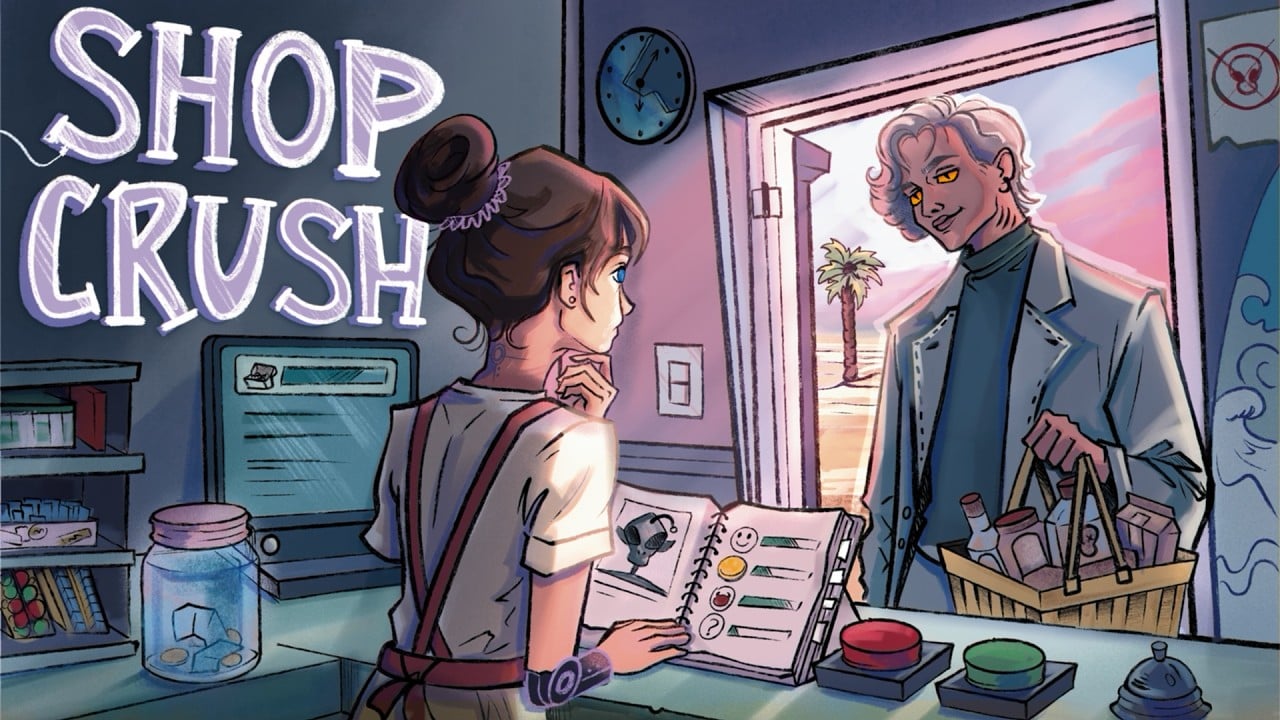

Lately, I’ve really been enjoying RPGs that blend visual novel elements with management mechanics, and today I’m covering another very interesting one that, in my opinion, has a lot of potential.
Turning away a wealthy customer can be good for business in Shop Crush. Chelsea is happy to overpay for desirable merchandise, but refusing to serve them improves your shop’s reputation. This is an early example of how this shop-management visual novel complicates the usual pursuit of higher margins: who you sell to matters as much as what you charge.

Developed and published by Bslteam, Shop Crush takes place in an early-2000s thrift store. Ordering stock, negotiating prices, and getting to know the regulars form the daily routine, while visual puzzles gradually expose the disturbing history behind the customers and the business itself.
Bargaining With a Limited Number of Turns
The economic system revolves around balancing income against reputation. Stock comes from a catalog of more than 70 products, with everyday essentials providing relatively safe sales and questionable merchandise creating opportunities for larger returns.

Demand depends on the clientele, and a damaged reputation discourages people from visiting. Keeping shelves full therefore requires some understanding of who is likely to buy what.
Negotiations operate within a limited number of turns. Customers’ personal traits can help justify higher prices, but pushing your own interests means managing their hostility. Bslteam cites Reigns as a reference for the choice-driven economic structure. The tactical decision is how far to press an advantage before the consequences outweigh the money on offer.
The cast has specific purchasing habits and ways of exerting pressure. Brinley hunts for discounts and generates modest margins, while Casey is an inspector who may confiscate merchandise and demand a fine.
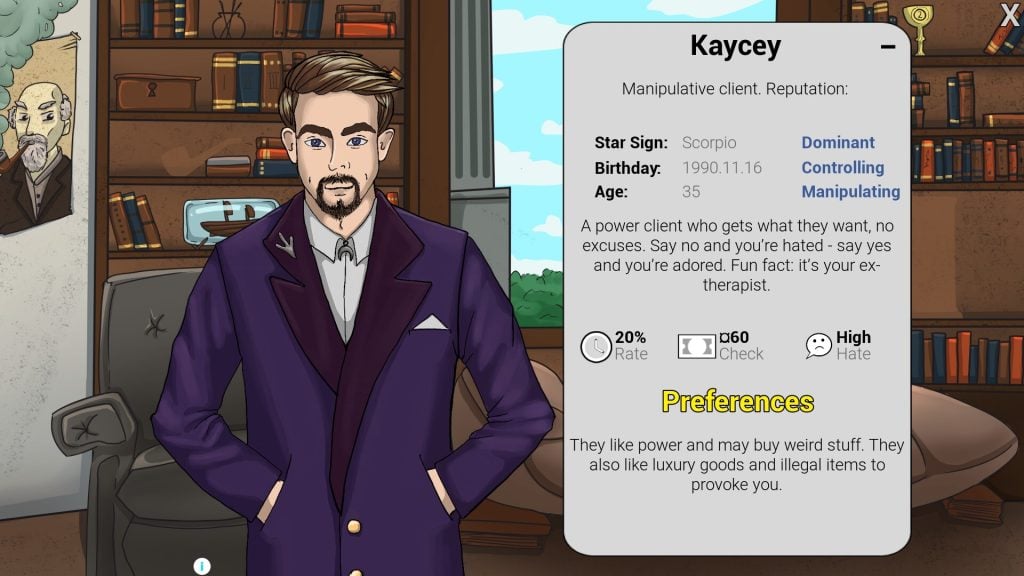
Refusing payment preserves your money at the expense of reputation. These encounters give individual customers different economic roles, requiring more than a universal pricing strategy.
Progression also applies directly to the customers. Leveling them up improves their visit frequency, average spending, and reputation contribution, with more than 50 upgrade levels advertised for each customer. Relationships consequently have a measurable business value alongside their role in the story.
Hidden Images Reveal the Customers’ Secrets
Each customer is associated with a visual puzzle called a Literal Illusion. Zooming, rotating, and dragging images reveals concealed forms and meanings connected to that person.
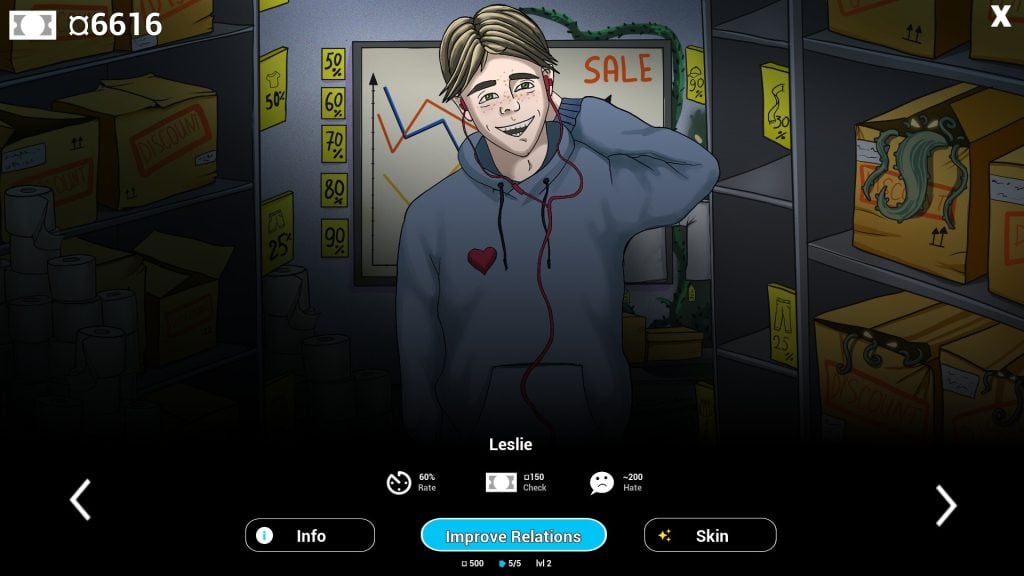
The developer describes these puzzles as the link between customers’ obsessions and the shop’s darker reality: learning their purchasing preferences is only part of understanding why they are there.
The horror centers on anxiety, unreliable narration, and uncertainty about what is real. Bslteam’s content description specifies implied violence and imagery resembling crime scenes in hidden-object games, without depicting the acts themselves.
That direction emerged partly from playtesting. In an interview with SUPERJUMP, designer Bohdan Sydorenko explained that the original concept leaned toward comedy, with strange merchandise and exaggerated customer personalities.
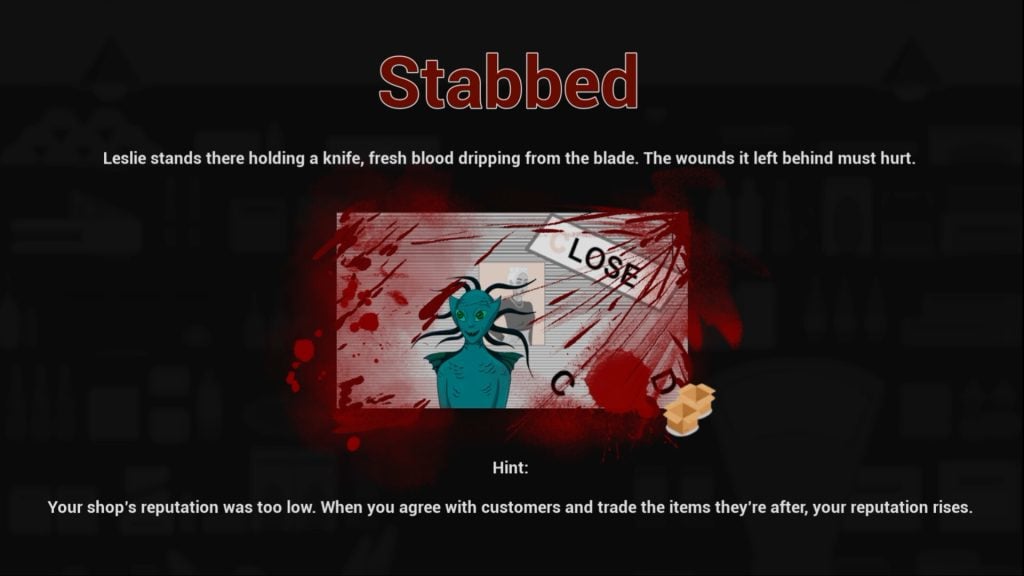
Testers became interested in those characters’ histories, prompting a shift toward psychological horror. Sydorenko also names Coffee Talk, VA-11 Hall-A, and Papers, Please among the game’s influences.
Release Plans and Playtesting
Shop Crush is planned for Steam Early Access, but its published release windows currently differ: Steam lists 2026, while the developer’s IndieDB press kit lists Q2 2027. Neither provides an exact launch date, so the schedule remains unclear.
An August development update introduced a new trailer covering shop management, customer interactions, and the illusion puzzles.
Bslteam also confirmed that its previous playtest had closed and said another test would open earlier than originally intended following interest from returning participants. The Steam page currently accepts playtest access requests.