
Most RPGs want me to become emotionally attached to my equipment. I find a sword, improve it over several hours, give it a dramatic name, and eventually refuse to replace it because the alternative has 2% more critical damage but looks considerably less heroic.
Tile Crawl has no interest in that relationship. Here, every weapon is temporary, every useful tool is slowly falling apart, and the fantasy adventurer’s greatest enemy may be basic inventory management.
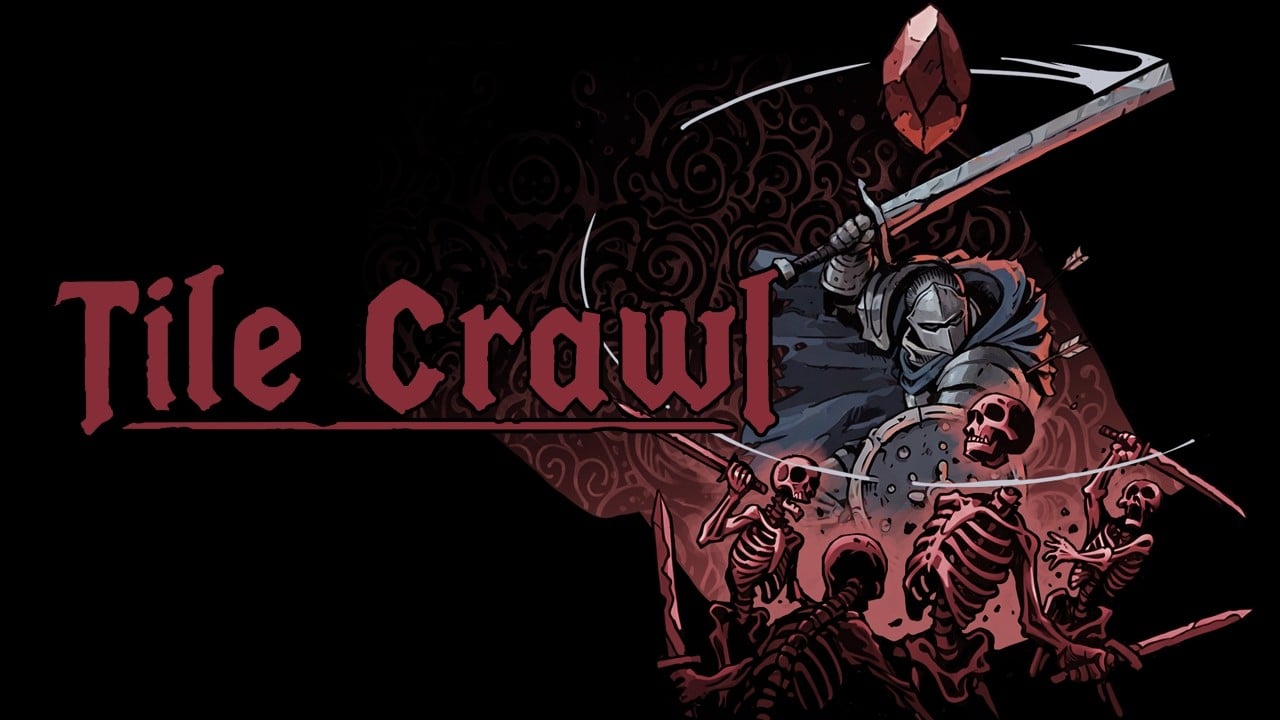
Developed by indie studio UNSUNG, Tile Crawl is an upcoming turn-based tactical roguelite built around a wonderfully inconvenient rule: the hero can carry only six Relics, and every one of them deteriorates when used. That powerful blade you found may solve the next encounter, but swinging it too freely could leave you facing the boss with an empty slot and a vague sense of regret.
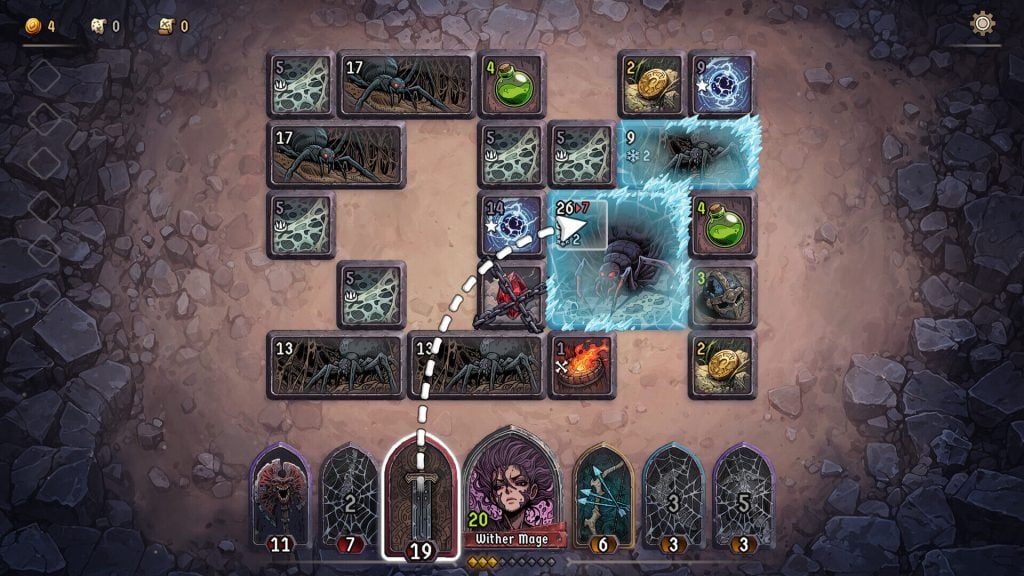
Each battle takes place in a compact tile-based board filled with many types of objects that you can manipulate (such as enemies, healers, treasure, bombs, etc.) to solve problems.
In order to win each battle, you don’t have to attack a monster until it dies; instead, you will examine the entire area, think about all of the components of this area and how they work together, and then figure out which of your limited resources you want to use up.
Six Relics Define Every Run
Tile Crawl does not use a shuffled deck. All six equipped Relics remain visible and available during combat, so each decision is made with complete knowledge of the current loadout.
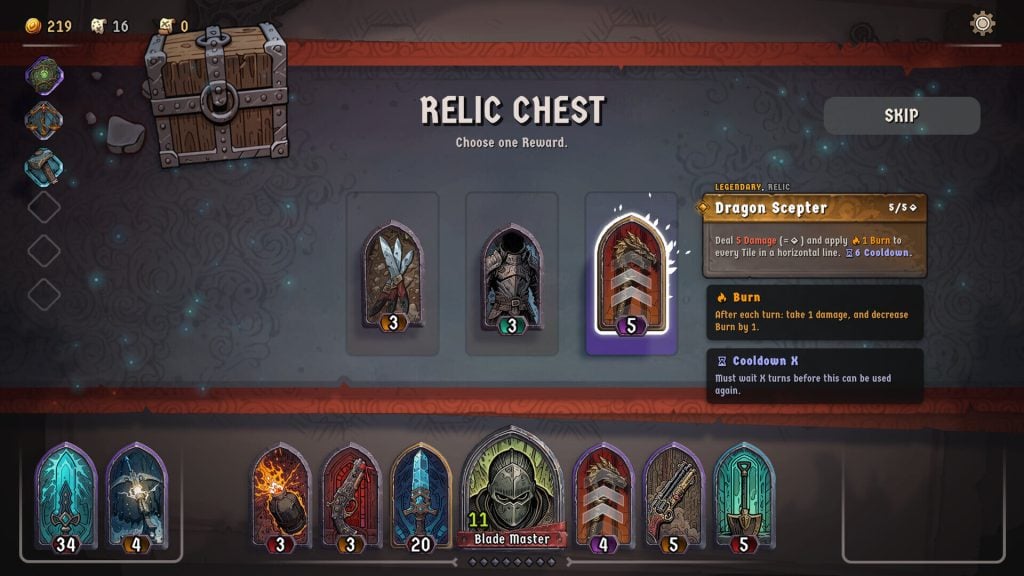
Relics include weapons, magical tools, and unconventional items such as a Bag Full of Toads. Since equipment degrades with use, stronger attacks cannot be used without considering later encounters. A Relic may solve the current board while leaving the hero without the right tool for the next one.
The six-slot limit also makes new equipment a meaningful decision. Picking up another Relic may require abandoning an existing item, even if it still has some durability remaining. Loadouts therefore depend on utility, remaining uses, and how different items interact with the board.
Perfect Hits Reward Exact Damage
The main combat mechanic is the Perfect Hit, triggered by dealing the exact amount of damage needed to match an enemy’s current strength.
This changes how attack values are evaluated. A high-damage weapon is not always the best option, while a weaker Relic may be necessary to reach the correct number. Players can use multiple attacks, environmental objects, explosives, and other effects to adjust enemy values.
Some situations may require strengthening an enemy before defeating it. The hero’s own health can also become part of the calculation, with certain sequences involving deliberate damage to create a more efficient solution.
The system gives low-damage equipment a continued purpose throughout a run. Relics are useful because of the numbers and effects they provide, not only because they deal more damage.
Heroes Act as Additional Tools
Tile Crawl is planned to include four playable heroes. Each character has an ultimate ability, individual upgrades, and a combat function that can be activated in a similar way to a Relic.

This effectively adds a permanent tool to the six-item loadout. Hero selection can change which tactical sequences are available and which types of Relics are most useful during a run.
Progression continues between attempts through unlockable heroes, equipment, and passive improvements. These additions expand the available strategies as players reach more dangerous regions.
A corrupted Free-to-Explore World
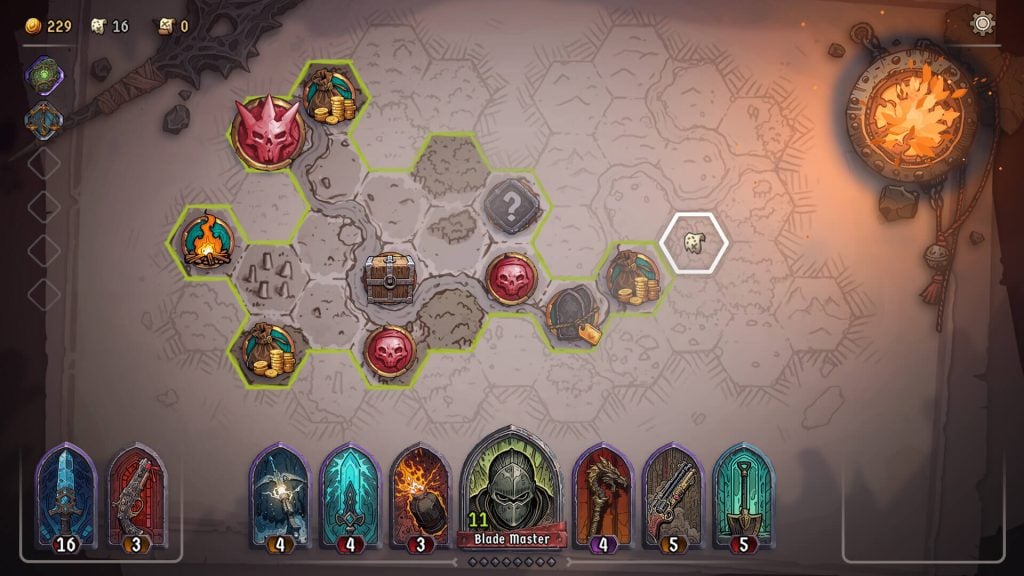
One of the things I liked the most is that Tile Crawl allows players to explore its regions freely and decide when to challenge each area’s boss.

Not every location can be visited during one run. Exploring additional areas may provide equipment, upgrades, or healing, but each encounter can consume health and Relic durability. Reaching the boss quickly preserves resources, while taking a longer route may produce a stronger loadout.
Route planning is therefore tied directly to the equipment system. The value of a detour depends on whether its potential reward justifies the resources required to reach it.
Tile Crawl takes place in a fantasy world affected by an unknown corruption. Creatures are being transformed, while metal has become weaker and conventional weapons deteriorate quickly.
This provides a narrative explanation for the durability mechanic and makes fragile equipment part of the setting.
Release Details
Tile Crawl is in development for PC and is currently listed on Steam with a Coming Soon release window. The available gameplay footage represents a pre-alpha version, so its interface, balance, and individual mechanics may change before release.
Its main systems are already clearly defined: six visible Relics, limited durability, exact-damage attacks, tile-based tactical encounters, and freely explorable regions. The result is a roguelite focused on resource management and carefully planned combat sequences.
The Steam page also states that generative AI was used during the production of some illustrations and music, while the developer says the game’s core elements were created by the team. Below i share the latest gameplay trailer.