

There is no shortage of choices these days for those of us who love the burgeoning rogue-like genre. With approximately 9% of Steam games having the rogue-like tag, there is no shortage of choice.
The problem developers of rogue-likes now face is how to stand out from the crowd. Fogpiercer does this, albeit with limited success. Let’s get into it.

Fogpiercer is a deck-building rogue-like that wears its inspiration on its sleeves. The developers (Mad Cookies Studio) are obviously fans of the Snowpiercer franchise (great 2013 movie and later a streaming series) that depicts an uninhabitable world where only those living on trains survive.
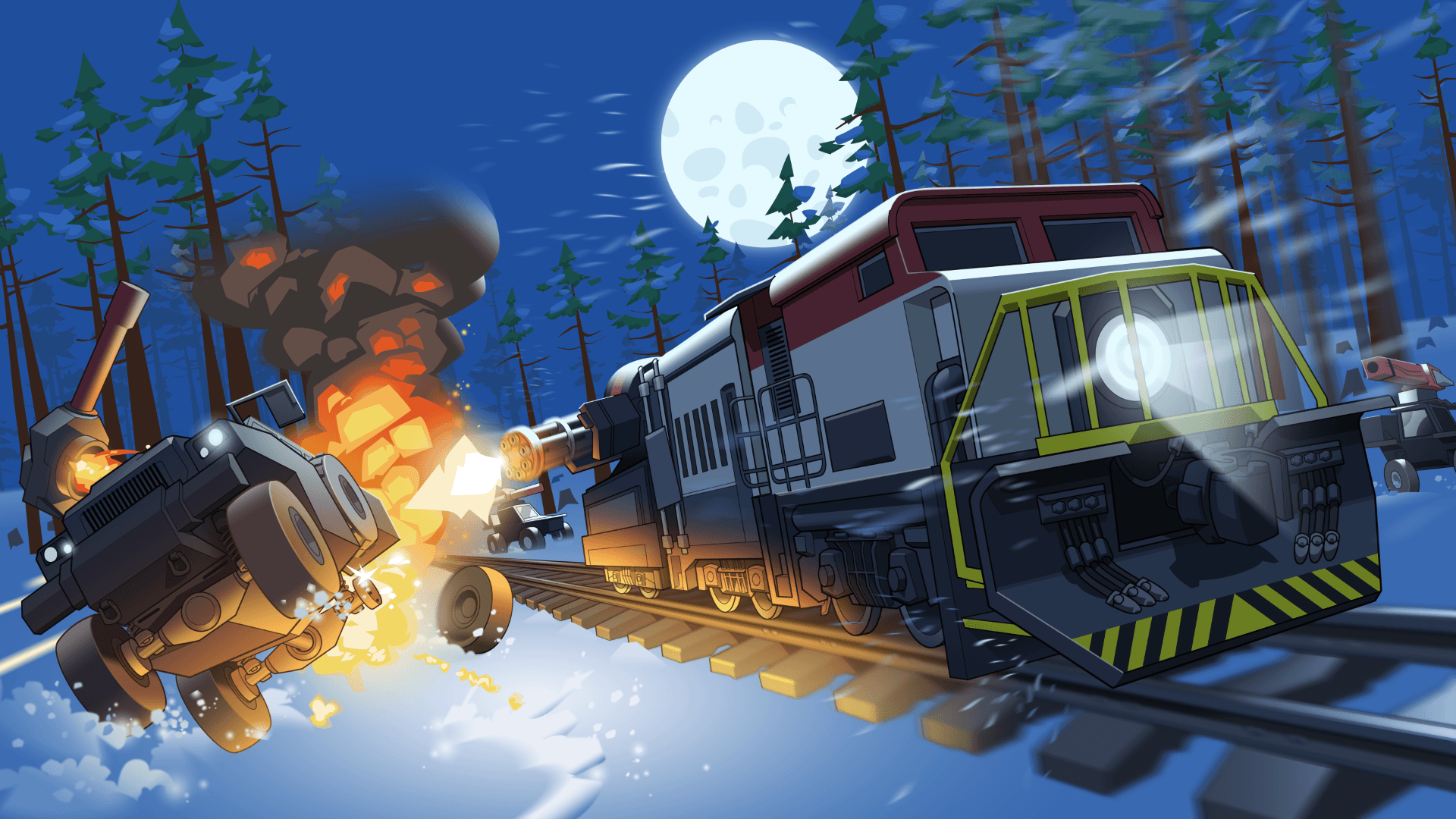
Its unique twist on the story is that the world has not become a frozen wasteland, but is covered in a dense and deadly fog. Your train-conducting heroes fight off waves of bandits as they make their way through the treacherous biomes, as difficulty slowly ramps up to an arduous boss fight.
You may find this formula familiar if you are a fan of the genre. Collect and remove cards from your deck, and collect relics to gain unique abilities. Fogpiercer’s twist on the deckbuilding aspect of the game is its best idea. Your starting cards are constructed from different carriages you attach to your train, including the locomotive leading the way.
Your locomotive that pulls the carriages can be the powerful steam engine, fast bullet train, or the middle-of-the-road starter.
The carriages range from the standard Artillery Car featuring a comically large cannon used to blast enemy vehicles with damage and move them into advantageous positions around the track.
You will also unlock more bizarre carriages such as the Crane Car, which appropriately sports a construction crane that can be used to pick up and move enemies around the play board. As you progress each run, you will grow each carriage’s pool of cards and unlock upgrades for your cards that may improve the damage or randomize the cost to play them.

The process of experimenting with different carriages and cards makes the first few hours with Fogpiercer memorable and left me wanting to keep playing after each run.
You use the multiple carriages to add cards of the corresponding type to your growing deck. Add more carriages to expand your options and give you more action points per turn; however, the tradeoff of a longer train is that enemies have more options to attack.
This push-pull only turned out to be interesting in theory, as it normally always makes sense to expand your train to increase your options per turn.
FP gets one mechanic quite right: the skid! As you battle through the wasteland, you drive left to right across the screen, with wind and snow rushing past. Enemy vehicles drive along the rows around you, waging war by ramming and shooting.
This leads to enemy vehicles often drafting behind one another as they jockey for positions of safety and advantage to attack.
When you defeat an enemy vehicle, they begin to SKID, if there is a vehicle behind them, they will skid into them, causing damage, if that damage takes out that vehicle, it will also skid causing a chaotic and satisfying domino effect. The dopamine hit when causing a skid that takes out multiple vehicles is nothing short of incredible. The perfect reward for a well-executed plan.

A perfect example of this occurred during one of my later runs: I was low on health and only had a Crane car, a Sword car (exactly what you think), and a radar car.
First, I used the Sword Car to strike an enemy vehicle to line up behind three of its malevolent compatriots. I then used the crane car to relocate a vehicle from above the train to last in this new line of bad guys.
Finally, I used the radar card to ‘Take Over’ the frontmost enemy vehicle to ram the vehicle behind it, dealing the final damage to each, making them skid into the following three vehicles one after another CRASH…CRASH…CRASH! Each vehicle skids away and off screen into the ether. Beautiful.
As you progress through runs, you will unlock currency (aptly named railroad spikes) for permanent upgrades via the completion of tasks as mundane as ‘Complete one run’ to ‘destroy 200 vehicles via skid’.
This is standard fare for a game of the genre, but FP excels at surfacing the information a player needs. This leads me to where FP shines: Quality of Life.
FP surfaces all the information any diehard turn-based game lover needs. Hover over each card to determine each keyword’s meaning, optionally label the fighting grid, convey enemy intents, and perform unlimited turn resets. I was only surprised by the outcome of an enemy intent once in my hours with the game due to a misinterpreted error that ended the battle. Not a bad hit rate regarding conveying information in a game full of it.

Another key differentiator for this genre is identity, a game’s sauce if you will. In such a crowded genre, each game needs an interesting theme to give it a unique feel.
FP’s theme, for better or worse, is train. A few little things actually make this sing. For one, there is a dedicated button to use mid-battle that sounds your train’s horn! Furthermore, to activate your hero’s special ability, you pull a 3D dangling train handle and pull it down to receive a special use card! The hundredth pull feels just as good as the first one.
Unfortunately, the train aesthetic, combined with the post-apocalyptic setting, does not leave much of a visual identity.
You will battle across the wasteland through forests, marshes, wastelands, and urban settings. Each area affects the types of enemies you will encounter. Distinguishing between each assailant requires very little cognitive load as they offer very little in the form of a unique look or mechanic.
Herein lies FP’s greatest weakness, which may end up pushing potential players away: a lack of sauce. The attempt at low-fidelity visuals can work if implemented with a sense of style. This is not the case here. In the absence of a distinctive visual design by the developers, the low-resolution textures make the game feel like a budget title.

This lack of visual investment extends to the card art and hero characters. The card art borders on appearing as a first draft placeholder rather than a final product.
Bland dark backgrounds accompanied by what seem to be hastily scrawled PDFs are less than a game with so much great tuning and design deserves. Similarly, the character designs somehow thread the needle between surreal and unappealing.
The starting character has ice powers that the game doesn’t bother attempting to explain. The glassy eyes of her character portraits betray no depth beyond the two dimensions of the image itself. The equally uninspired dialogue that splays across the screen when facing each area’s boss is generic and lackluster. This leaves a chasm between the well-designed, finely tuned gameplay of the game and the tableau on which it is presented.
If PC gaming rogue-like games are being served at a restaurant, Fogpiercer is a part of the sneeze-guarded buffet. It’s not terrible, but no one will mistake it for fine dining. Take it from someone who enjoys the occasional glizzie; sometimes filet mignon doesn’t satisfy in the same way.
After many hours with Fogpiercer, I still find myself squinting through the dense fog. There is a great game in the thick mist somewhere. I can occasionally get a glimpse of it if I’m patient, but most of the time I only see silhouettes, just out of reach.
The $19.99 price tag on Steam ($14.99 introductory price ending July 31st) is a bit too steep for how much I enjoyed this game personally.
The game may appeal most to super fans of train aesthetics, Snowpiercer analogs, and solid rogue-like mechanics. I don’t regret my time with the game, but I doubt it will linger long in my mind; Fogpiercer is just as memorable as a passing fog.

