


I’ll admit it’s been tough lately, I’ve been pushing too hard to keep the blog updated, taking time away from my family, and constantly cutting into my main job. Even the YouTube channel has felt the impact; it’s been two weeks since I managed to publish a new video.
I’m hoping to get back to a more regular schedule soon. But after this brief vent, which honestly helps every now and then, it’s time to return to the real focus of this article.
Here’s the weekly roundup of every new release worth playing, whether it’s hitting Early Access, launching out of it, or even debuting as a noteworthy demo.
I’ll start with a clever, satirical strategy title which debuted this week: Ctrl Alt Deal. In the Only By Midnight game, you are SCOUT, sneaking through departments, spying on employees, reading their drives and hang‑ups, then playing cards to nudge behavior, trade favors, and cut deals that open new routes to escape.

Each scenario asks you to curate a deck mid‑run: cards carry subjective value, so you’re weighing whether a social tweak, a sabotage, or a quirky compulsion gets you closer to the goal.
A visible Suspicion Meter tracks how much heat you’ve drawn from the Turing Office; push your luck and you risk a hard fail if they flag you as sentient.
Choices branch outcomes: who you help, how much they trust you, and which levers you pull shape SCOUT’s personality and the ending you see.
Switching to spacefaring CRPG territory, there’s a game I missed in last week’s recap (thanks for the heads-up, Michela), so I thought it was right to include it in this week’s article. It’s Sector Unknown, the new game from Creative Storm Entertainment, which debuted in Early Access.
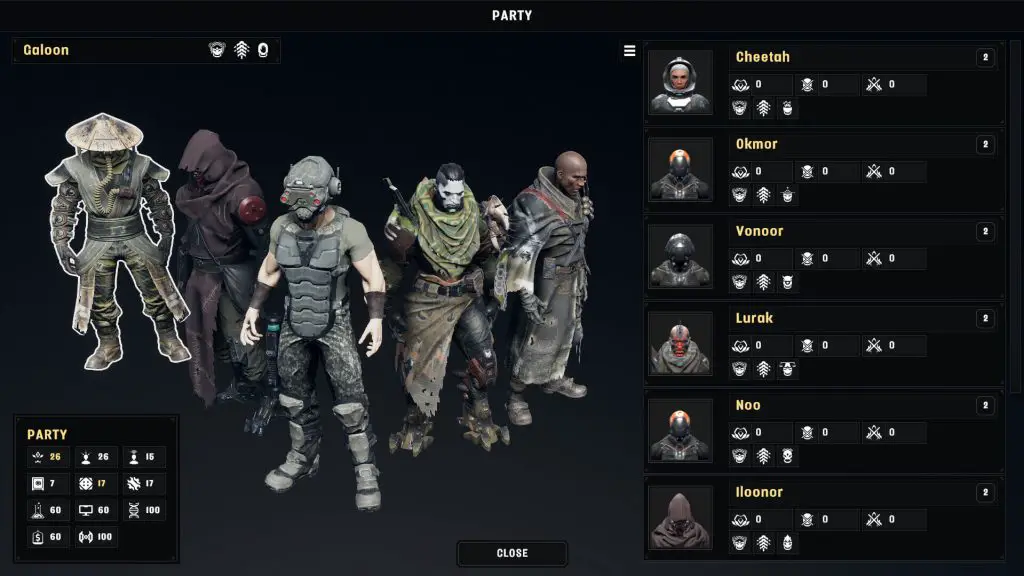
The game starts with a prison break and a crash on Maku, where you claim an abandoned mining facility and turn it into a base.
Character creation features six core attributes (Strength, Coordination, Vision, Speed, Aggression, Intelligence) that feed both turn‑based combat and dialogue checks. At the same time, a wide skill list (Engineering, Science, Computers, Biology, Finances, Piloting, plus social skills like Persuasion and Intimidation) opens alternate paths through quests.
From Maku, you branch to distinct planets, each with its own factions and self‑contained arcs. Systems layer on: a research framework tied to your technical skills unlocks perks and components; a bounty terminal seeds contract hunts; crafting uses dozens of organic and inorganic materials to build weapons, armor, shields, narcotics, injectors, and even starships.
Pivotal side missions and the main campaign support multiple endings and emphasize diplomacy as a viable route alongside combat.
The Early Access build targets roughly 10–20 hours with the whole planet set and a planned 4–6 month EA window.
The major release this week is surely The Great Villainess: Strategy of Lily, an interesting Anime Strategy RPG developed by a lot of people, One or Eight, Alliance Arts, and WSS Playground.

The game is built around capturing. Battles revolve around cutting enemy supply lines that link outposts to HQ; units on a live line gain strong turn‑based support, so isolating nodes is as important as winning frontal fights.
Your signature tool is the Stream Airship, a map‑wide command platform: stall advances, intercept to sever lines, push movement to counter ambushes, convince squads to surrender, and, crucially, activate Capture Stream so Lily can take opposing generals alive.
Captured commanders can defect and bring unique abilities, opening new available actions; executing them instead, powers Scarlet and Lily into Demon Queen territory at the cost of truth and the happy ending.
And finally, here are two demos you should try. The first is Earth vs Mars, a brand-new strategy title from Relic Entertainment, the studio behind Warhammer: Dawn of War and Company of Heroes. It plays like a vividly colorful take on Advance Wars.

Earth vs Mars is Relic’s small‑team turn‑based project under the Relic Labs banner, pitching Earth’s commanders against a Martian invasion while you grow an army of human animal hybrids with the Splice‑O‑Tron.
The public demo lets you try three skirmish maps and three commanders, each with two distinct abilities, and splice fly, cheetah, and rhino DNA into troops like the cheetah‑fly or human‑rhino to test movement, healing, reinforcement, and buff mechanics.
The full game (TBA) targets a narrative campaign of 30‑plus handcrafted missions, nine commanders with around twenty abilities, play‑as‑Martians options, online multiplayer for 2 4 players, a VS skirmish mode, and a full map editor.
Its tone nods to Advance Wars and Relic’s own Impossible Creatures, but with a B‑movie setup where Martians have abducted humans and animals for years and now bring grav‑tanks, saucers, elite troops, and bio‑weapons like the Creep, pushing you to counter with evolving hybrids and commander perks.
And the other demo and last game of my weekly recap is Die for the Lich, which offers its first chapter of a dice‑driven deckbuilder where you pair weapon cards with customizable dice and trinkets, test luck‑mitigation mechanics, and prepare to face the Lich.
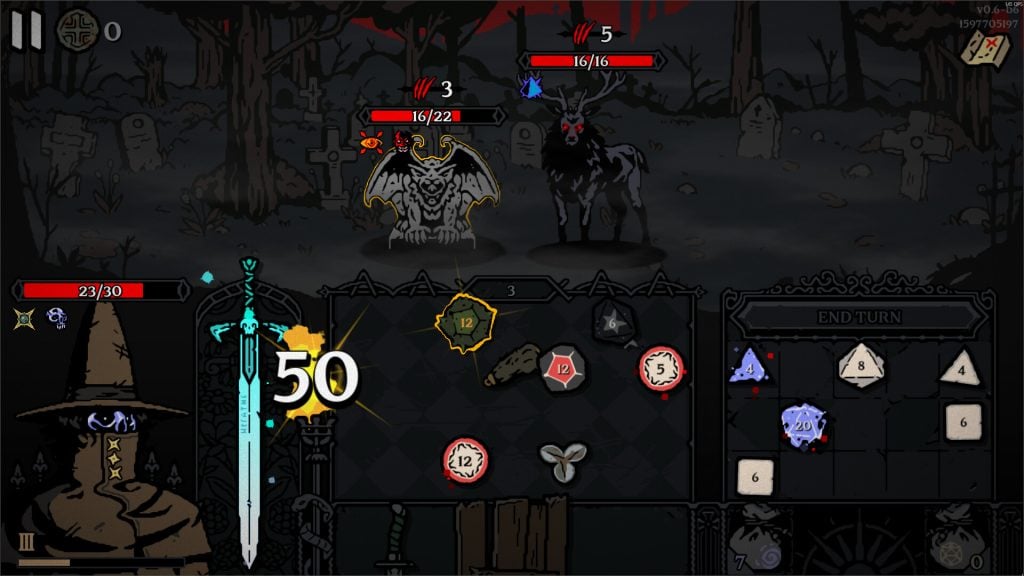
Runs branch through playable characters with distinct abilities and a light level‑up system, while meta challenges unlock new gear to keep later attempts fresh.
The bestiary leans on folklore, so before the final showdown with the Lich, you’ll face creatures like the Strigoi and Vetala, along with an early boss, Ankou, who anchors the first chapter in the public demo.
The demo adds extras such as dice crafting, Blood Moon battles, and daily runs, giving a good look at how luck mitigation, loadout tuning, and leaderboard chasing fit together.
That’s all for the week. Wish you the best. Ciao

