

A personal list of RPG characters and icons that have left an indelible mark on me.
A video game character can completely change the way you remember a particular RPG, or even an entire genre. Today, I found myself thinking back to characters who have stayed firmly in my mind over the years and who, for me, represent turn-based games as a whole.
They’re the kind of characters who pulled me so deeply into this world that, in one way or another, they helped fuel the passion that eventually pushed me to create an entire website dedicated to the genre.
A memorable RPG character can change how you remember an entire game. The combat system might have gotten you started, but years later, a particular companion, an intimidating villain, or an eccentric stranger often brings the adventure back.
No single formula explains that kind of staying power. An unforgettable design helps, but so do a convincing performance, a difficult personal journey, and the time spent relying on someone in battle. Even a character who never joins the party can become inseparable from the experience.
The following selection is quite personal and brings together 9 distinctive figures, without ranking them or pretending that popularity can be measured precisely.
Sephiroth – Final Fantasy VII
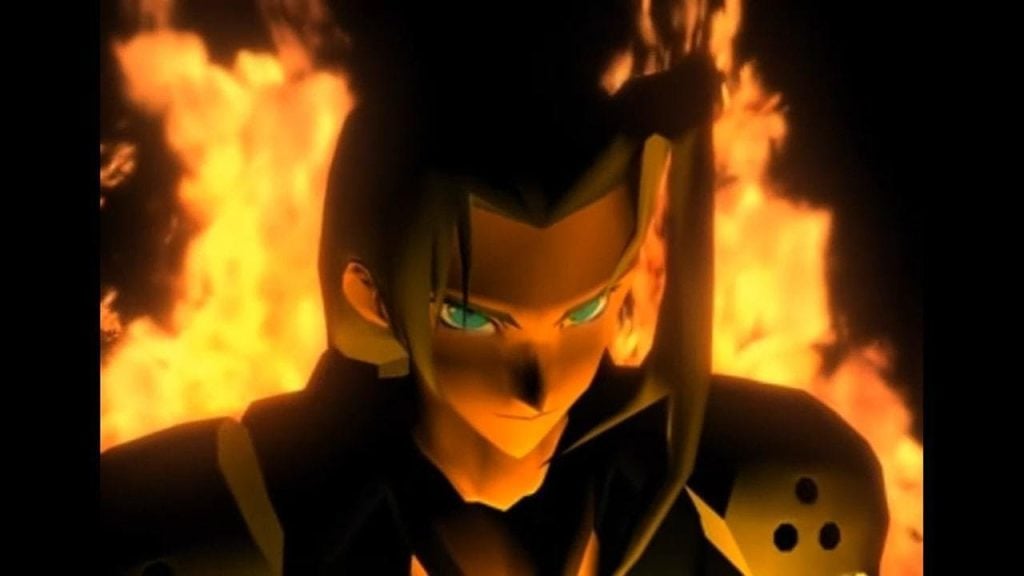
Honestly, with Final Fantasy VII being one of my favorite JRPGs of all time, I could have easily included several more characters from that game. But if one character best represents not only that chapter, but the JRPG genre as a whole, it has to be him: Sephiroth.
His design needs little explanation. The silver hair, black coat, and impossibly long Masamune create a silhouette that is hard to confuse with anyone else. Add his association with “One-Winged Angel,” and Final Fantasy VII has a villain whose appearance and musical identity reinforce each other exceptionally well.
His appearance as a fighter in Super Smash Bros. Ultimate also shows how far that identity has traveled beyond his original RPG. Yet his strongest claim to this list remains the original presentation: a fallen legend whose presence can make an entire journey feel less secure.
Auron – Final Fantasy X
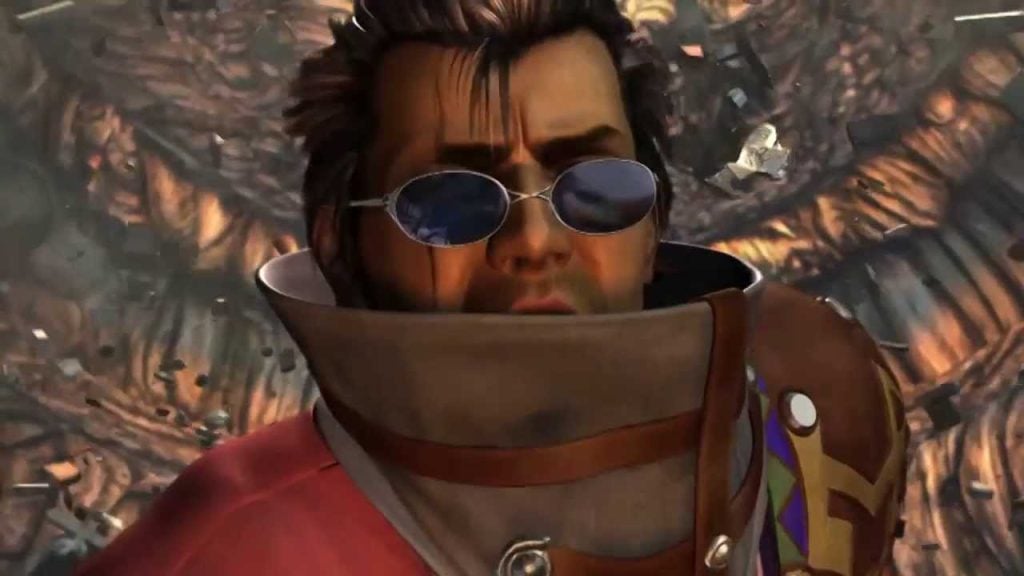
Another character I absolutely love, and always have, is Auron, straight from what I consider one of the best Final Fantasy games ever made: Final Fantasy X.
He looks like someone who has already survived the adventure everyone else is about to begin. His red coat, dark glasses, facial scar, and enormous sword communicate experience before he explains anything. Auron is restrained, occasionally dry, and rarely interested in comforting explanations.
He knows more about Spira than Tidus does, but understanding his silence becomes part of understanding the character. His authority feels earned, though the game gradually gives him a more complicated emotional foundation. And then there was all that raw strength, unleashed through that enormous sword he wielded with just one hand.
Auron’s appeal comes from the relationship between the capable guardian standing in front of the party and the imperfect person who had to become him.
Igor – Persona Series
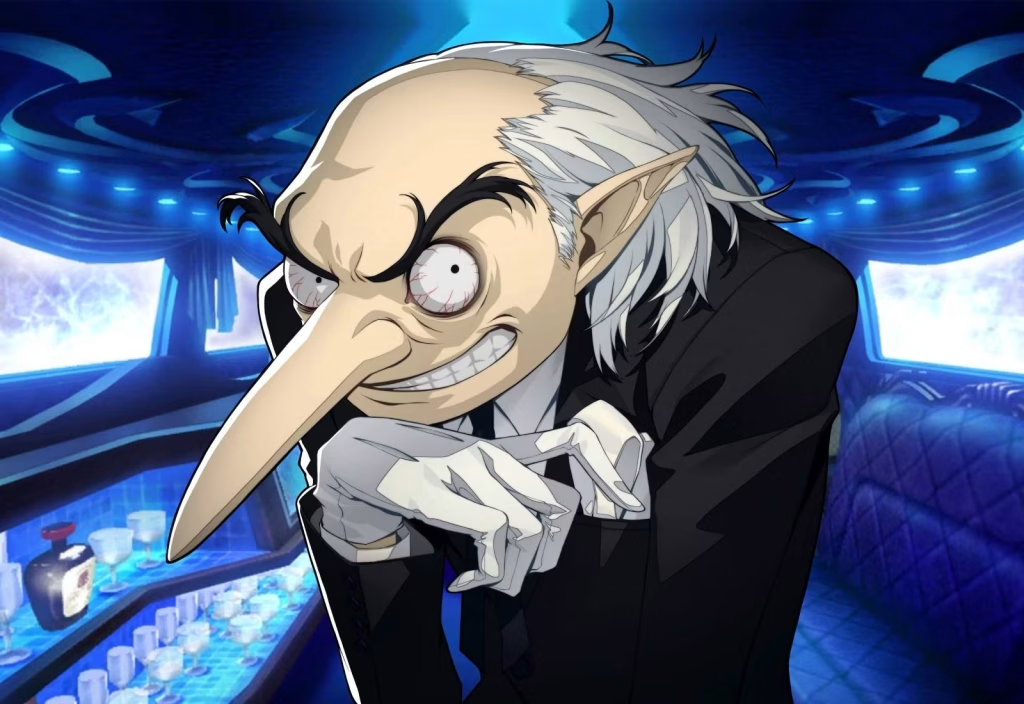
Then there’s Igor, a character you won’t find on the battlefield, but rather as an unlikely—and at first, slightly unsettling—ally inside the iconic Velvet Room. He’s the perfect example of how a single character can represent an entire series, or at the very least, instantly make you think of it.
His long nose, unsettling expression, and place in the Velvet Room are enough to give him an identity that spans different Persona casts and settings.
His importance is closely tied to what happens in that room. Persona fusion allows existing Personas to become new ones, turning a collection of supernatural allies into material for further experimentation. The Velvet Room also houses the Persona Compendium, making it a recurring destination for managing the protagonist’s available options. Igor gives this central part of character development a recognizable host.
Igor’s guidance also connects personal development with combat strength. In Persona 3, for example, he encourages the protagonist to form Social Links and explains how they shape the power the protagonist can develop.
His strange appearance might suggest someone best avoided, yet his role makes him a familiar presence. Something deeply unusual gradually becomes routine and iconic.
Cid – Final Fantasy Series
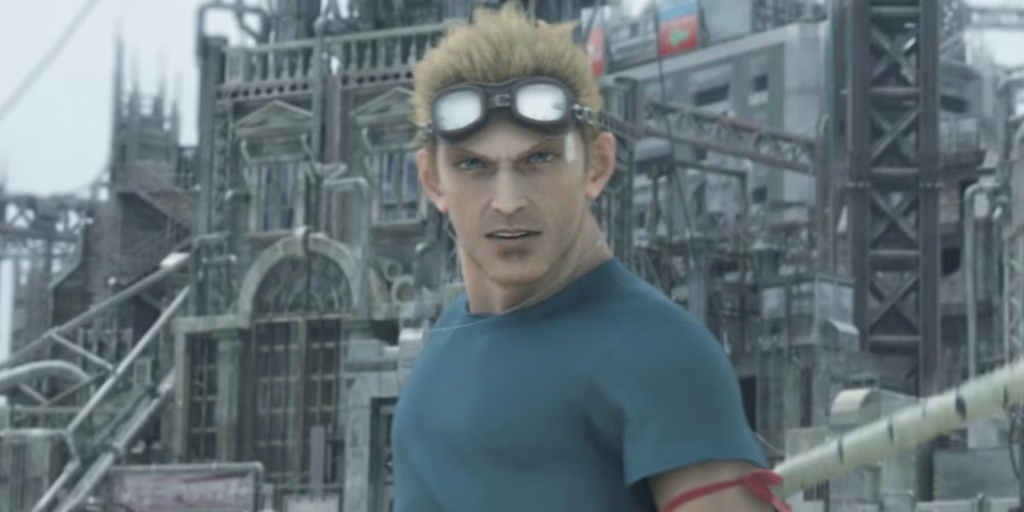
We are back to Final Fantasy, this time to a character who has appeared across countless adventures and chapters of the series, always in a different incarnation. I’m talking about Cid.
Different games introduce different Cids, each with its own history, personality, and allegiances. The tradition began with Final Fantasy II, and the various incarnations are often linked by engineering or an association with airships.
A new setting can change almost everything about Final Fantasy, but meeting someone named Cid immediately creates familiarity. The interesting part is discovering what this version contributes to the world.
In Final Fantasy IV, Cid Pollendina is a master engineer and a playable companion. Final Fantasy VII gives him the name Cid Highwind, a pilot whose frustrated ambitions shape his personality. They are distinct people, even though their shared knowledge of machinery gives them a recognizable family resemblance.
Cid belongs here because the name has become a tradition worth reinterpreting. The pleasure is less about recognizing exactly the same character and more about discovering what Final Fantasy has done with an old acquaintance this time.
Grahf – Xenogears
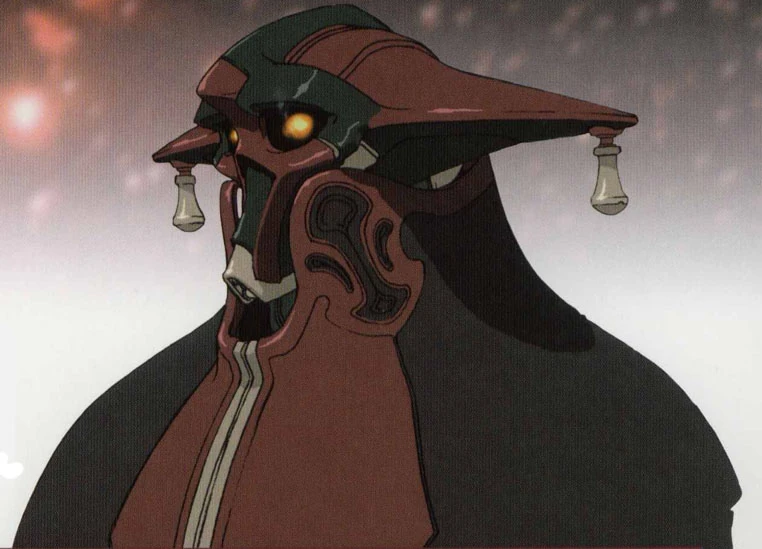
“Doth thou desire the power?” is an appropriately ominous introduction to Grahf’s particular brand of villainy. The masked antagonist of Xenogears repeatedly grants power to others, making him a threat even when he isn’t directly fighting the party. His skull-like helmet and concealed face reinforce the sense that each appearance brings information the protagonists don’t yet have.
Another antagonist who really stayed with me, and honestly, every single appearance brought a certain sense of tension. A true supervillain from a truly great JRPG, one of the very best and still near the top of my personal favorites.
His pursuit of Fei ties into the game’s larger mysteries, while his destructive aims give his appearances significance beyond the immediate battle. Explaining the full connection would reveal too much, but the story gives ample reason to pay attention whenever he enters the scene.
Grahf is memorable because he makes strength feel threatening in more than one way. A conventional enemy can demonstrate the danger of being weaker than someone else. Grahf also suggests that accepting greater power might be a terrible decision.
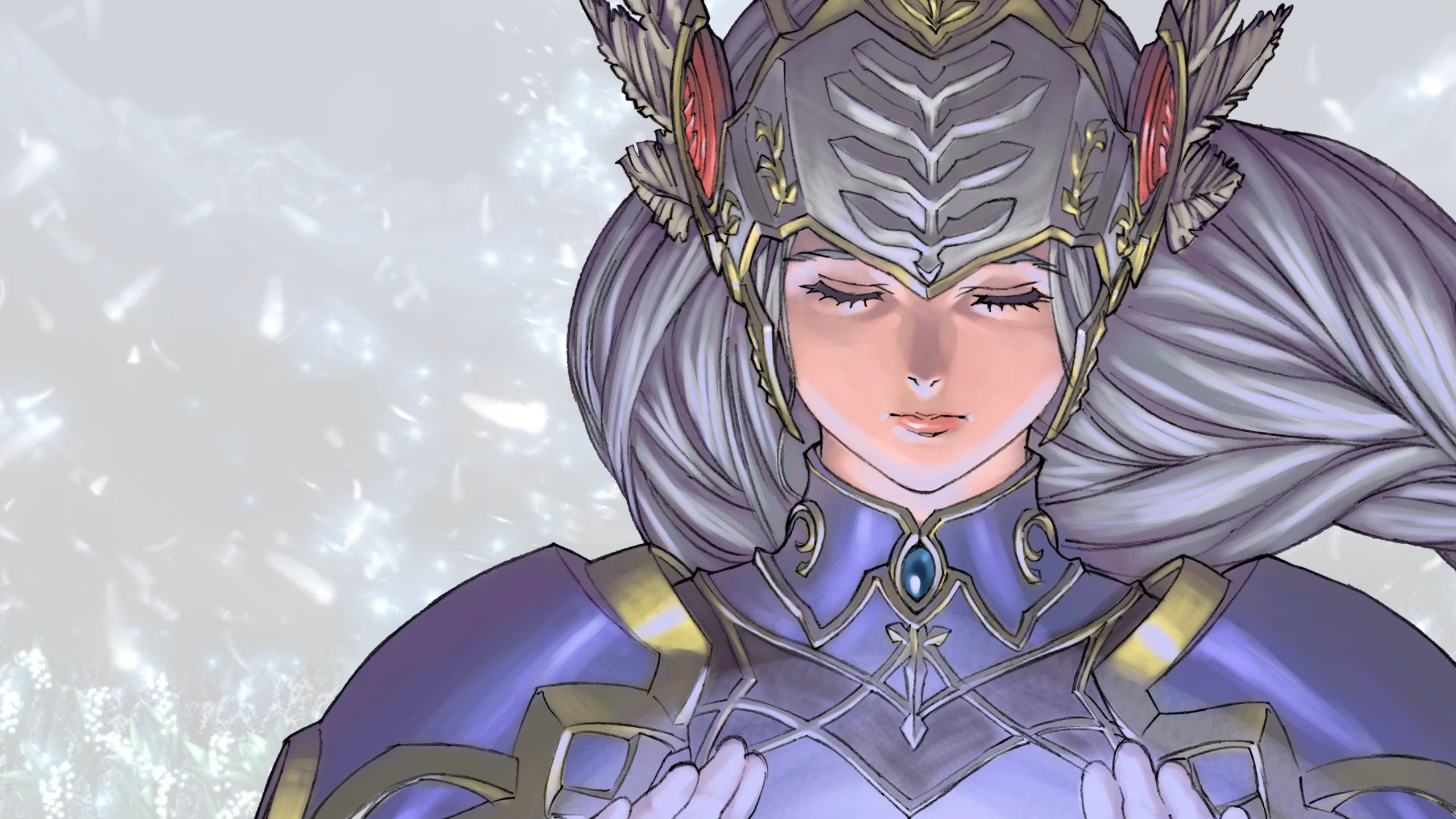
Lenneth – Valkyrie Profile
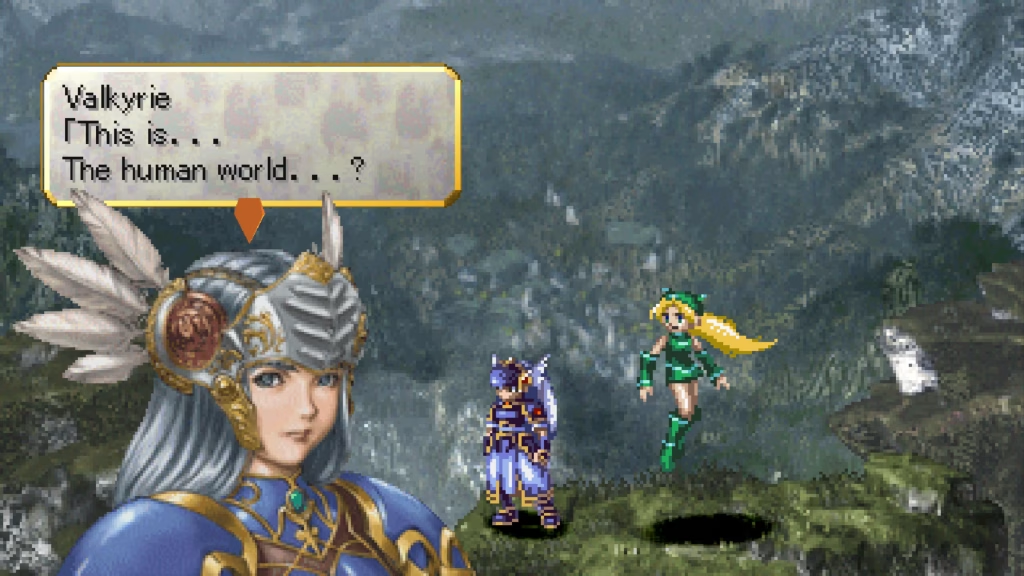
If you think about Valkyrie Profile’s premise when it first arrived around the turn of the millennium, it felt unusually serious and emotional for the JRPG genre, which had often been associated with lighter stories.
In this masterpiece, we play Valkyrie Lenneth as she meets many of her future companions at the end of their mortal lives. Acting under Odin’s orders, she gathers worthy souls to become Einherjar and prepare for Ragnarok, touching stories of loss, sacrifice, and unfinished lives.
Compassionate, but also incredibly tough when the situation demanded it. I chose to include Lenneth not because she was the most charismatic character ever, but because she acted as the perfect link between the tragic stories of the human warriors she recruited and her role as Odin’s own sword.
And I’m sure that, for many of you just as for me, her silhouette is still impossible to forget: the silver hair, the winged headgear, the armor… and, of course, that legendary cry: “Nibelung Valesti!!”
Ichiban Kasuga – Yakuza: Like a Dragon
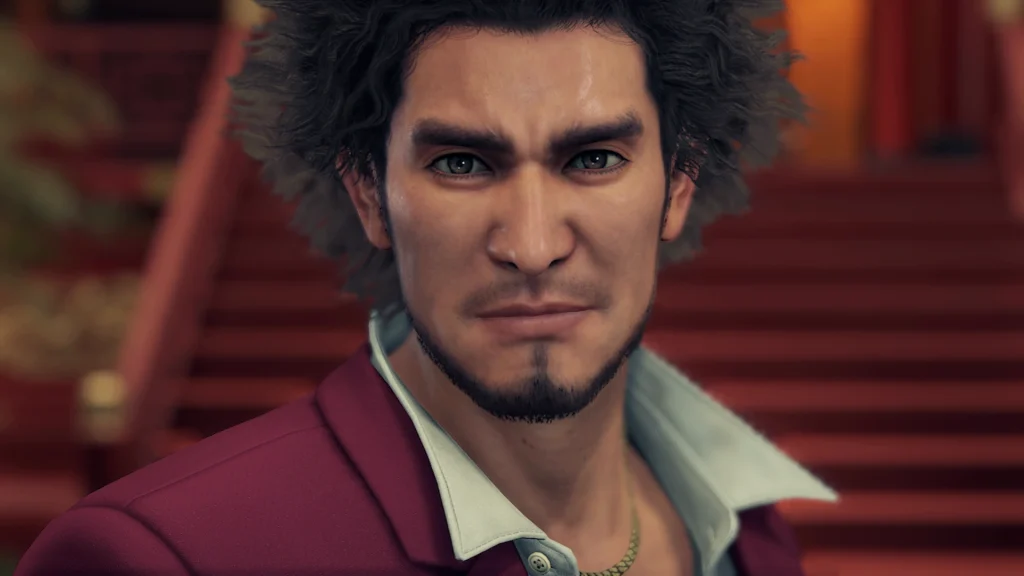
Of course, before Yakuza: Like a Dragon, I barely knew the Yakuza series. I knew what it was, sure, but I had never actually played any of the games. Then this somewhat experimental entry in the series came along and, fortunately, became a huge success, giving us one of the most charismatic heroes in gaming history.
Ichiban Kasuga approaches heroism with an enthusiasm that makes him immediately distinctive. His love of Dragon Quest informs how he imagines the world, helping Yakuza: Like a Dragon translate its street-level conflicts into the language of party-based adventures. He is a middle-aged man who still believes gathering companions and helping people can start something worthwhile.
Ichiban can be impulsive, emotional, and remarkably willing to believe in someone. The humor works because the game lets that openness carry genuine vulnerability. His enthusiasm would be less convincing if someone could exploit it. Absolutely one of those rare characters who, on their own, can be enough to push you to finish an entire game.
Astarion -Baldur’s Gate 3
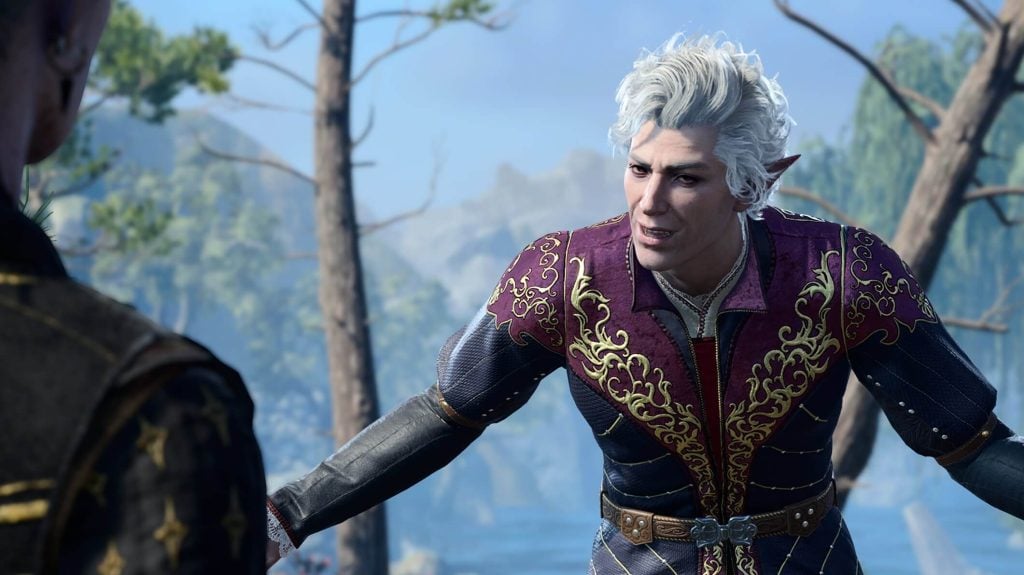
Who doesn’t know Astarion these days? I’d bet even people who have never touched Baldur’s Gate 3, or a turn-based RPG in general, would still recognize him and immediately know where he’s from.
His charm, theatrical personality, incredibly punchable face, and razor-sharp sense of humor make him one of a kind in RPGs. Neil Newbon’s portrayal won Best Performance at The Game Awards in 2023, showing how much attention the role drew.
Beneath the confidence is a vampire spawn who spent centuries under Cazador’s control. His sudden freedom is therefore fragile, and his desire for power is closely connected to the fear of being forced back into that existence. Understanding his circumstances changes how some of his earlier behavior reads, without excusing every decision he makes.
Astarion represents a more recent kind of RPG icon, one whose identity depends heavily on performance and on the player’s involvement in getting to know him. The entertaining first impression matters; what makes the character worth discussing afterward is why.
The Classic X-COM Soldier – X-COM: UFO Defense
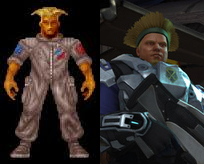
To close things out, there isn’t one specific character, but rather one who’s gone by countless names over the years. Still, that figure, at least for me, is deeply etched into everything I am today as a video game player.
The blond soldier with the towering flat-top is this list’s most unconventional inclusion. He represents a visual archetype from the original X-COM, not a single named protagonist with a fixed biography. His identity was recognizable enough for 2K to bring back the look as the “Classic X-COM soldier” in the Elite Soldier Pack for XCOM: Enemy Unknown.
There isn’t much to say on the narrative side, since this is really just a character prototype you can name whatever you want. But maybe that’s exactly where his strength lies. Beyond representing a game that became a true milestone in video game history, the blond soldier can become almost anything you imagine once you fill in that name field.
That wraps up my personal list of the characters I consider the most iconic. Now I’m really curious to hear about yours: which characters do you love the most, or which ones mean something special to you?

