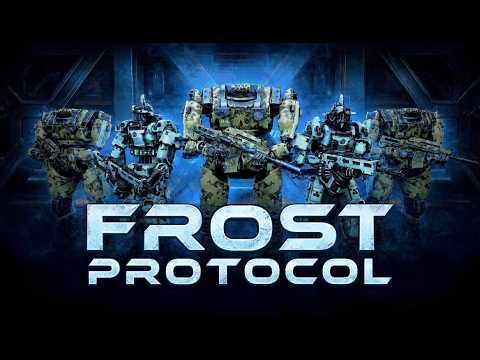
Before introducing today’s game, I invite you to join our Reddit community, because that’s exactly where I stumbled upon Frost Protocol, an intriguing XCOM-like that features a compelling strategy layer alongside its tactical combat system.
Developed by Stonewake Studios, Frost Protocol is an upcoming strategy game built around two connected responsibilities. Away from the base, customizable robots undertake turn-based expeditions across the hostile world of Terminus.
Back home, the surviving crew must be fed, rested, treated, and assigned to the jobs that keep the entire operation running. Its PC release is currently planned for 2027.
A Survival Mission Built Around Robots
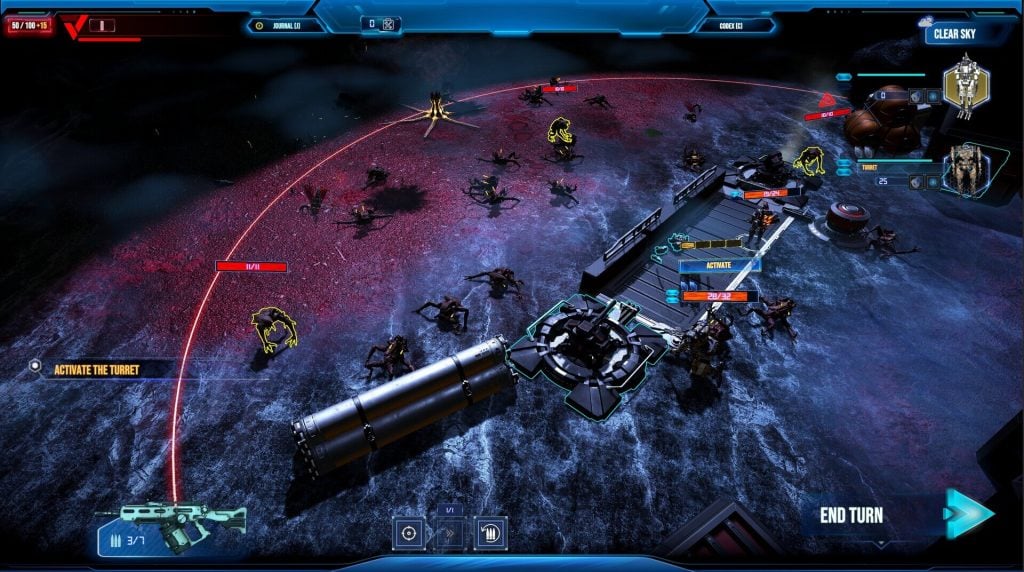
The surface of Terminus has been consumed by an invasive threat known as the Nadir. Human survivors remain at the base while mechanical squads venture into abandoned outposts, recover supplies, examine the spreading biological growth, and search for other people who may still be alive.
Each expedition has several possible objectives. A squad might restore damaged infrastructure, salvage components, secure an area, or scan beneath the ground for Veyrite, a valuable material demanded by an organization called Helvern. Bringing an old mining facility back online can turn an outpost into a permanent source of the resource, making future quota deadlines easier to meet.
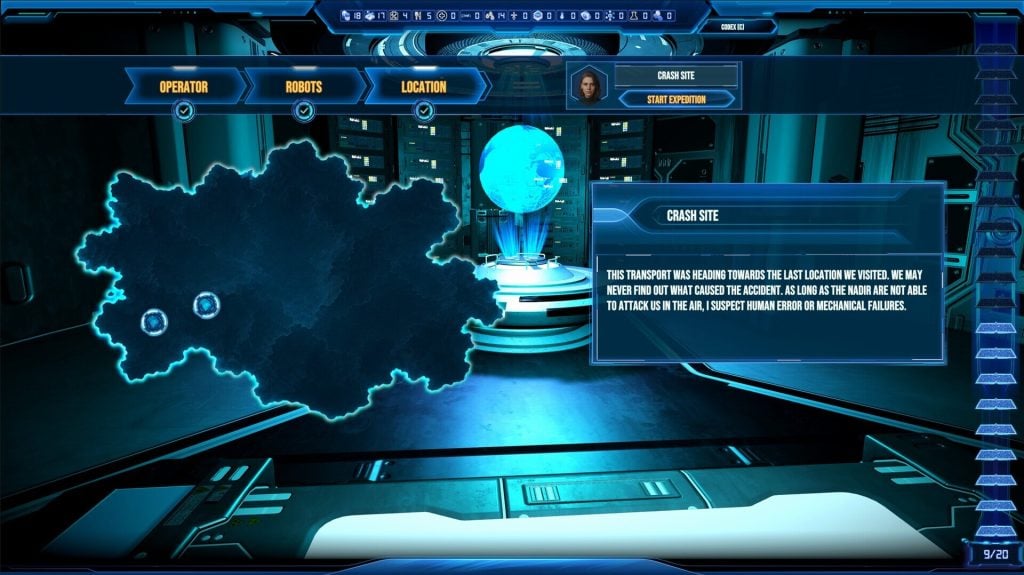
The Nadir become increasingly aggressive the longer a squad remains in the field. Staying a few additional turns could uncover a richer Veyrite deposit or provide enough time to complete another task, but it also increases the possibility of being surrounded before extraction.
An outpost can be revisited later with repaired machines, improved equipment, or a squad assembled for that location’s particular demands.
Turn-Based Combat Under Constant Pressure
Encounters revolve around tactical combat, specialized robot abilities, explosives, and defensive systems found around the environment.
Combat is only one part of an expedition, however. The squad also needs enough time and energy to interact with machinery, carry recovered objects, perform technical tasks, and transport supplies back to base.
Robots have two action points each turn, with movement, item handling, and expedition tasks drawing from the same allowance. Sending a machine to repair a system or collect an object may leave it unable to reposition when enemies arrive.
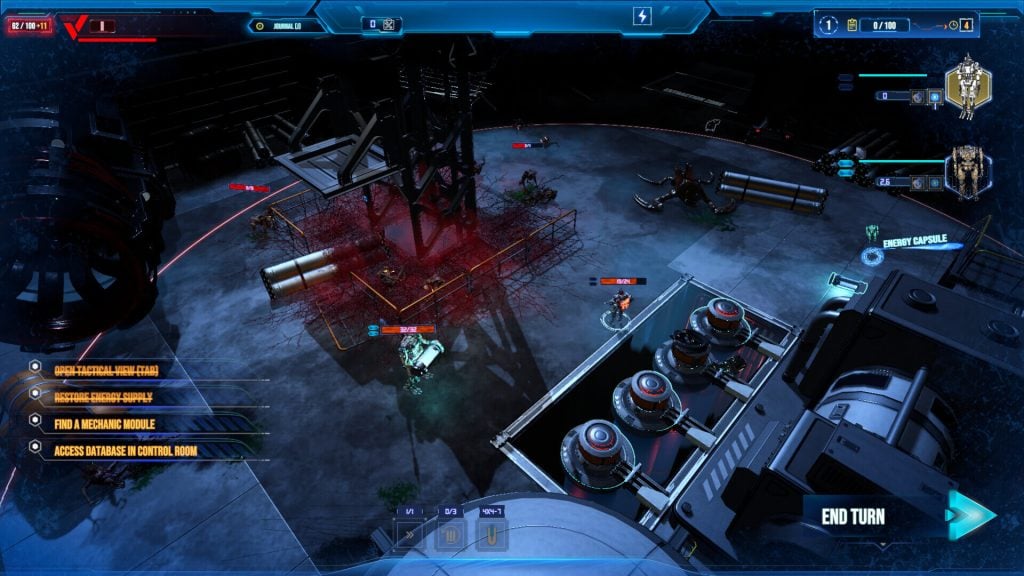
Noise and aggression further complicate the situation. Larger squads provide more firepower but attract greater attention, while explosions and mining operations can accelerate the enemy response.
Sometimes the direct route involves destroying an obstacle and dealing with the consequences. A specialized robot may instead hack the system or analyze the environment without creating as much disturbance.
Explosives can open sealed routes, collapse hostile entry points, or create a final defensive option during an evacuation. The result appears to be a tactical system where the objective is not necessarily to dominate every encounter, but to accomplish enough before the situation becomes unsustainable.
Building the Right Machine for the Job
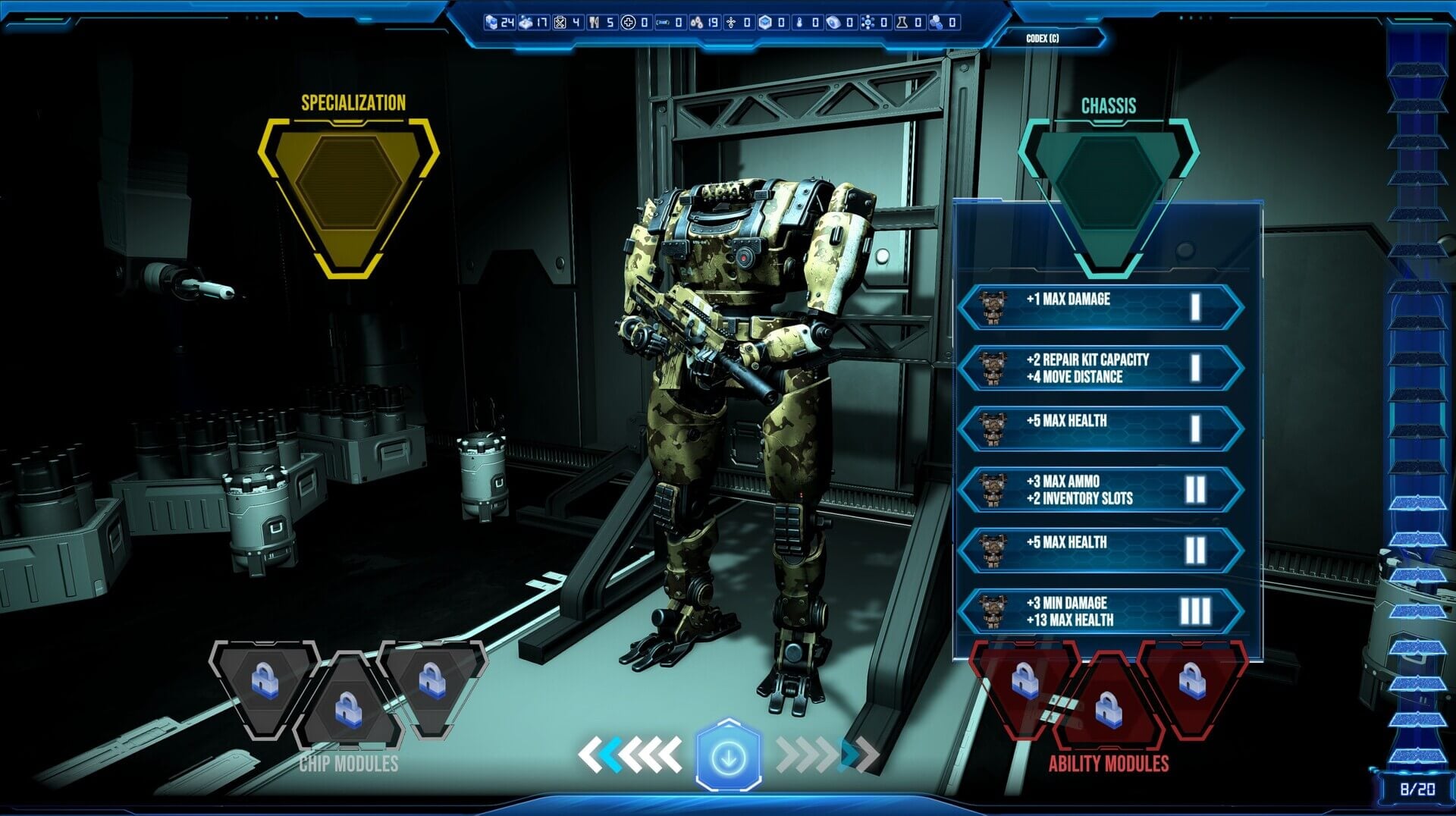
Robots are divided into different roles and carry their own combat tools, energy requirements, transport capacity, task proficiencies, and other characteristics. A heavily equipped unit might hold a defensive position effectively but consume resources that could have supported several lighter machines.
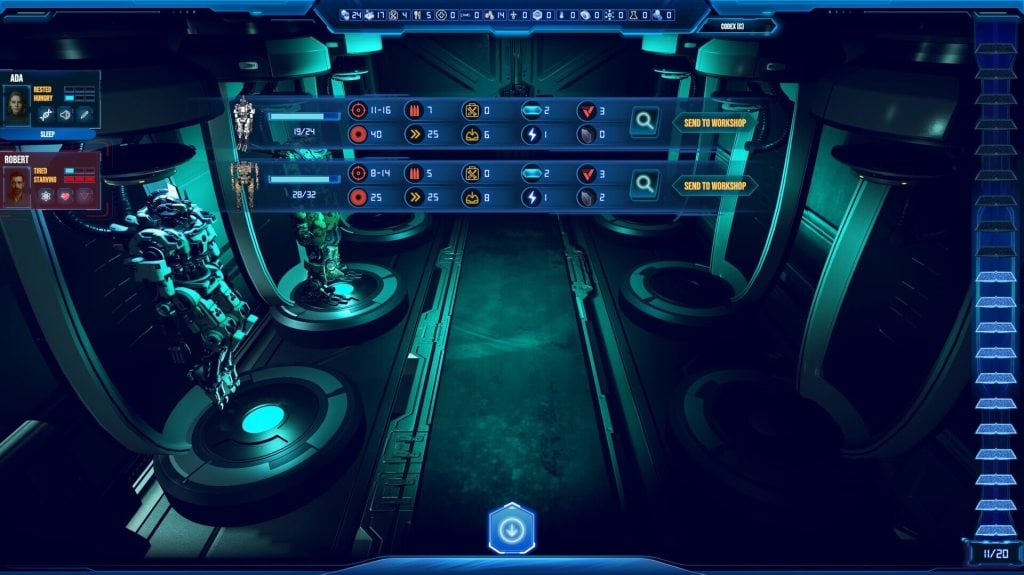
New chassis, ability modules, chips, and specialization components can be recovered during expeditions. These parts are then used to alter the squad between deployments.
The developer has outlined specializations related to hacking, mechanical work, and biological analysis, giving certain robots a purpose beyond dealing damage. Equipment can also be removed without being destroyed, although reconfiguring a machine consumes valuable time at the base.
Damaged robots must be repaired before returning to service, while additional machines can be discovered in the field. This should encourage a broader roster rather than relying on the same small team for every assignment.
The Humans Are Not Safe From Consequences
One of the most interesting parts of the project, at least for me, is the strategy layer where players must assign people to generate power, repair machines, conduct research, manufacture supplies, grow food, and construct station upgrades. Others may need to spend a turn resting instead of contributing to the workload.
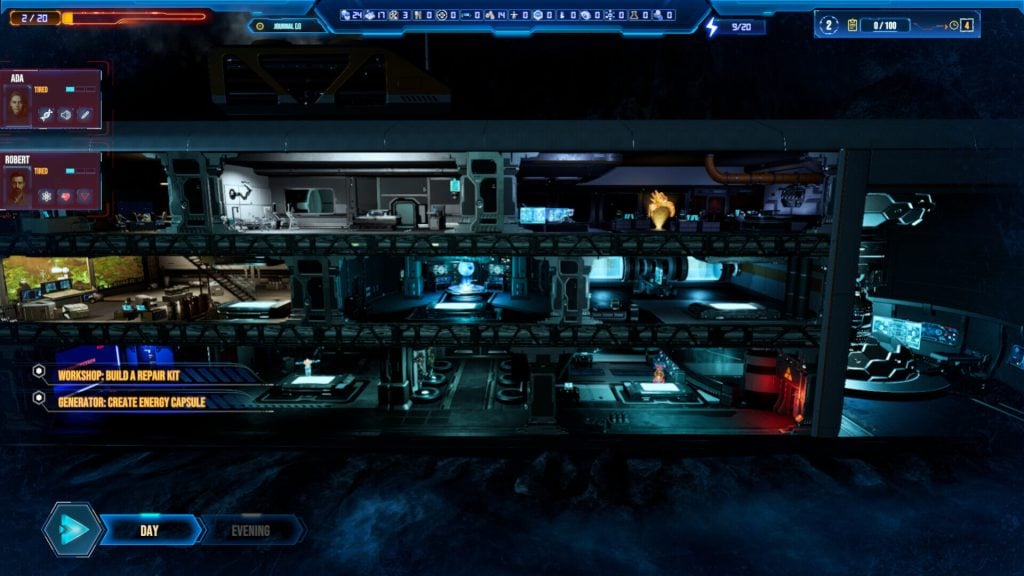
Hunger, fatigue, injuries, and overall crew pressure all need attention. A survivor with useful traits can improve work at the base or influence an expedition, but every additional person also adds another set of needs.
Rescue decisions may therefore become uncomfortable: saving someone could consume food and medical supplies the existing crew cannot spare, while leaving them behind carries its own consequences.
Unexpected events can further disrupt a carefully prepared schedule. Solutions may require materials, several turns of work, or sacrifices involving a survivor’s health. Even the home-base layer has been redesigned around turns, making each assignment a commitment.
There is also a larger mystery behind the daily struggle. Ada Dupont’s journal entries document what happened on Terminus, while continued research into the Nadir and the restoration of abandoned facilities gradually reveal more about Helvern and its interest in Veyrite.
Frost Protocol Playtest Now Open
Stonewake Studios opened the first round of the Frost Protocol Steam playtest on August 24. The early build concentrates on the central gameplay loop and currently contains a tutorial alongside two expedition maps. Access can be requested directly from the game’s Steam page.
There is still plenty that could change before the planned 2027 launch, but the underlying structure is already intriguing. Below, I share the announcement trailer.