

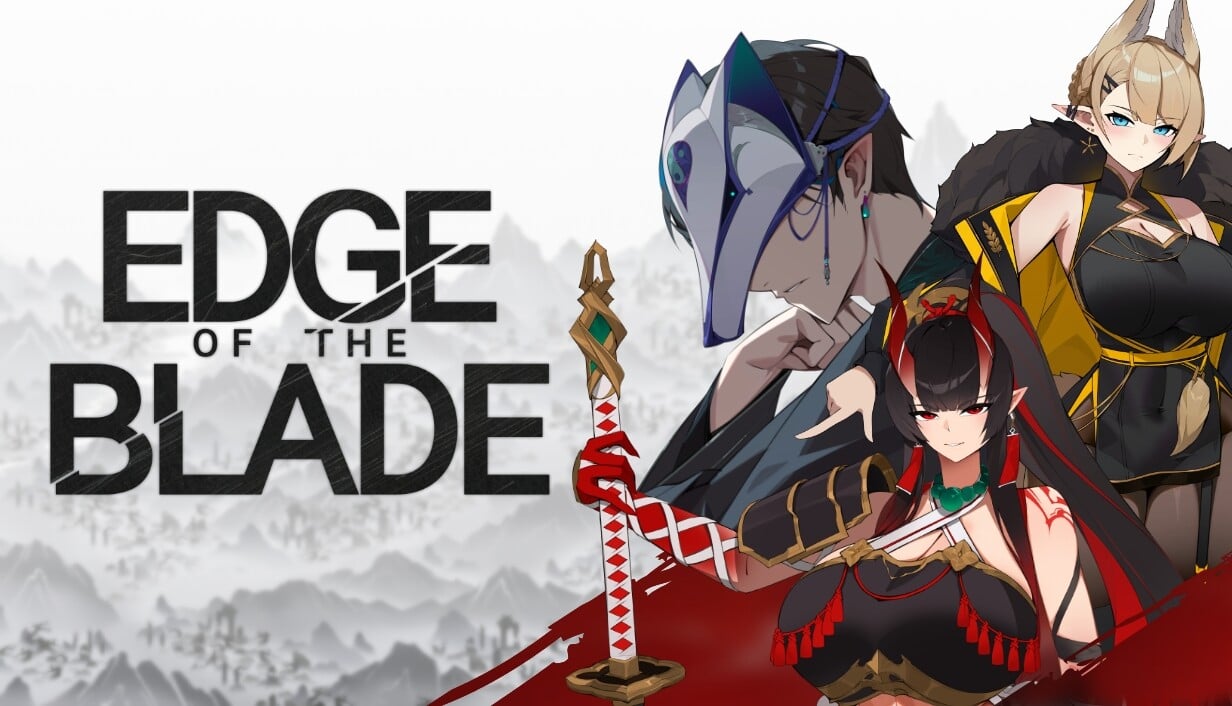
Weekly objectives, supply-based army deployment, faction-specific campaigns, and real-time autobattles define NINEHECTARE’s upcoming strategy roguelite.
Edge of the Blade centers its campaign on decisions made before armies meet. Each run begins in spring and advances week by week toward a final winter battle, leaving limited time to capture territory, secure resources, and prepare for the decisive confrontation. Developer NINEHECTARE plans to release the strategy game on PC in November 2026.
The war takes place in Cheonggu, a region devastated by civil conflict and foreign invasion. At the beginning of a campaign, players choose one of three factions, each entering the conflict with a different objective.
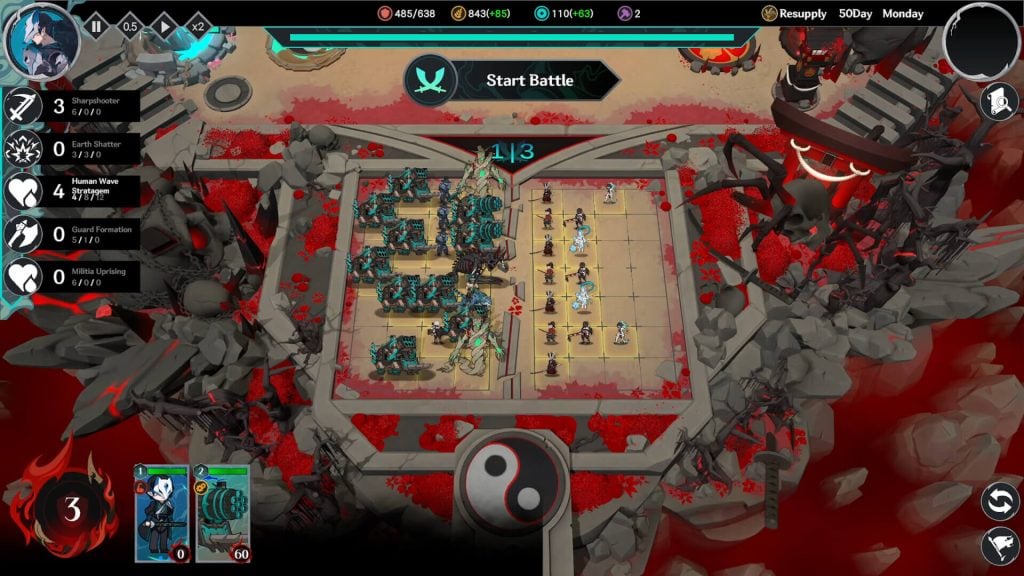
The exiled leader of the Nine-Tailed Clan wants to recover a stolen city and restore their honor. The Oni chieftain seeks further destruction, while the Khan’s royal guard intends to bring Cheonggu under its ruler’s control.
NINEHECTARE describes the factions as completely different, although the developer has not yet explained how far those differences extend into unit rosters, economies, or faction-specific mechanics. Their contrasting motivations should at least provide separate perspectives on the war and support repeated campaigns.
A War Planned One Week at a Time
Every week, the player selects a war objective and works toward its completion. Capturing strongholds produces rewards, but settlements also serve distinct logistical purposes. Cities are used to recruit new talent, fortresses allow armies to be reorganized, and farms provide food for upcoming operations. Territory therefore matters for what it contributes to the war effort, not simply for how much of the map a faction controls.
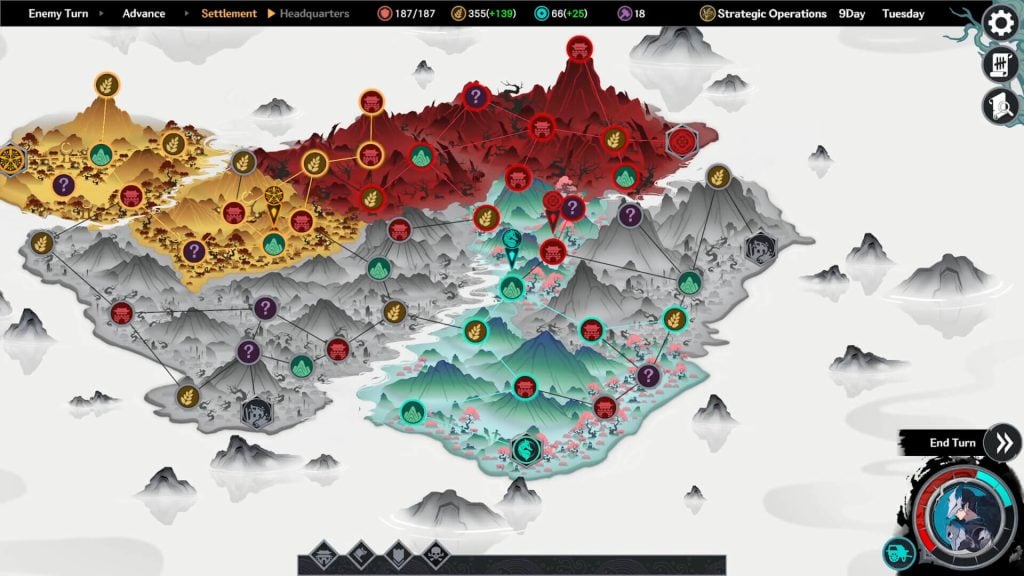
The seasonal calendar places a clear limit on expansion. Spending several weeks securing food or strengthening a defensive position may leave less time to capture strategically important locations before winter.
Weekly events add another layer of uncertainty. Diplomatic envoys and calamities can force the player to choose between fighting, cooperating, or ignoring the situation.
Battles Are Automated, but Preparation Is Not
Edge of the Blade resolves battles as real-time autobattler encounters. Players deploy units within a limited supply budget before combat begins, while hero skills provide a way to intervene after the armies engage. The central battlefield objective is to destroy the enemy’s supply structure or headquarters instead of eliminating every opposing unit.
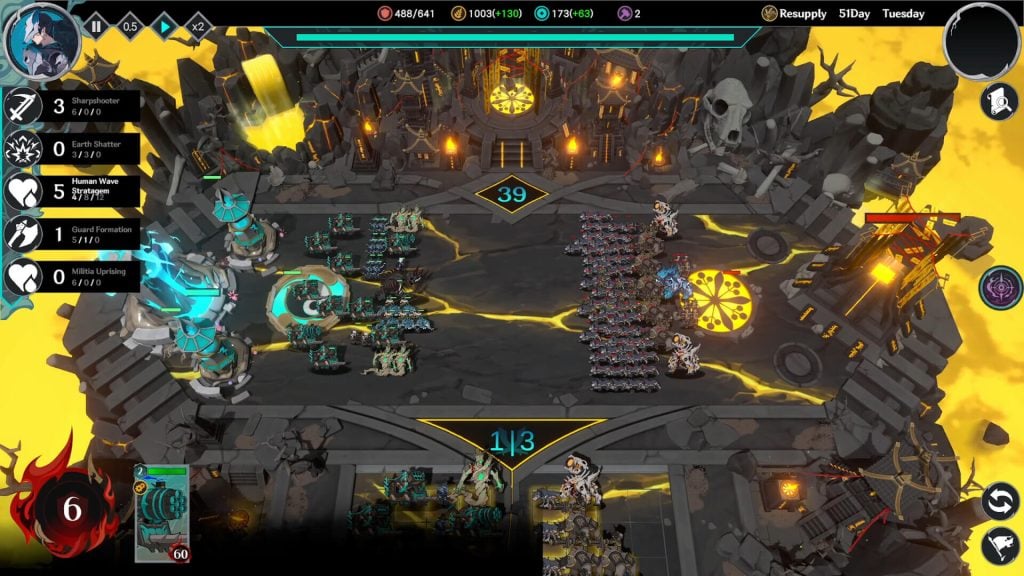
A battle timer prevents prolonged stalemates. Failing to destroy the enemy headquarters before time expires counts as a defeat, encouraging armies that can advance and apply pressure instead of relying entirely on attrition. The system places much of the responsibility on army composition, deployment, supply allocation, and the timing of hero abilities.
Defensive construction also carries directly into combat. A garrison system added during the current playtest grants additional units in defensive battles when headquarters buildings and fortifications have been constructed.
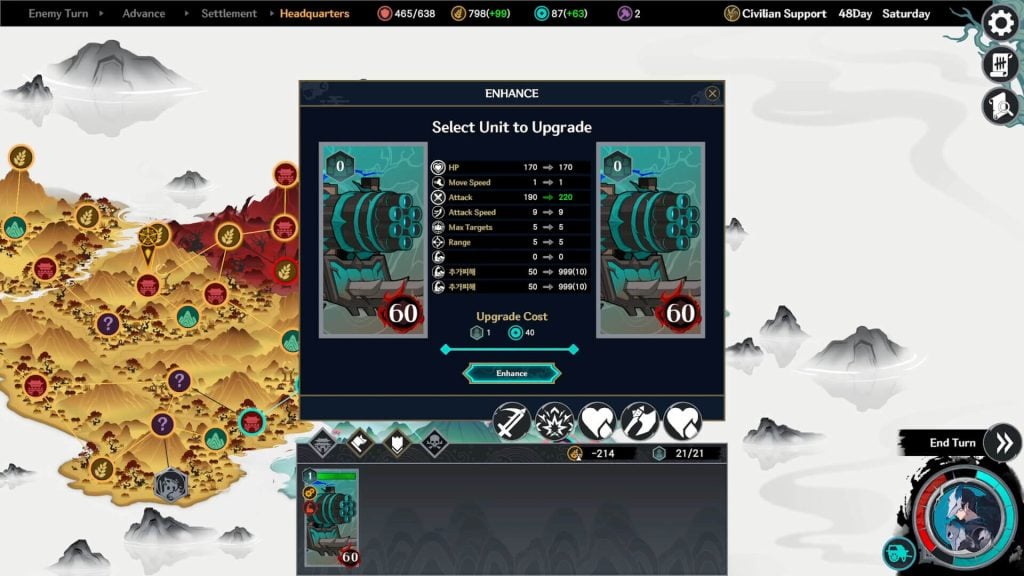
NINEHECTARE is also developing a more restrictive information system for the campaign map. The current playtest displays details about cities when selecting a starting region, but the studio plans to hide distant territory behind fog, requiring armies to explore and gather information before forming a broader strategy.
The game is scheduled for November 2026, although an exact release date and price have not been announced. Access to the ongoing Steam playtest can currently be requested from the store page. The developer has also disclosed that generative AI was used as an assistive tool for some in-game icons and programming work.