

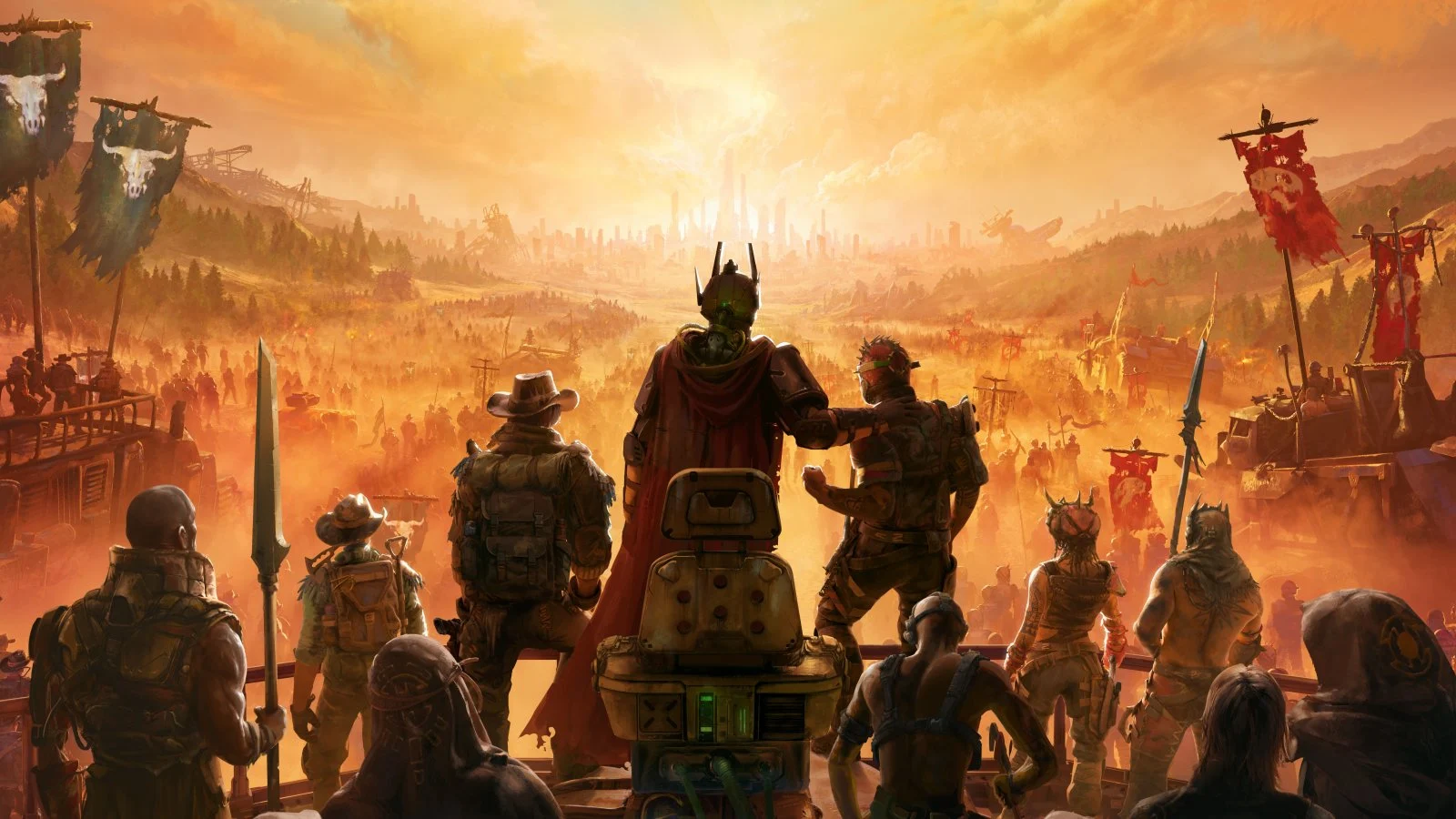
Paradox Development Studio is leaving familiar history behind for a ruined version of North America. Revealed during Gamescom Opening Night Live 2026, Afterworld is a post-apocalyptic grand strategy game in which a vulnerable group of survivors can eventually grow into a continent-spanning power.
The project comes from the studio behind Crusader Kings III and Hearts of Iron IV, but its structure appears noticeably different from Paradox’s established historical games.

Instead of beginning with an existing nation, functioning government, and recognizable borders, the campaign opens close to the ground: a small tribe, limited supplies, and an environment capable of ending the story before an empire has even taken shape. Paradox describes it as its first original non-historical setting in a decade.
- Developer: Paradox Development Studio
- Publisher: Paradox Interactive
- Genre: Post-apocalyptic survival grand strategy
- Platforms: Windows, macOS, and Linux
- Release Date: To be announced
- Modes: Single-player, online co-op, and competitive multiplayer
An Empire That Begins With Food, Water, and Fuel
Every campaign starts with an Origin representing the tribe’s history and circumstances. One group may emerge from a deteriorating nuclear shelter, while another could be a band of religious wanderers searching the wasteland for its missing goddess. These backgrounds establish an initial identity, but they do not completely define the society that follows.
Before thinking about diplomacy or territorial conquest, the tribe must secure basic necessities. Food, clean water, fuel, shelter, and workable land determine whether the settlement survives its earliest years. People are scarce, forcing the player to decide where labor is most urgently needed and which opportunities can be postponed.

Game director Dan Lind describes Afterworld as a grand strategy game influenced by settlement management and survival games.
Systems are introduced gradually as the tribe explores and develops. The goal is to make it one of Paradox’s more approachable grand strategy games without reducing the complexity that emerges later.
That does not mean the campaign is intended to be predictable. Paradox places adaptation above rigid long-term planning. A resource shortage, unexpected discovery, environmental threat, or political dispute can redirect a carefully prepared strategy. Lind compares this philosophy more closely to the emergent complications of Crusader Kings than the comparatively structured military planning of Hearts of Iron.
Rediscovering a Changed North America
Afterworld takes place roughly a century after a global conflict known as The Fall destroyed the technologically advanced civilization that came before. Its North American map is semi-procedural: the broad geography and recognizable landmarks remain, but the distribution of resources, settlements, tribes, and dangers changes between campaigns.

This creates a world that is familiar enough to navigate while preventing every playthrough from following the same route. A valuable deposit found near one starting settlement may be absent in the next campaign. Friendly neighbors could be replaced by raiders, cultists, or a rival community competing for the same limited water supply.
Expansion also depends on logistics. Distant resources must be connected through convoys and supply lines, while settlements require enough support to remain useful. A starting town is not guaranteed to become the permanent capital. When an area can no longer sustain the population, migrating the tribe may be more sensible than defending depleted territory.
The closer scale gives Paradox room to represent events often abstracted in grand strategy games. Rather than depicting only major armies and national borders, Afterworld can follow truck convoys, local raids, underground expeditions, and small groups led by named characters.
There Is No Conventional Technology Tree
One of the most distinctive ideas revealed so far is the Ideas Tree, a progression system shaped by discovery rather than a fixed sequence of research projects.

Knowledge develops from what the tribe encounters. Finding a river can introduce irrigation, while meeting a community with an established faith may reveal organized religion. Exploration therefore affects which social, economic, and technological possibilities become available.
The concept fits a civilization that is recovering lost knowledge instead of inventing everything from nothing. It should also prevent every society from advancing through an identical order of upgrades. Two tribes occupying different environments may develop along separate paths simply because they encountered different people, ruins, and natural resources.
Some discoveries are remnants of the civilization that existed before The Fall. These artifacts can reshape what an emerging nation is capable of, but the most valuable ruins are unlikely to remain uncontested. Ancient technology may grant an enormous advantage while creating new political, military, or moral problems.
Your Society Is Defined During the Campaign
Tribe creation establishes a backstory, but most ideological decisions are made after the game begins. Laws determine how scarce resources are distributed, who participates in leadership, and which groups receive protection or political influence.

As new problems appear, the population develops its own demands. Religious movements may emerge. A growing settlement might question how leadership is chosen. Encounters with mutated or technologically augmented people can force the government to decide who belongs within the new society.
These decisions are not presented as isolated events. A policy that resolves an immediate shortage could generate resentment years later, while excluding part of the population might strengthen one faction and radicalize another. Political mistakes can fracture a nation just as effectively as military defeat or famine.
This gradual construction of identity separates Afterworld from games in which an empire’s ethics are finalized before the campaign starts. The tribe begins without fully developed institutions, and its eventual character reflects the compromises made while attempting to survive.
Diplomacy, Raiding, and the Ancients
Other survivors represent both a threat and a valuable source of people, knowledge, and resources. Rival tribes can be approached through trade, incorporated into the growing nation, attacked for supplies, or confronted through larger wars once regional powers begin to form.

The strategic scale expands alongside the population. What begins as a struggle to support one settlement eventually becomes a contest between alliances and emerging empires. Resources grow more difficult to secure as territory fills, making diplomacy and warfare increasingly important.
Among the most dangerous forces are the Ancients, individuals who lived before The Fall and have remained alive through forgotten technology. These immortal rulers possess their own ambitions for the continent and are unlikely to accept the rise of a new power without resistance.
Campaigns can be played alone, through online co-op, or against other people in competitive multiplayer. There’s no release date yet; you can wishlist it on PC via Steam.


