

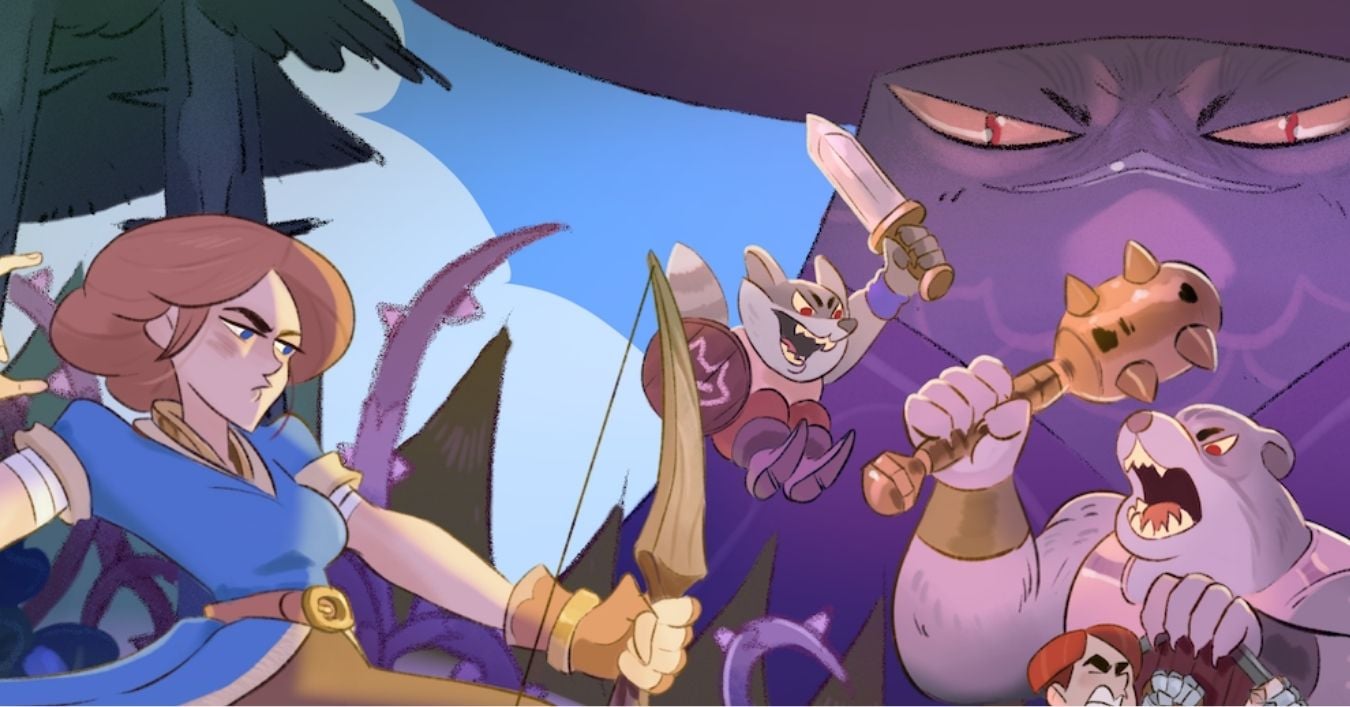
Save the Forest places an unlikely village militia against corrupted woodland creatures, bizarre forest events, and an evil circus director named Morgathrax. Behind that deliberately lighthearted premise is a turn-based roguelite featuring telegraphed enemy intentions, compact battlefields, and extensive squad customization.
Developed by solo creator Jens Arvidsson, the game is preparing to release a Steam demo on September 10, 2026, for Windows, macOS, and Linux.
It will also participate in the October edition of Steam Next Fest. Arvidsson says the full release is planned shortly afterward.
Tactical Battles With Visible Enemy Intentions
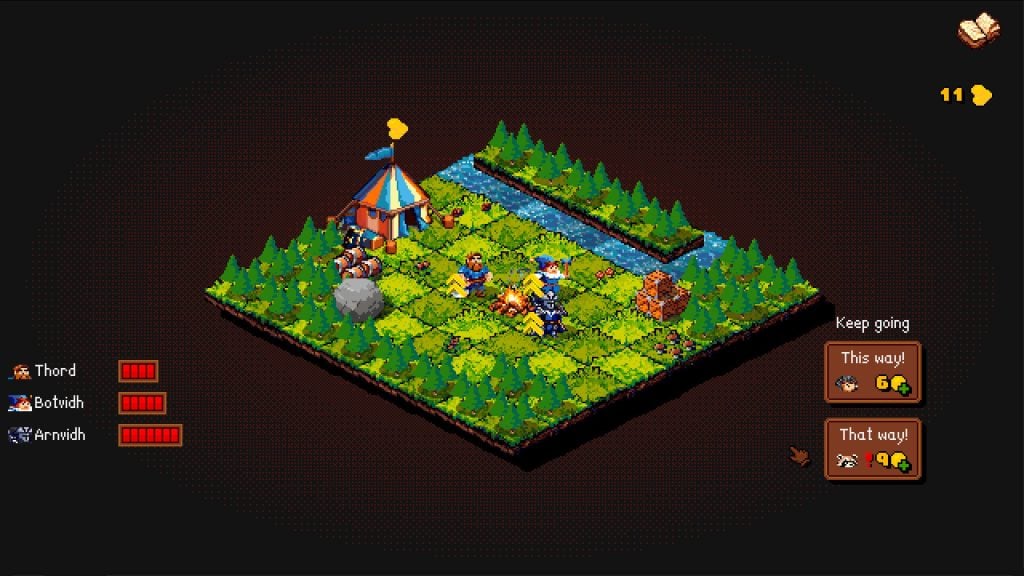
Combat takes place across small isometric maps rendered in colorful pixel art. Each unit follows a straightforward action sequence: move into position, then attack.
The limited number of actions keeps individual turns easy to understand, but it also makes placement especially important. Moving to the wrong square could waste an attack, expose a vulnerable unit, or prevent another villager from reaching a more valuable target.
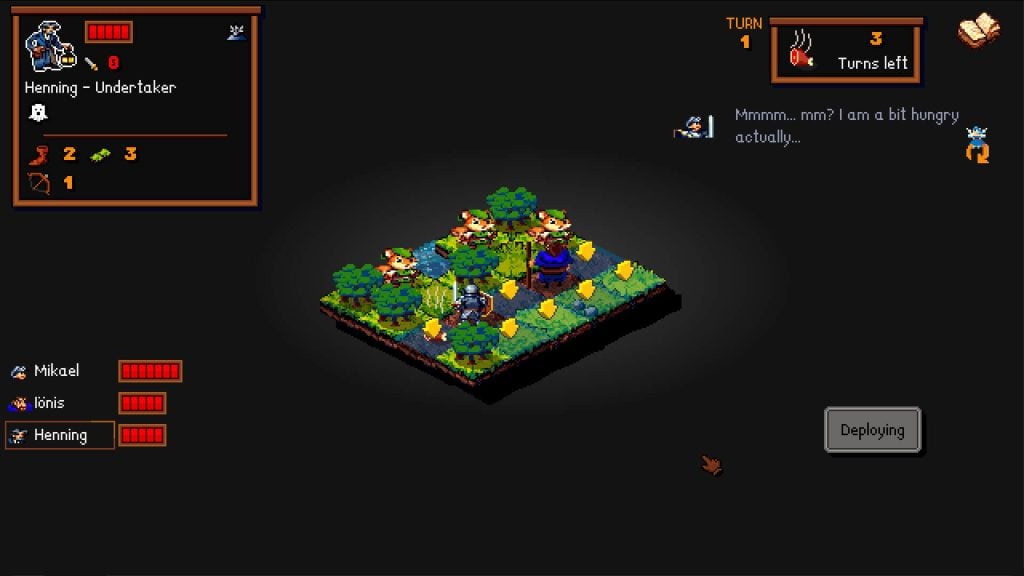
Most enemy actions are displayed before they happen, so commanders can examine the incoming attacks and organize their turn around preventing or redirecting them. Abilities such as pushing, stunning, and inflicting Fear can interfere with those plans, while unit facing also affects how effectively a formation performs.
This approach draws a clear line to Into the Breach, an influence Arvidsson has openly acknowledged alongside older strategy RPGs such as Shining Force.
Building a Different Village Militia Every Run
Coins earned after battles can be spent on additional recruits or improvements for existing villagers, creating a choice between expanding the roster and concentrating resources on a smaller core team.
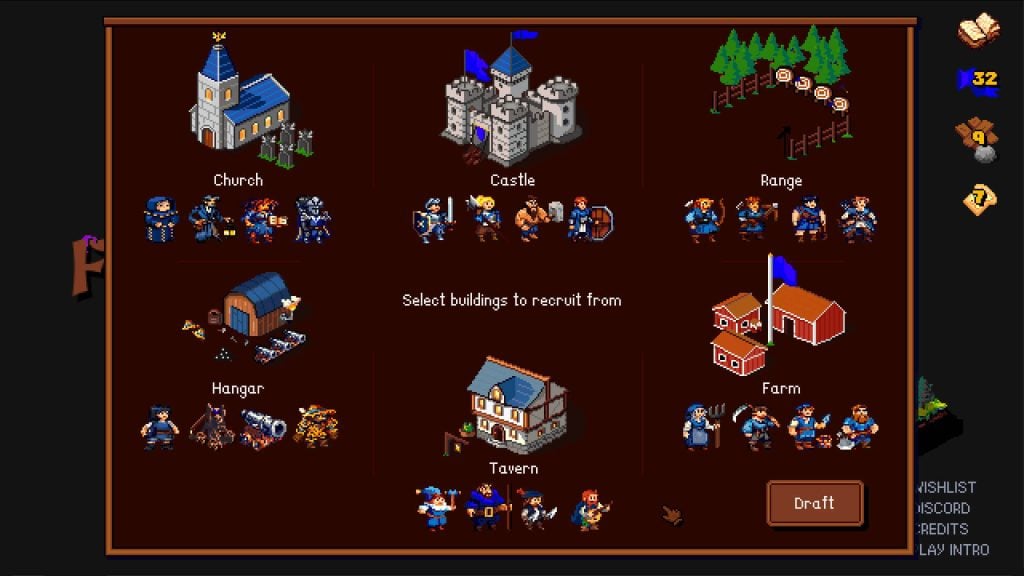
More than two dozen recruitable unit types and over 150 skills provide the foundation for those builds.
Available villagers include specialized roles such as Halberd and Cannon units, and upgrades can alter their statistics or grant additional combat effects. A run might revolve around a few heavily enhanced fighters, a broader collection of specialists, or a combination built around abilities that reinforce one another.
Arvidsson describes party building and tactical positioning as equally important parts of the experience. That division could give the game a useful balance: combat remains relatively predictable because enemy intentions are visible, while uncertainty comes from the recruits, upgrades, and events found along the route.
Bosses, Events, and Increasing Difficulty
Runs progress through battles of escalating difficulty, with 10 bosses currently listed by the developer. Nine additional difficulty options are also planned for those looking to push subsequent attempts further after learning the standard encounters.

Not every stop in the forest leads directly into combat. Random events and unusual encounters can affect the party between fights, with encounters like a frog merchant with a questionable business model, horse-racing gnomes, and opportunities to gain the favor of fairies.
The story surrounding those systems remains intentionally absurd. Humans and forest animals once shared an understanding that Morgathrax, the local evil circus director, should never be trusted. The animals have apparently forgotten that warning, allowing his corruption to spread through the woods. A group of townsfolk must consequently enter the forest, fight its affected inhabitants, and confront the person responsible.
Its SNES- and Genesis-inspired presentation reinforces that less serious tone, pairing medieval villagers, gnome knights, and cute animal opponents with small-scale tactical maps.
The Save the Forest demo launches on Steam on September 10, 2026, ahead of its appearance in October’s Steam Next Fest. The full game is in development for Windows, macOS, and Linux, with an exact release date still to be confirmed.

