


The tough side of turn-based strategy and RPG survival that perfectly fits true masochists.
I know the words “lovers” and “masochists” might suggest something else, but relax: this article is about video games, even if, in a way, it still involves a certain kind of perversion.
Yeah, that strange urge to get kicked around by a game and still beg for more. So today I gathered 15 turn-based RPGs and strategy titles with brutally high difficulty, sometimes outright frustrating, yet always capable of luring in new, fearless, and maybe slightly “perverse” players.
I’m definitely one of them, so putting together a list like this was a breeze, the only thing in this article that could ever be called “easy.” Obviously, there are classics everyone knows, but also a few hidden gems you’ve probably never even heard of.
Battle Brothers
- Developers: Overhype Studios
- Release date: 24 Mar, 2017
- Platforms: PC, PlayStation, Xbox, Nintendo Switch
- Steam Page
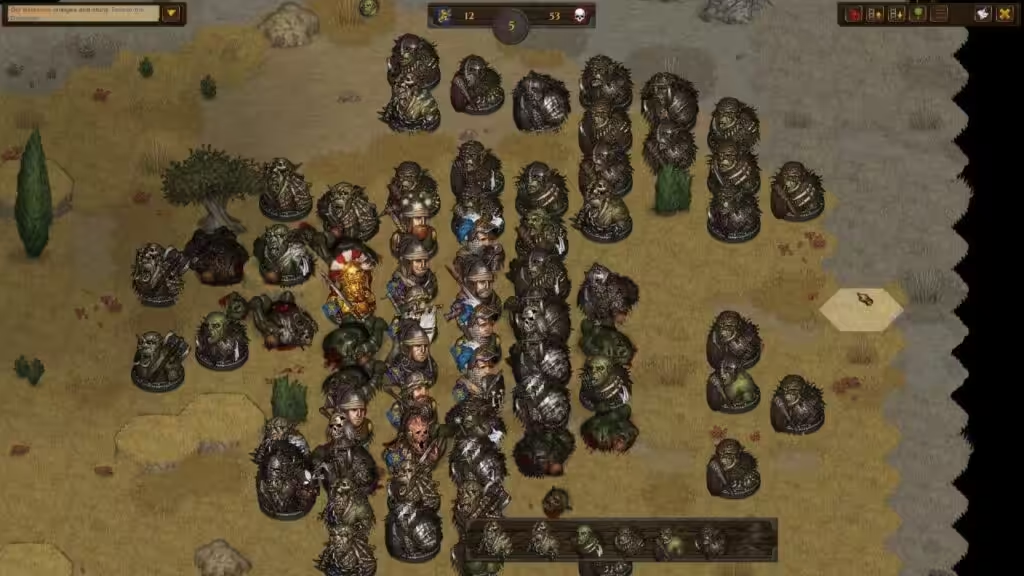
The first thing that comes to mind when I hear “brutal video game” is, obviously, Battle Brothers, because it’s the game that teaches you what “brutal” really means.
You run a starving mercenary company in a low fantasy medieval world, where every contract is a mix of risk calculation and desperation. The tactical layer sits on a hex grid with an action point system, zones of control, morale checks, and a fatigue mechanic that punishes heavy armor and sloppy positioning.
Spears control space, polearms punish bad flanks, shields buy you time, and even then, a lucky hit can rip through mail and delete a veteran in one blow.
The real cruelty lives in the campaign layer. Every brother is a bundle of background traits, injuries, and growth potential. You hire drunks, thieves, cripples, and failed nobles because that is all you can afford. Wounds linger. Lost eyes, broken knees, and permanent injuries stay with a character, and you have to decide whether to keep investing gear and salary into a half-broken veteran or cut him loose and start over.
Food, tools, medical supplies, and wages drain your purse while you chase rumors of caravans, bandit camps, undead hordes, and late-game crises that can wipe entire regions off the map if you are not ready.
There is no story armor, no scripted comeback, and no safety beyond your own caution. That mix of sharp, readable combat and long-term economic pressure is what makes Battle Brothers feel punishing and sometimes not honest at all.
Darkest Dungeon & Darkest Dungeon 2
- Developers: Red Hook Studios
- Release date: 19 Jan, 2016
- Platforms: PC, PlayStation, Xbox, Nintendo Switch
- Steam Page

Darkest Dungeon is for sure one of the hardest roguelite RPGs out there. Every hero has a stress bar that fills from bad lighting, terrifying enemies, hunger, failed rolls, and the general horror of crawling deeper into damp crypts. As stress rises, characters develop quirks. Some become paranoid and refuse to act; others develop phobias that make them useless against certain enemy types.
They snap. They melt down. They turn on each other. Sometimes they simply stop doing their job. You can treat their stress, but treatment costs gold and time, which you do not have.
Combat itself is slow but unforgiving. Your team will probably be wiped out by damage and stress if not positioned correctly. Gunslingers hate being shoved out of position, while occultists lose their minds when forced toward the back rank. Food and torchlight supply resources that ease stress but burn through the gold you need for upgrades.
Dungeon layouts are randomized, enemy compositions vary wildly, and boss fights often shred parties that looked solid only moments before. Losing a character mid-dungeon means carrying that mental and financial cost back to town. There is no auto-pause safety net during travel events, either; clicking through a random ruin event can cost entire runs.
Darkest Dungeon II changed the structure to a roguelike road trip, but it kept the psychological torment as the central mechanic. Instead of a hamlet, you manage a stagecoach route with branching paths that impose increasing risk. You gather tokens that represent buffs and debuffs, and you carry them from fight to fight.
I admit I didn’t play the second installment nearly as much as the first, but the stress system remains, now compounded by compounding route effects and larger enemy rosters. A decision to rest might recover hit points, but escalate stress and invite a worse encounter next. Fights are shorter but sharper, and the meta-layer forces choices that compound mistakes into dead runs.
Both games punish optimism and reward careful planning because the cost of failure is always steep.
Jagged Alliance 2 + v1.13 Community Mod
- Developers: Sir-Tech, Strategy First
- Release date: 1999
- Platforms: PC
- Steam Page
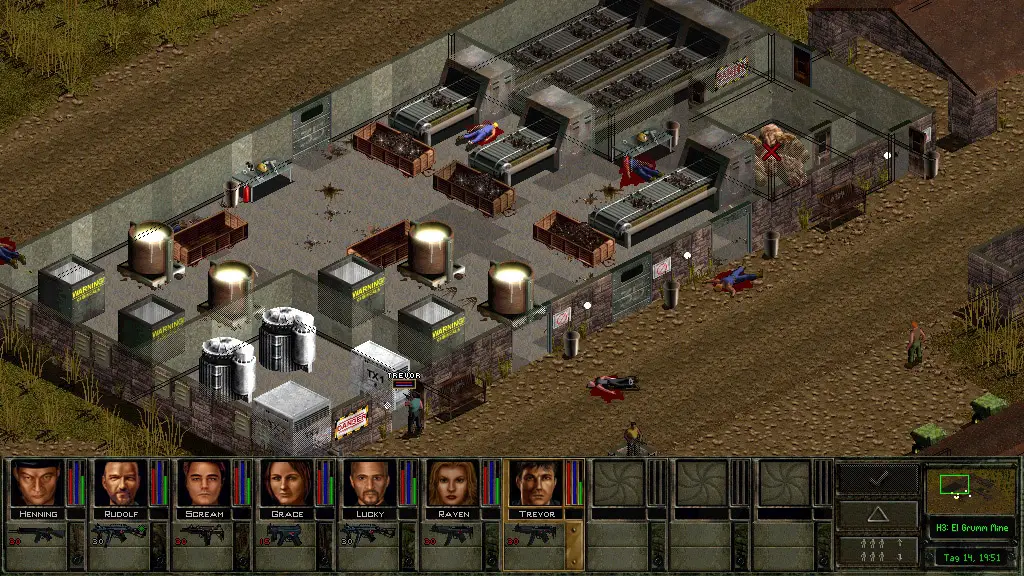
Definitely one of my all-time favorites, and obviously, I’m not the only one. Jagged Alliance 2, by itself, is already a classic for people who enjoy tactical pressure and campaign-level consequences.
You run a mercenary team in Arulco, moving across a sector-based strategic map where every town, mine, and roadblock matters. Combat plays out in turn-based mode with action points, line-of-sight, suppression, stealth, interrupt fire, and detailed hit location logic.
Shots pass through cover, ricochet, or hit bystanders, and the game never pretends you are safe because the odds look decent. A night raid gone wrong or a missed interrupt can turn a confident assault into a full squad evacuation, if anyone is left to pull out.
Mercenaries have personalities, relationships, and salary demands that change as the war drags on. Some hate working with others. Some walk out if morale drops or if you don’t pay them. Your income depends on mines you liberate and hold, and those mines can deplete over time, or you can even lose them to the enemy.
Training militia costs both time and cash. Spreading yourself too thin often means losing sectors you thought were secure, and reinforcing one hotspot always means leaving another exposed. The game gives you freedom, and then lets you drown in it if you misjudge the strategic picture.
Then there is v1.13, the legendary community mod that effectively turns Jagged Alliance 2 into a long-form masochist sandbox.
It raises resolution caps, adds new weapons, externalizes hundreds of balance variables to editable files, expands enemy AI behavior, and layers mechanics like overheating, new inventory systems, and more demanding logistics on top of the original design.
The mod doesn’t just make the game harder; it makes it wider, more reactive, and less forgiving of sloppy planning. AI squads flank more intelligently, weapon handling punishes bad stances and long bursts, and the margin for bad positioning shrinks.
For players who want deep, punishing tactics where every bullet and every hiring decision matters, I think Jagged Alliance 2 with v1.13 remains one of the most intense experiences you can still play today. It is old, rough, and completely uninterested in your comfort, which is exactly why it still has a cult following.
XCOM 2
- Developers: Firaxis Games
- Release date: 5 Feb, 2016
- Platforms: PC, PlayStation, Xbox, Nintendo Switch
- Steam Page
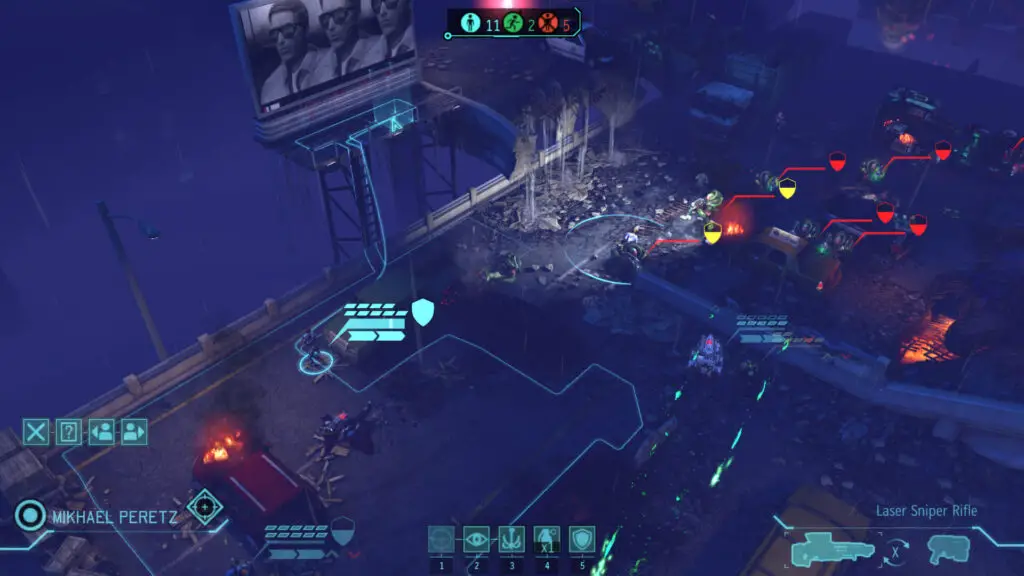
The undisputed king of missing a shot with a 99% hit chance, and at the same time, the modern benchmark for what a tactical strategy game should be today. Obviously, the difficulty of XCOM 2 isn’t just about the occasional “guaranteed” shot that somehow whiffs but also about the entire gameplay experience.
It is a game about being outnumbered, outgunned, and always slightly behind schedule. Missions start in concealment, but the safety is fake.
Timers push you to take risks, objective layouts force bad angles, and pods of aliens chain-activate when you overextend. The two-action system seems simple until you realize how often you need to choose between moving into half-cover for a clean flank or staying safe and letting the timer choke your options.
Full cover, high ground, overwatch traps, armor, and shredding all interact in ways that reward careful turn planning and punish leaps of faith.
The real cruelty comes from the connection between tactical and strategic layers. The Avenger base is never far from failure. The Avatar Project clock rises in the background, new alien types enter the pool, dark events stack nasty modifiers, and every wounded soldier creates downtime in a roster that is already stretched thin.
Losing a colonel on a bad mission is a hole in your future squads, your perk coverage, and even your continent bonuses if that soldier was carrying a key PCS or weapon mod. On Legendary Ironman, the game expects you to live with those failures and rebuild on the fly.
With the War of the Chosen expansion, the game adds named nemesis enemies, resistance factions, soldier bonds, fatigue, covert actions, and more emergent mission types. The Chosen themselves level up over time, learn new tricks, and turn ordinary missions into crisis management exercises.
It becomes a campaign where you are constantly trading short-term risk for long-term survival. That is what makes XCOM 2 brutal in a satisfying way. I think every videogamer on this planet should experiment with what XCOM is all about.
Lords of Xulima
- Developers: Numantian Games
- Release date: 14 Nov, 2014
- Platforms: PC
- Steam Page

This is one of those titles I’m willing to bet you’ve never heard of, and after playing it, I can confidently say it’s among the most brutally challenging games I’ve ever experienced.
It’s called Lords of Xulima and is a hybrid between classic isometric exploration and first-person, party-based combat. You explore the overworld and dungeons from a top-down, pseudo-isometric view, but when a fight starts, the game shifts into a static first-person battle screen where your six-character party faces enemy ranks head-on.
The brutality is front-loaded in how the world is structured. Xulima is not level-scaled. Regions have fixed enemy strengths, and the game lets you wander into zones that will absolutely destroy you if you are underleveled or poorly geared.
Some foes are visible on the map and can be avoided; others appear as random encounters that punish long trips away from safe areas. Enemies on the overworld are finite, and there are rewards for fully clearing areas, but that also means grinding back in older regions has strict limits.
If you waste early combat opportunities or mismanage consumables, you can set up a mid-game where you simply do not have enough safe fights left to catch up.
Party building is another vector of pain. You create a custom six-character team with nine available classes and then define their roles across front and back rows. Frontliners need durability and threat management; backliners need protection and resource efficiency.
Skills, talents, and equipment push you toward specialization, and Lords of Xulima is not generous about letting you fix bad choices. A party with weak crowd control or poor damage types will struggle badly in regions with heavy resistances, and many players only realize that after hours of progress. Resting safely, managing food, and tracking limited-use items become essential habits.
Lords of Xulima is brutal because it remembers the old-school CRPG idea that the world does not scale to your level. It is perfectly happy to let you walk into the wrong valley and never walk out. For masochist players who enjoy mapping danger, planning routes, and squeezing every stat point and consumable for value, it is one of the more underrated punishers in the genre.
Gloomhaven – Digital Edition
- Developers: Flaming Fowl Studios, Saber Interactive
- Release date: 20 Oct, 2021
- Platforms: PC, PlayStation, Xbox, Nintendo Switch
- Steam Page

Gloomhaven – Digital Edition brings the tabletop dungeon crawl into a turn-based tactical format that punishes overconfidence and rewards long-term planning.
Honestly, it’s one of the titles I spent the least time with on this list, probably because of that extra layer of mechanical complexity. At its core is a deck system where every card is both an ability and a portion of your health pool.
Using a card for a strong move often means losing its utility later in the scenario, because you don’t get that card back until you rest. Burn the wrong cards too soon, and your party collapses under fatigue before the final room.
Initiative is tied to the card choices as well, so calculating when you act in a turn can matter as much as the actual action you choose. Enemy AI follows patterns, but those patterns punish bad spacing, predictable lists, and a lack of crowd control. Some enemies can move multiple times per round, can retaliate on counterattacks, or can buff other foes, forcing you to think about sequencing several turns ahead.
The campaign structure is long and nonlinear, with a branching map of scenarios that unlock new characters, items, perks, and narrative beats.
Mistakes in one mission affect future runs because you expend limited resources on items and character upgrades. Resting resets your hand but costs precious camp resources. Pushing deeper without sufficient planning almost always ends in a wipe, so learning to read enemy turn orders, optimize card rotations, and sacrifice short-term comfort for long-term gain is the only way out.
Phoenix Point
- Developers: Snapshot Games
- Release date: 3 Dec, 2020
- Platforms: PC, PlayStation, Xbox,
- Steam Page
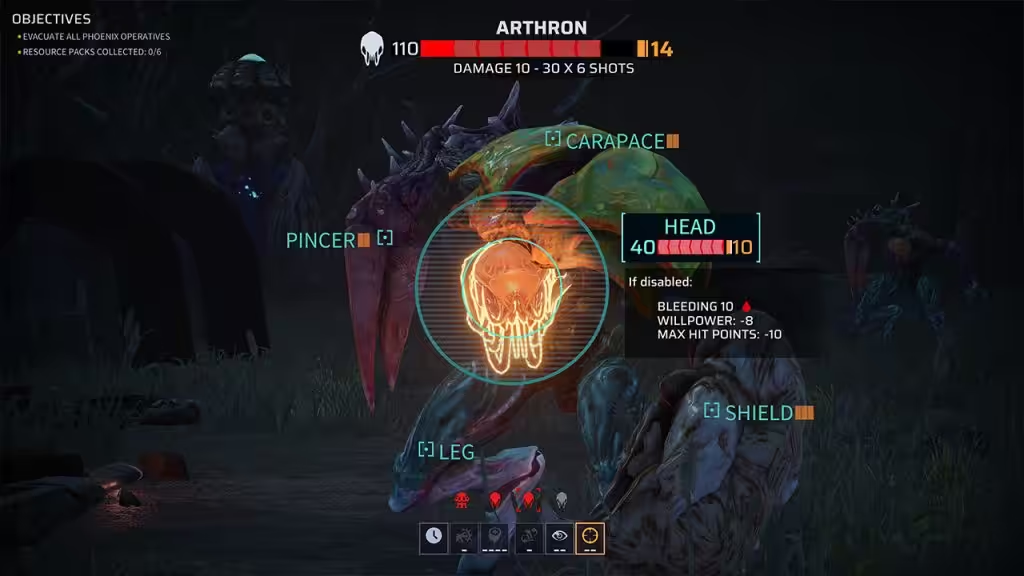
Another strategy RPG with high challenge is Phoenix Point. The tactical layer borrows from XCOM, but replaces the comfort of hit percentage rolls with a ballistic simulation where bullets travel in cones and strike body parts individually.
Shooting a limb can disable weapons, cripple movement, or shut down abilities entirely, and the same is true for your own soldiers. Cover matters, but positioning matters more, because enemy variants can apply corrosion, acid, viral damage, mind control, or armor-shredding attacks that force hard target prioritization every single turn.
The strategic layer pushes even harder. Three major factions compete for territory, research, and ideology. Your relationship with them determines access to equipment and tech, so antagonizing one faction to gain favor with another can result in sabotage, retaliation, and global instability.
Mist zones spread across the map, mutating enemy rosters, and swallowing havens that you are not fast enough to defend. Each lost haven reduces your capacity to trade, recruit, and gather resources. Waiting too long means losing the campaign before you even recognize the point of no return.
What makes Phoenix Point brutal is not a single mechanic, but how many pressures stack at once: evolving enemies, escalating geopolitics, corruption, fatigue, base management, and limited manufacturing capacity. The game demands long-term planning, and it expects players to absorb failures, reroute priorities, and accept casualties as the natural cost of trying to slow an extinction event.
Xenonauts
- Developers: Goldhawk Interactive
- Release date: 16 Jun, 2014
- Platforms: PC
- Steam Page

Another hidden gem of pure cruelty, and an undeniable quality I want to introduce, is Xenonauts, which is brutal in the old UFO Defense sense of the word. It does not care about player comfort, and it does not pretend you are meant to win cleanly. You defend Earth by intercepting UFOs, landing squads, and trying to keep panic under control across multiple funding regions.
If your detection coverage is weak, you lose cities to alien infiltration. If your aircraft roster is weak, you lose the war in the air before you ever see a ground mission. It is a campaign where strategic mistakes manifest hours later, and rarely with warning.
Ground combat is crude and hard too. Soldiers have firing arcs, view cones, time units, suppression, bravery checks, and ballistic trajectories that interact with cover, walls, and civilians.
A missed burst can kill a hostage, destroy salvage, or hit your own flank. Aliens are also not balanced later on in the game. Early missions often feature squads with poor accuracy, terrible weapons, and fragile armor, which makes every indoor breach feel like a coin flip.
Pilot deaths, base placement, and funding relationships form a separate layer of stress. You can lose a region because you built your base in the wrong hemisphere, and you can bankrupt yourself trying to field too many vehicles or rifles too fast.
Like its inspiration, Xenonauts is less about winning than about surviving long enough to get off the back foot, and for players who like punishment that feels systemic, it nails the tone.
Stoneshard
- Developers: Ink Stains Games
- Release date: 6 Feb, 2020 (E.A.)
- Platforms: PC
- Steam Page
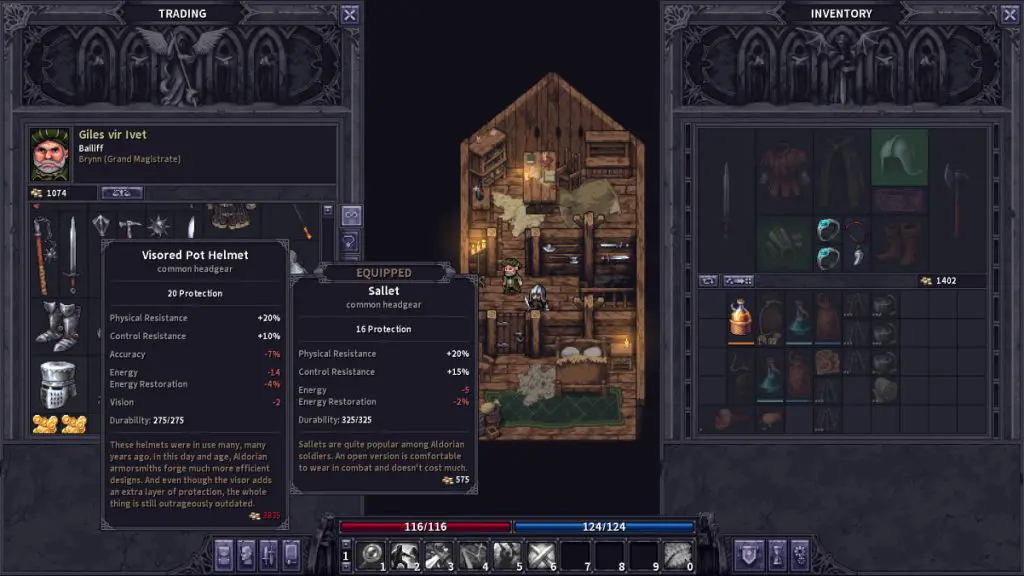
Stoneshard is one of those games I’m deliberately keeping on the back burner, waiting for what feels almost like a utopian dream: its full release date. This roguelike RPG has been in early access since 2020, but don’t mistake that for abandonment but quite the opposite.
Even now, the game already offers a massive amount of content, paired with a level of brutality few titles can match. That alone makes it an easy recommendation, even in its current state.
Stoneshard is a low fantasy survival RPG where almost everything that hurts you does so slowly and permanently. Health pools are segmented by body part, and each part can bleed, fracture, or become infected.
Bleeding reduces health over time, pain spikes can lock you out of actions, and infections require medicine you often cannot afford. Hunger, thirst, fatigue, and temperature push from the other side, and every condition competes for the same limited set of consumables. You do not chug potions in Stoneshard. You ration, and you pray that the next village has bandages.
Fights are rarely fair. Bandits come in mixed parties with archers, spearmen, and bruisers, which means you have to break line of sight, use terrain, and kite enemies into choke points. Aggroing two rooms at once can end a run even if your build is solid. Gear durability is another slow knife: weapons dull and break, armor loses protection, and repairing equipment drains precious coins that you need for medical supplies.
Death does not come from bosses. It comes from wolves, bad weather, starvation, and misjudged scouting. Travel itself is dangerous because fast travel is limited, ambushes are common, and dungeons are long.
The brutality of Stoneshard is not about big numbers or impossible enemies. It is about how many systems are arranged to punish small lapses in judgment over long distances. If the player refuses to respect logistics, the game quietly kills them.
King Arthur: Knight’s Tale
- Developers: NeocoreGames
- Release date: 26 Apr, 2022
- Platforms: PC, PlayStation, Xbox
- Steam Page

My next recommendation for anyone who thrives on a high level of challenge is King Arthur: Knight’s Tale. Every mission is a trade of blood, sanity, and time. Knights suffer permanent wounds, psychological conditions, and, in some cases, corruption that slowly pushes them toward darker archetypes.
Death is final, but sometimes survival is worse because an injured hero becomes an expensive liability you still feel compelled to field. Even small skirmishes can leave half a roster in the infirmary for weeks, creating gaps in class coverage that matter on the next operation.
The tactical layer runs on action points, armor values, overwatch, knockbacks, and directional attacks, but the real brutality comes from pacing. Most missions are multi-stage, and players who overextend in the early fights pay for it when the finale arrives, and the healer is out of spell charges or the tank is sitting at half armor.
There’s also a strategy layer where buildings must be constructed to provide treatment, training, and political functions, but resources are scarce and time is not free.
Morality tracks across two axes, and your choices not only affect narrative outcomes but also alter access to units and relics. Failing to commit to a direction creates awkward middle paths that weaken roster composition and itemization.
King Arthur: Knight’s Tale is brutal because you are asked to survive a long campaign with a roster that is always slightly broken, slightly understaffed, and always one bad mission away from unraveling.
Pathfinder: Wrath of the Righteous
- Developers: Owlcat Games
- Release date: 2 Sep, 2021
- Platforms: PC
- Steam Page

Pathfinder: Wrath of the Righteous becomes brutal when played in full turn-based mode because it expects literacy in a ruleset that does not bend toward accessibility. The Pathfinder system contains status effects, resistances, immunities, dispels, combat maneuvers, saving throws, attacks of opportunity, action types, and layered buff interactions that punish shallow understanding.
Enemies frequently carry spell lists, talents, or immunities that negate your default tactics outright. The game does not explain these interactions gently. It assumes you either already know, or will learn the hard way.
The campaign’s scale magnifies that pressure. Wrath of the Righteous is long, dozens of hours if played briskly, and well over one hundred if you engage with optional content. Rebuilding a bad party is not as simple as respeccing one character. Caster progression, mythic spell access, feat requirements, and weapon focus all interact with specific paths, so an early mistake in build planning can echo thirty hours later when you realize your party lacks the tools for certain encounters. The game never fixes that for you. It lets the consequences stand.
Mythic Paths add another layer. Choosing Angel, Trickster, Lich, Azata, Aeon, or the more exotic options changes how your character develops mechanically.
A Lich reshapes party composition through undead servants, changing rest cycles and buff priorities. Angels push heavy caster utility and late-game divine spikes. Tricksters rewrite the rules of critical hits and skill checks. Choosing poorly for your playstyle is not fatal, but it makes the campaign feel hostile until you adapt.
The crusade layer increases the brutality further. Armies march, morale shifts, sieges drain resources, and mythic events demand commitments that cut off other paths.
Army compositions matter, sending the wrong stack into the wrong enemy wipes weeks of progress. This makes Wrath of the Righteous difficult in a way that feels earned: it is not about inflated numbers or cheap ambushes, but the ruthless exposure of gaps in system mastery.
airness, no scripted campaign to guarantee victory. Some maps and faction matchups are functionally unwinnable unless you understand every faction’s ecosystem and the tempo of seasonal economy. That is exactly why the game is loved by masochist strategy fans: it is hostile, opaque, and uninterested in symmetrical balance.
Quasimorph
- Developers: Magnum Scriptum
- Release date: 2 Oct, 2023 (E.A.)
- Platforms: PC
- Steam Page
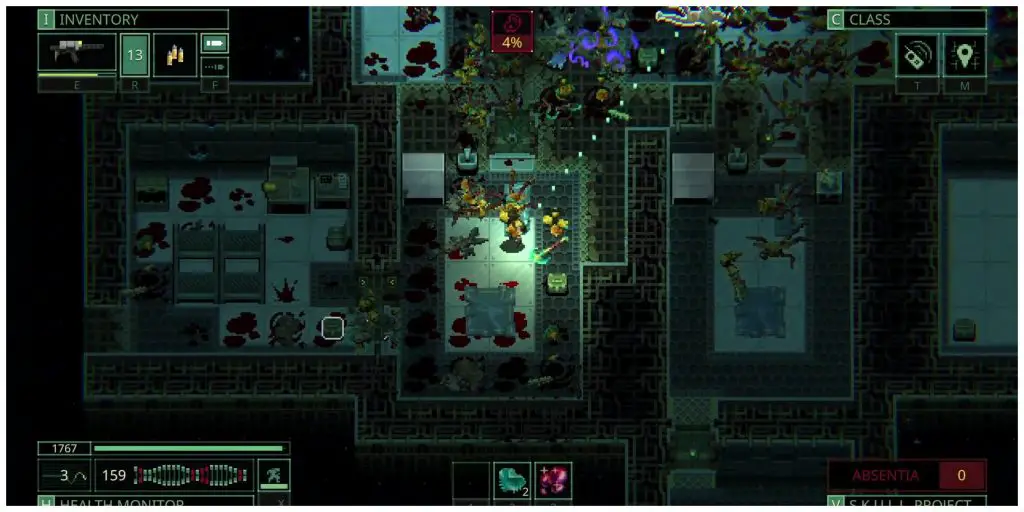
My next recommendation is a very punishing title and very close to Stoneshard, since it’s also a roguelike RPG and is likewise currently available in Early Access.
Quasimorph is a dark turn-based extraction RPG where death wipes your inventory, then bolt that onto a corporate-run solar system full of factions, ship upgrades, and contracts.
Every mission is a one-way ticket for a disposable clone. You pick a class, gear them up from your limited stash, drop onto a hostile planet or station, and try to finish a contract while not bleeding out in a corridor.
If the clone dies, everything they carried is gone. If they make it back to the ship, the loot and experience become permanent progress for your PMC. No mid-mission banking, no partial refunds, no safety net.
The tactical layer is tile-based and fully turn-based, with line-of-sight, ballistic weapons, ammo types, cover, and status effects that stack fast. Pain shock, bleeding, armor degradation, and limb damage can spiral out of control in just a few exchanges.
Enemies have resistances and weaknesses that demand proper ammo and damage types. Taking the wrong loadout into the wrong zone means burning through your medkits and stims just to survive a couple of rooms. Extraction becomes the real objective long before you clear the map.
Outside missions You manage a ship, unlock new stations and floor scanners, invest in faction relations, and decide which contracts are worth risking your best gear for.
Factions fight a meta-war across planets on a system map, and their conflicts spawn new missions and opportunities. The brutality here comes from how easy it is to overreach. Taking a high-paying job in a zone you are not ready for can cost you your best weapons, armor sets, and a high-level clone in one bad run. Because progression is tied to extracted loot and completed contracts, a few failed sorties can stall your entire campaign.
Quasimorph is openly hostile to casual play. It expects you to inspect enemies, learn their resistances, plan ammo usage, and route missions around extraction points instead of full clears.
It sits in that sweet spot between classic roguelike cruelty and modern tactical gunplay, and it never pretends that a mission gone wrong is recoverable. You either get out, or you feed the void with another clone.
Fear & Hunger
- Developers: Miro Haverinen
- Release date: 11 Dec, 2018
- Platforms: PC
- Steam Page
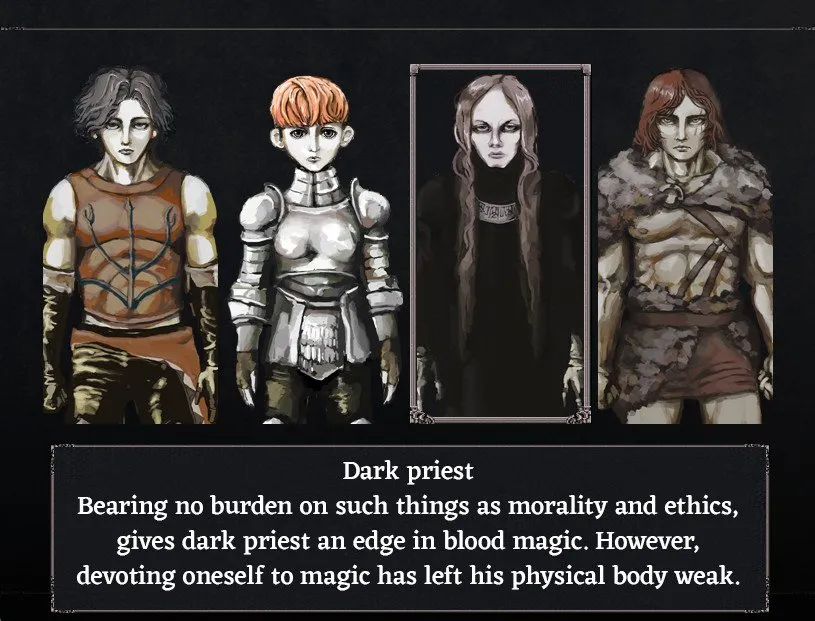
Another not-so-well-known title, but one that I think pairs perfectly with the desire to suffer, is Fear & Hunger.
There are no clean tutorials, no hint systems, and no guarantee that an early encounter is even winnable. Combat uses a targeted limb and organ system. Attacking heads, arms, or legs has specific effects; decapitation ends fights instantly, cutting limbs shuts off enemy abilities, destroying wings grounds flying targets, and so on.
Enemies use the same logic on you. Limbs can be severed, which permanently removes actions or equipment options. Eyes can be gouged out, impacting accuracy. They are long-term consequences layered on top of hunger, sanity loss, infection, and ritual mechanics.
Save points are rare, tied to items, or tied to risks that can go badly. Resting can result in ambushes or horrific events. Hunger and starvation sit in the background as constant downward pressure.
The longer you remain alive, the more danger accumulates. There is no natural recovery curve, no smooth healing loop, no “just grind for XP” fix. Exploration itself is a long negotiation with risk. The end result is one of the most brutal turn-based RPGs out there.
Divinity: Original Sin 2
- Developers: Larian Studios
- Release date: 14 Sep, 2017
- Platforms: PC, PlayStation, Xbox, Nintendo Switch
- Steam Page

I’ll admit that I really struggled with the combat system in Divinity: Original Sin 2. You know that feeling of always doing something wrong, something I thankfully didn’t experience again in Baldur’s Gate 3.
Anyway, Divinity is brutal indeed, even if at first sight it looks playful, but beneath the humor sits a deeply sharp tactics engine built around elemental interactions, armor gating, and turn tempo.
The armor system alone defines the pace of every fight. Physical damage breaks physical armor, magical damage breaks magical armor, and crowd control only works after those layers collapse.
If you dump spells without breaking the right armor first, you waste actions and lose tempo. If you break the wrong armor, you can lock yourself out of key disables and lose the fight.
Elemental surfaces add a second layer of punishment. Fire ignites oil, steam becomes electrified water, poison clouds explode when ignited, and cursed surfaces spawn hazards that spread across entire arenas. Many players lose encounters not because they were outnumbered, but because they accidentally chained fire, oil, and poison into a domino effect that killed half their own team.
Elevation grants damage bonuses. Tight corridors punish area effects. Vertical funnels create death traps that enemies are not shy about using. DOS2 is one of the rare RPGs where being out of position cost initiative, control, or survival.
On higher difficulties, this translates to full party wipes during the tutorial if you do not respect how punishing the sandbox can be. The game rewards players who build around control, tempo, terrain, and turn order, and its brutality stems from being punished for not thinking the way the simulation expects you to.
Wasteland 2
- Developers: inXile Entertainment
- Release date: 19 Sep, 2014
- Platforms: PC, PlayStation, Xbox, Nintendo Switch
- Steam Page

Let’s close my list of tough RPGs with Wasteland 2. A party-based CRPG with turn-based combat, where under the Fallout-style nostalgia sits a game that is happy to let you dig your own grave with bad skill spreads and poor world map decisions.
You build a squad of Desert Rangers with stats and skills that cover combat, dialogue, and utility. Put too many points into the wrong firearms or niche skills, and you will feel it hours later when you cannot crack crucial safes, disarm mines, or keep up with new enemy armor. There is no gentle respec button waiting to save you from early mistakes.
Honestly, I found this installment significantly harder than the third one, which was a bit more forgiving overall, especially when it came to the combat system. A system that has cover, line-of-sight, action points, cone attacks, and friendly fire.
Enemies do not scale down to your level. Wander into the wrong area early, and you will simply get erased. The game does not stop you from doing that.
The overworld map is where Wasteland 2 becomes quietly brutal. Water is limited, and travel consumes it. Radiation zones block routes until you have the right gear. Responding to a distress call might mean abandoning another settlement to its fate, with permanent consequences on the narrative and on your faction’s reputation.
Many choices are locked behind skill checks that you will fail if your build is not prepared, and the game does not circle back to give you second chances for most of them.
The Director’s Cut version makes the experience smoother and adds perks, quirks, and targeted shots, but it does not blunt the core of the game. For players who like their turn-based campaigns to feel like actual survival missions, it delivers.
These are some of the toughest, most unforgiving, and often downright unfair, RPGs currently available. Titles like Caves of Qud, Underrail, BattleTech, Troubleshooter, and others definitely deserve at least an honorable mention. But now I’m waiting for your feedback and recommendations. See you next time. Ciao

