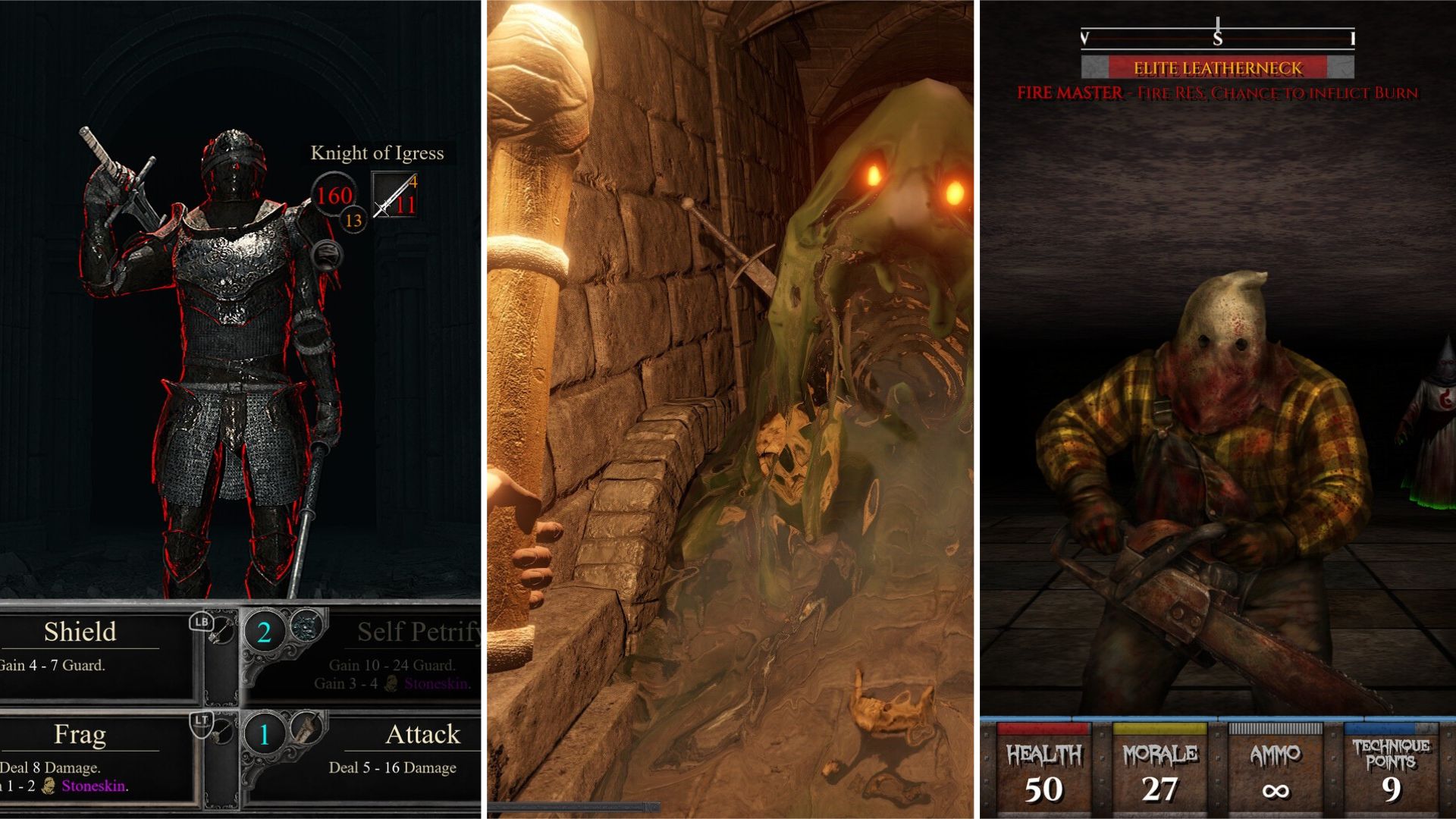
One of my absolute favorite things to do in games is first-person dungeon crawling, particularly when it’s got some lovely pixel art involved. Underkeep has just launched and it’s a textbook example of everything I love about this particular subgenre.
With so many promising projects in the pipeline at the moment, I thought it was as good a time as any to go through and take a closer look at what’s coming next and highlight some of the most interesting upcoming first-person dungeon crawler RPGs that are definitely worth keeping an eye on.

Mystic Land: The Search for Maphaldo
A Long-Delayed Adventure With Its Roots in the DOS Era
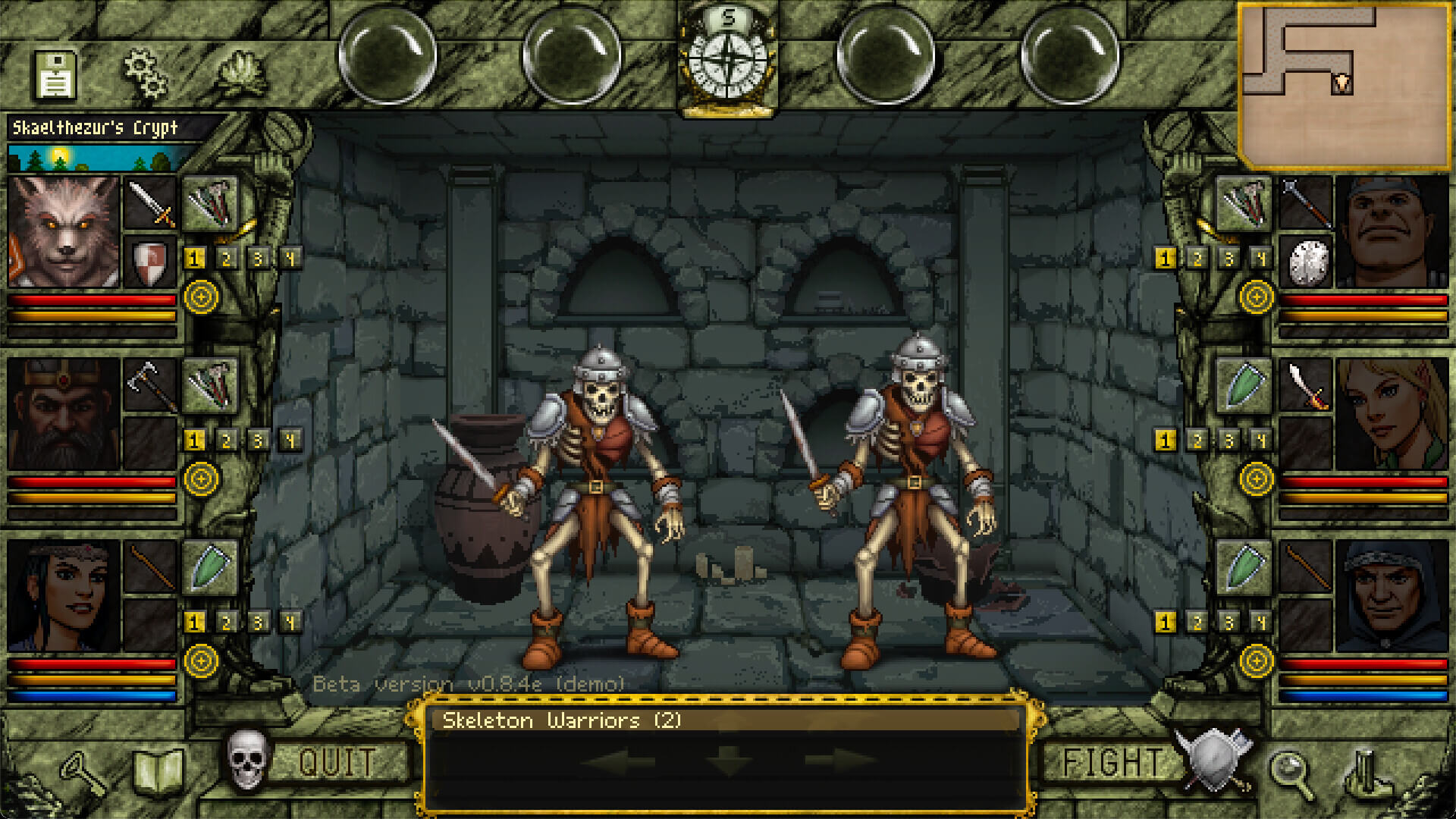
I’ve mentioned Mystic Land quite a few times over the last few weeks and still think the pixel art in it is absolutely superb. The story of Mystic Land’s development goes back to the early 90s when the original creators started an RPG which would ultimately end up being in a state of complete incompletion for decades. The project was resurrected by recovering old DOS builds, maps and design docs and MegaVision Software are now aiming for a June 2027 release.
The adventure is six characters out to find the missing scholar Maphaldo, with grid-based exploration, turn-based battles, and puzzles (all very much in the Wizardry and Might & Magic tradition). Character attributes and skills are key to the design, with inventory and controller support getting the more modern treatment.
There’s also an odd presentation option in that you can switch between a pixelated 2D view and a full 3D view. A public demo is available which gives you a very early look at a project whose links to the 90s go way beyond just the art, so go try it and let me know your opinion.
The Secret of Weepstone
A Monochrome Adventure for a Very Unprepared Party
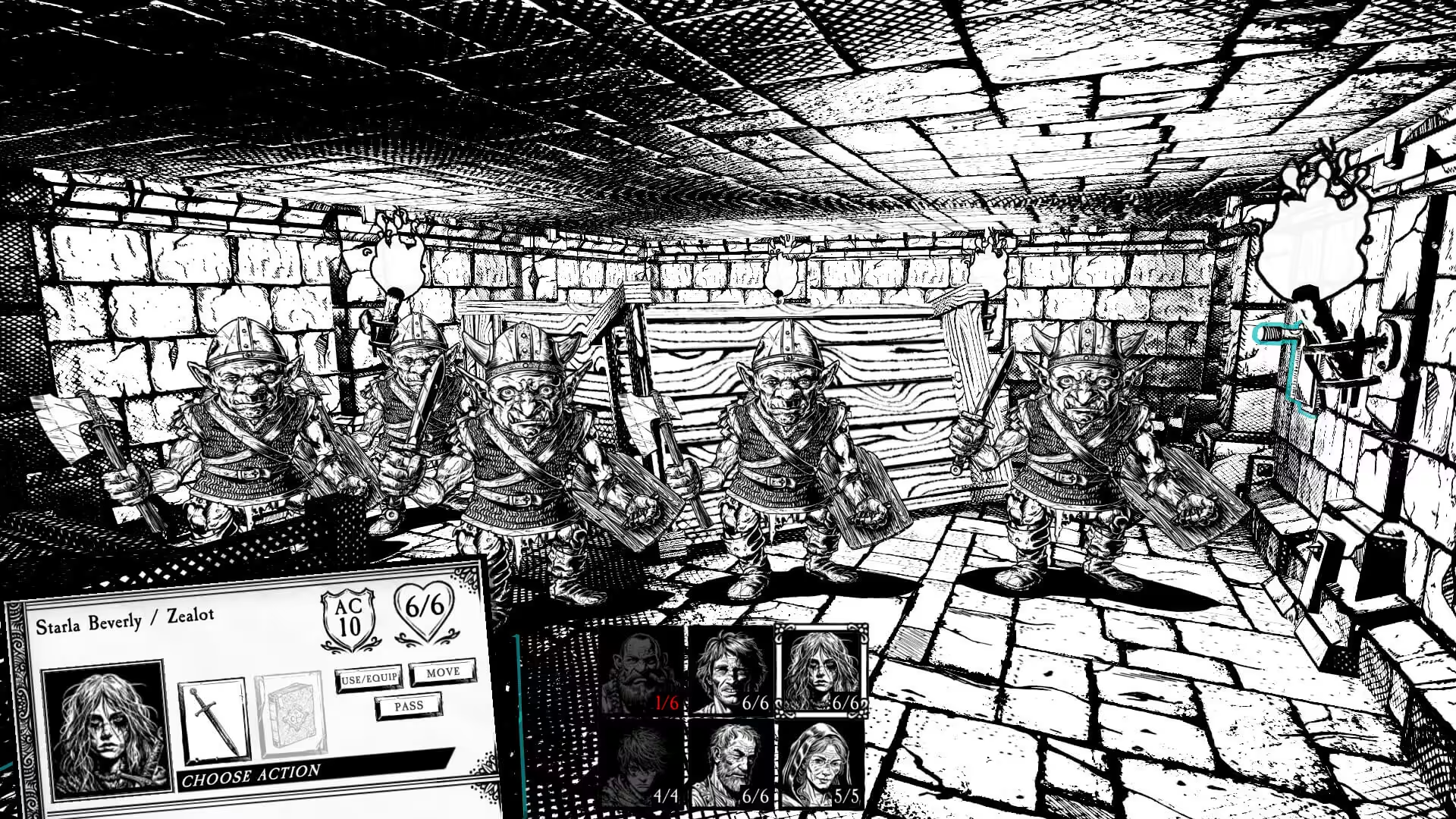
The Secret of Weepstone is definitely number one on my list of most anticipated RPGs. Six ordinary villagers go into an abandoned keep to investigate their lord’s illness and his rather disturbing visions. It’s presented by Talesworth Game Studio via hand-drawn black-and-white artwork in the style of early tabletop RPGs, with dice for all your skill checks and combat.
The monochrome is still a huge part of the appeal for me. Exploration is gridless and battles see you break the party down into front, middle and rear ranks which is obviously a big part of the tactical element (weapon reach and formation being key).
You can bring in further recruits to bring the party up to eight and character deaths do give you some rather strange Mortal Favors. 2027 release with demo available now. Weepstone is a game that combines puzzle solving and equipment management with the slow, gradual building of an unlikely band of adventurers and can’t miss inside your wishlist.
Häxeri
Extra Turns for Exploiting Weaknesses, Fewer for Getting It Wrong

I’d bet that one went completely under your radar. It’s a lovely retro-style dungeon crawler called Häxeri, which does one very specific thing in combat. Hit a weakness and you get extra turns. Hit a resistance and you lose turns.
Enemies follow the same rules so learning what a creature can take is going to have a direct bearing on how much your party get to do before the enemy side come back. Tarpit Games have built that system into a first-person dungeon RPG that’s very much in the vein of Shin Megami Tensei, Etrian Odyssey, and Wizardry. Release is due in 2027.
Six classes (Bard, Paladin and Sorcerer among them) offer different ways to develop your party via attributes, equipment and skill trees. You have buffs, debuffs and status effects to give you a whole host of tactical options beyond just choosing an elemental attack. Exploration is on a grid across 5 biomes. You can manually map or use the optional automap to suit either player who likes to map their own route or those who just want to focus on the encounters.
Delving The Depths
Freedom Lies Somewhere Beyond the Prison Cell

Due 15th January 2027. Delving The Depths starts with a life sentence and an escape tunnel that leads into a far bigger underground problem. Your imprisoned adventurers have to get through the caverns beneath their cell and find a way to the surface.
Dragon Dropper gives us a very traditional approach. You roll your character stats, encounters come in without any monsters actually on the map, you progress by exploring and experimenting with very little in the way of direction. There’s a written manual that goes into the detail of the grid movement and the turn-based combat.
New class options are an Alchemist (who makes potions from the ingredients you gather) and a Psionic (specializing in mental abilities). This is the fifth and final game in the series that started with Into The Inferno, and it stands completely on its own. The demo available covers five of the sixteen dungeon levels that are planned.
Descent of Lunaris
A Lunar Expedition Where Reality Refuses to Stay Put

One of the most unusual games I’m actually bringing you today is Descent of Lunaris, simply because it has two very different ways of doing combat. It’s a sci-fi RPG set in 2070 and you’ve got hostile robots to contend with straight away. The real problem though is the instability of reality itself, which can change the dungeon and open up the team to all sorts of new hazards and new opportunities.
A 4-person squad drawn from 9 classes and 18 subclasses gives party building a huge role to play. Unison Games also has two forms of combat: first-person encounters, which are all about front and rear formations, and tactical battles where movement, the terrain, and positioning are all key.
Skills and items carry over between both systems, so the squad’s progression is linked to the type of encounter you’re having. In between expeditions, you can get supplies, equipment upgrades, and the chance to reconfigure your team at the lunar base. Steam has a 2026 release window and there’s a demo available.
LURKS WITHIN WALLS
Turn-Based Survival Horror Inside a Quarantined Building

Resident Evil meets first-person, turn-based dungeon crawling in LURKS WITHIN WALLS. Infected residents roam the corridors of a quarantined building, alongside things that were never residents in the first place.
The game brings that survival-horror premise into first-person dungeon crawling, with creatures designed by Trevor Henderson and turn-based battles built around weapons, special abilities, and resource management.
Players can take the role of residents armed with improvised weapons or police officers trying to eliminate threats and rescue survivors. Gathering useful supplies and deciding how to spend them are central concerns, even when the combat gives you time to think. The game has a demo available that I personally tried a while back that convinced me, while the full release remains undated.
Golel
Positioning and the Dungeon Itself Become Weapons

A bookshelf can go right over a skeleton. A zombie can be kicked right onto the spikes. A narrow passage can be an escape route from something too big to pursue. All of these things are part of Golel‘s approach to dungeon combat where the layout of the room is just as important as the weapon you’re wielding.
That whole focus on the room is what really interests me. Ofer Rubinstein’s first-person RPG (due April 2027) is tile-based with a simultaneous tick system: doing an action advances the enemies as well, and some of the creatures can act twice for each of your actions.
Working out the patterns and positioning yourself to your advantage is key to the encounters. The non-linear adventure follows a warrior who is plagued by visions, and the character progression covers weapon-specific skills, spellcasting, and combinations of the two. I love the graphic style and the premises here, and if you want to test it yourself, go try the demo available.
Apathema
A Decaying World Where Light Is a Lifeline

Four spell slots leave very little room for error in Apathema. Magic is made from materials harvested from within the Chasm itself (a dying environment whose internal organs the protagonist is cursed to mend), and Sammy Makes Games takes that biological nightmare and combines it with a very grungy fantasy feel and first-person, turn-based combat which is all about targeting enemy limbs.
Crippling or destroying limbs, exploiting vulnerabilities, and altering equipment in the course of the fight all give you a number of adjustment points. Parrying and dodging are also actions you can take.
Beyond your spell loadout, you have a lantern which gives you another resource to manage during both exploration and combat. Darkness is a drain on sanity and will bring additional horrors, so the state of your light source is inextricably linked to the risks of pushing on.
Dungeons of DUSK
A Dungeon-Crawling Detour Through the DUSK Timeline

Dusk’s world is now moving in the direction of deliberation which is a fairly significant career shift for a game that was always going to be about frantic shooting. It’s a first-person turn-based RPG from 68k Studios and New Blood Interactive, which sits squarely in the space between the original Dusk episodes.
The campaign is 30 levels in length, combining the usual suspects with new enemies and featuring character progression as well as NPC encounters. A demo is available but the full release date is yet to be announced.
The weapons and horror aesthetic are clearly DUSK in nature, with the dungeon crawling taking place on a grid which provides a different way of moving through the environment. Beyond the main campaign there’s an endless arena, a boss rush, a number of survival modes and a level editor to further extend the dungeon crawling.
Rakshasa
Modern India Meets a Hidden Supernatural War

I’ll be putting out the video version of this article on my YouTube channel in the next few hours so you can get a much better feel for just how much potential Rakshasa has. It’s set in modern-day India, blending the mundane with the occult. I’m really interested to see how that setting will play into the roleplaying. The setting is urban India in all its glory (luxury apartments, the most crowded of neighborhoods, ancient temples, etc.), and the premise is an illicit dig which brings the protagonist’s latent Tantrik powers to the surface.
Odd Compass Studio’s first-person narrative RPG employs turn-based combat in a story involving rogue sadhus, asuras, and ancient flesh-eating beasts. Your choices and the shifting alliances you form will be key in navigating the various agendas and connecting the investigation to the people you meet along the way.
It’s a very visual game which mixes in classic RPG visuals with the look of a fairly early 2000s digital camera. The urban environments are very much of that period and have a very distinct texture to them. No release date at this stage, but a place in your wishlist is deserved.
EREWHON
Different Lives Connected by One Vulnerable Mind

Death brings EREWHON‘s protagonist back to the Weatherleigh Hotel, where another corpse can be the means to go on with the investigation. In Invisible Inc’s Lovecraftian RPG, the player is a Wandering Psyche inhabiting the body of an Academic, a Detective, an Occultist, or a Rogue.
Their stories start in 1982 and run through the hotel, enabling a second iteration to offer a different take on the hotel’s mysteries. You have first-person turn-based encounters alongside visual novel-style storytelling, with each vessel having its own attributes, class abilities, weapons, and artifacts.
Occult power has a price, and the Mythos spells and bindings of unnatural creatures are no exception in that respect. The continued state of the player’s mind is therefore a key issue. Physical death is fine, you can go through another incarnation. Permanent insanity, however, is a different matter and will carry forward and can eventually end the journey.
Deathand
A Deck That Doubles as Your Torch Fuel

In Deathand your deck also provides the fuel which keeps the dungeon lit. Burning a card permanently removes it from your deck and restores light. There is a direct cost to keeping the dungeon lit, as each step consumes light. Brighter conditions reveal enemy intent; in the dark, they are hidden, and the undead are much stronger.
PogoPixel Games‘ first-person roguelite deckbuilder is due in March 2027. You explore procedurally generated floors on a grid. Combat requires you to decide when to play your card, as playing an attack will charge it for subsequent turns. Enemies are in the Melee, Near and Far rows and will have push and pull effects which will move them around.
Cards get better with use, victories and treasure chests give you new cards to add to your deck. A few of the cards will actually assist you with exploration in the form of scouting, lock picking or setting up an ambush, which takes your deck building into the decisions you make between fights. I quite like that the deck is still a problem to solve even when there’s no enemy on the screen.
DEORUM
Coin-Driven Combat and the Cost of an Otherworldly Debt

Owing money to the otherworldly powers is the fundamental problem in DEORUM and the solution is to produce occult coins from rather unpleasant materials. Bones, flesh and divine blood collected on dungeon runs are used in a crafting/merging system and the whole exercise is given a raison d’etre by the approach of the Divine Festival.
Joyhop Games ties in the resource gathering to incremental upgrades and turn-based battles which are resolved via arcane coin flips. Different symbols yield attacks, protection or status effects and the progression of luck and the range of symbols available will have an effect on the odds.
Earnings also go towards better skills, greater endurance and arcana perk cards. The end result is a dungeon crawler built around repeated runs and a growing production chain, with cosmic horror providing the working conditions. A demo is available prior to the planned Q1 2027 release.
Sigils of Nightfall
Deckbuilding at the Edge of a Tabletop Apocalypse

Another game that really impressed me in an earlier playtest was Sigils of Nightfall. It’s very much a roguelite in nature, but I think it definitely warrants a closer look, particularly for the way it looks.
Choosing which room to go into is part of the risk in the game from 2 Wedges and Monumental Collab, as your journey through the dungeon can bring all sorts of unexpected events and you’re always faced with the choice of how much you’re going to spend or sacrifice before the next fight. Every run starts with a condemned character locked in Mountain’s Penance, below which a cult is working towards an apocalyptic awakening.
The game is first-person exploration with a turn-based deck-building element. Cards, abilities and trinkets you collect all go towards shaping your character’s options. Shattering sigils change the conditions of the run and so give you yet another reason to re-evaluate your current approach.
It’s based on MÖRK BORG and features some very grotesque character art by Thiago Lehmann. The one-shot format is very appropriate to the setting in that you’re dealing with a situation where the end is approaching and each attempt is a contained fight against the inevitable. The demo is available and a release date is yet to be announced.
Diviner
First-Person Battles Built Around Rerolling Skills

And to finish, here’s another game that’s seen a number of structural changes over the years and I think they’ve all been for the better. It’s called Diviner, and it’s isometric exploration combined with first-person turn-based combat. A rather interesting mix in my opinion.
One of the more interesting mechanics is the way skills work in battle. After you use a skill it gets rerolled so the order in which you use your skills becomes very important as your options are constantly changing. Character builds are all about Tether weapons (each of which has its own passive) and then you can further tailor the effects of those via additional skills and the various Affixes that are linked to them.
There’s also a blacksmith for equipment upgrades, a slot-based inventory, and loads of places to go (dungeons, abandoned settlements, excavation sites, etc.) in a Dark Souls style. Between expeditions you’ll be back at the caravan hub where you can access various services and talk to other characters. Developer Born of Three is currently aiming for a 2027 release and I’m very much looking forward to seeing how all those mechanics come together in the end product.
And there you go, the 15 first-person RPGs that, in my opinion, are the most interesting. Now I’m curious to know what you think. Which of those grabbed you the most? And if you know of any other ones that you’d like to see on a future list, please do let me know. Until next time, have a great game. Ciao
