


Last recap of August, and I think it’s safe to say it’s been an incredibly packed month for exciting new RPGs and strategy games. Of course, we reached the high point with the release of Star Wars, which made a hugely successful debut, and I couldn’t be happier about it.
This week, there are tons of new demos to check out for several titles I’ve been following for quite some time and that are finally playable. There’s also an unofficial expansion for a well-known tactical RPG that I thought was worth highlighting, along with plenty more. Let’s see all of them.
STAR WARS Zero Company
Developer: Bit Reactor
Publisher: Electronic Arts
Release Date: August 27, 2026
Platforms: PC, PlayStation 5, Xbox Series X|S

There are plenty of demos to show you this week, but of course I’m kicking off this recap with the highlight of the month, which could very well turn out to be the highlight of the year. Obviously I’m talking about STAR WARS Zero Company, which transports turn-based squad tactics to the final stages of the Clone Wars.
The campaign follows Hawks, a former Republic officer who assembles an unconventional team to investigate the Infinite Coil, a growing threat operating behind the conflict between the Republic and Separatists.
Combat revolves around cover, coordinated abilities, and an Advantage resource that can be spent to strengthen attacks or execute tactical maneuvers. Mistakes can leave operatives injured, with repeated wounds potentially leading to permanent death on the standard difficulty.
Between deployments, the squad returns to a customizable base known as the Den. Here, Hawks can recruit new specialists, upgrade facilities, treat injured operatives, improve relationships, and use cross-training to expand the team’s combat options.
Alongside established Star Wars archetypes, the game supports customized recruits, allowing each campaign to develop its own squad composition and internal dynamics. Reviews for the game are great so far, and you can find ours here.
Canvas City (Demo)
Developer: Disc 2 Games
Publisher: Disc 2 Games
Demo Release Date: August 24, 2026
Platform: PC
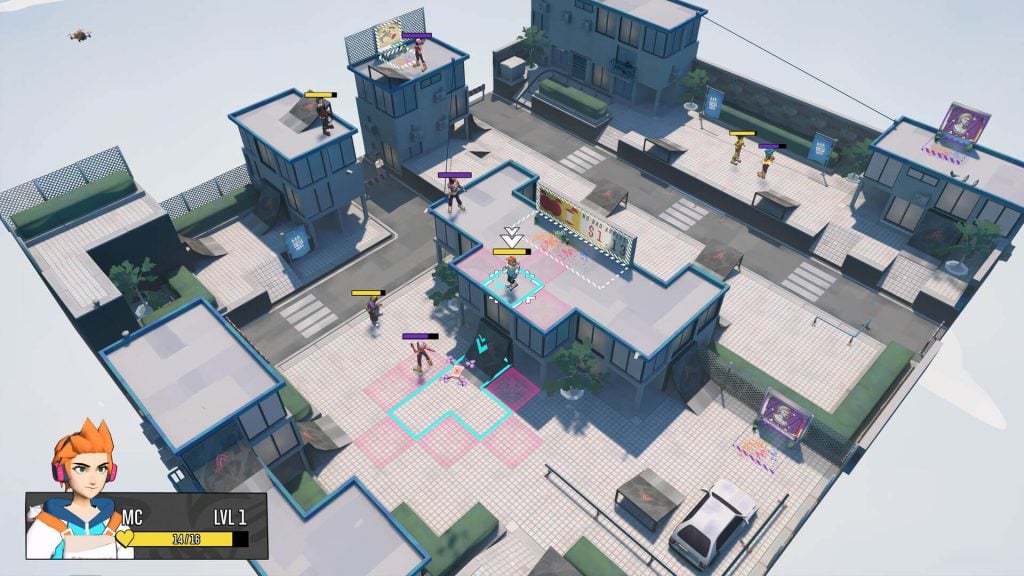
I talked about Canvas City earlier this week and its original combat system built around skateboard tricks and maneuvers. Rails, ramps, elevation, and momentum are incorporated directly into Canvas City‘s turn-based battles, giving movement a far more expressive role than the usual grid-based march between cover points.
The story follows the Fire Starters, a group of young skaters and street artists pushing back against an authoritarian regime. Tricks generate Style Points, while tagging parts of the battlefield helps the crew claim territory and activate additional abilities. Rival crews bring their own tactics and personalities, turning each confrontation into a competition for physical and cultural control of the city.
The newly released demo provides an early look at a tactical RPG with an unusually colorful identity, blending urban traversal, rebellion, and territory management without treating its street-art theme as surface decoration.
BRIGANDINE ABYSS
Developer: Adglobe
Publishers: Happinet, NIS America
Release Date: August 26, 2026 on PC; August 27, 2026 on consoles
Platforms: PC, PlayStation 5, Xbox Series X|S, Nintendo Switch 2
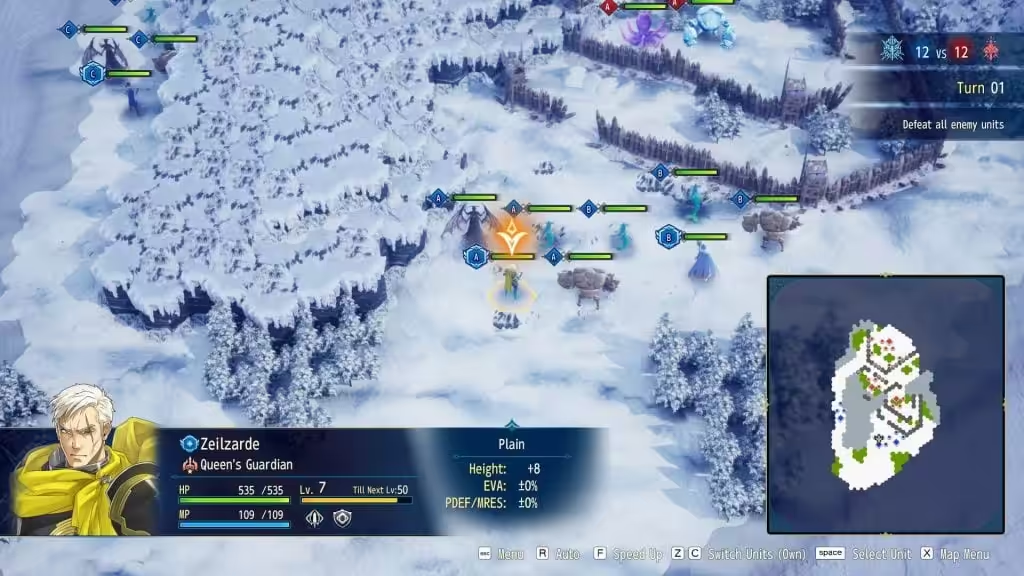
The other major August release is the latest entry in the series, BRIGANDINE ABYSS, now available on PC and consoles.
More than two centuries after the events of Brigandine: The Legend of Runersia, war once again spreads across the continent as the Abyssloa Empire returns. BRIGANDINE ABYSS places entire nations, armies, and territorial campaigns under the player’s command.
Each turn is divided into organizational and attack phases. The former is used to recruit troops, strengthen units, and prepare defenses, while the latter determines which neighboring territories to invade. Battles unfold across hexagonal maps where positioning, unit composition, and the protection, or elimination, of commanding leaders can decide the outcome.
Six nations receive dedicated story campaigns, but the broader Mission Mode expands the selection to 24 playable powers. That makes this a sizeable strategic package for those who prefer long campaigns built around shifting borders, army development, and large fantasy conflicts rather than isolated tactical encounters.
BURNED HORIZONS (E.A.)
Developer: Burned Horizons Studio
Publisher: Burned Horizons Studio
Early Access Release Date: August 24, 2026
Platform: PC
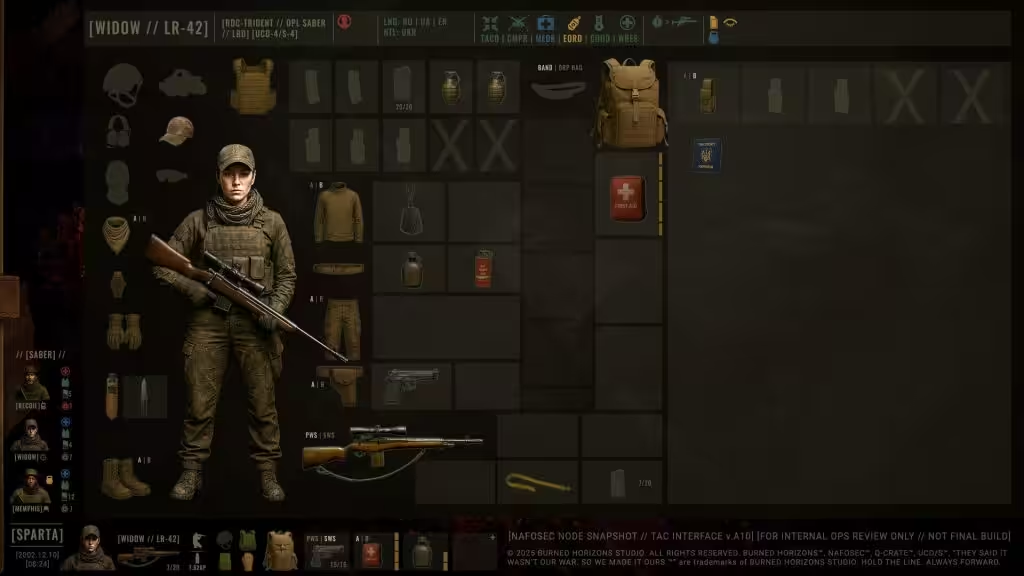
Set in an alternate version of Ukraine in 2002, BURNED HORIZONS is a harsh turn-based military sandbox centered on a multinational private military company. Its approach deliberately moves away from conventional health bars, fixed classes, and experience-based perk trees.
Operatives instead develop according to the actions they perform in the field. Injuries, scars, trauma, equipment weight, and realistic ballistic behavior all affect their performance, while battlefield decisions continue to influence the campaign after a mission concludes. Losing a skilled contractor consequently means more than removing a replaceable unit from the roster.
This is still a very early build. The developer describes the current version as intentionally limited and rough, with one continuous Area of Operations and several systems still requiring expansion or refinement. Anyone entering during the opening phase should expect an evolving tactical sandbox.
Seven Blasphemies (Demo)
Developer: Crit42 Studio
Demo Release Date: August 24, 2026
Platform: PC
Full Release: September 8, 2026
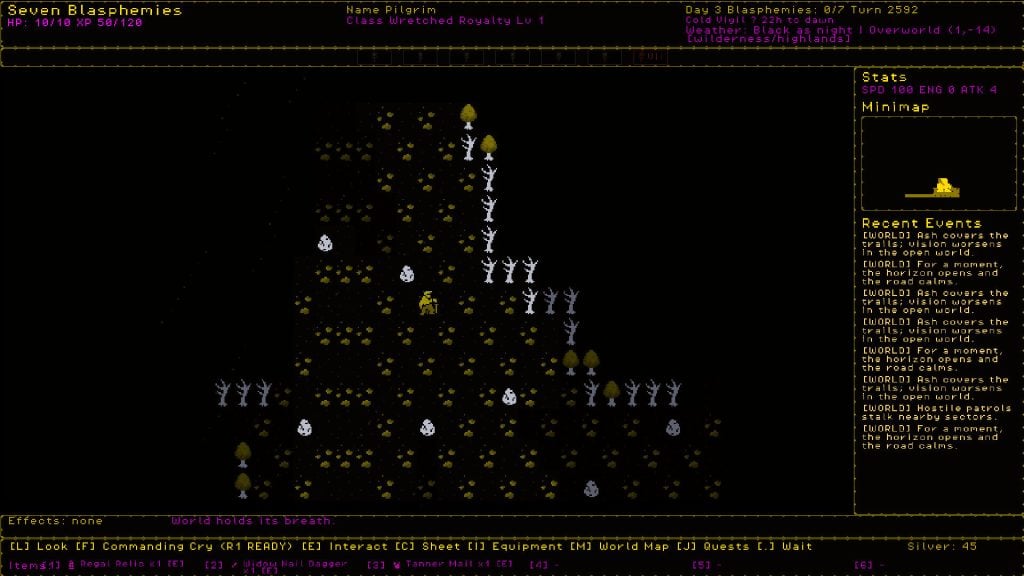
Time itself becomes the central threat in Seven Blasphemies. Every new dawn can introduce another permanent curse known as a Blasphemy, gradually changing the rules and making the journey more dangerous. Should the seventh curse arrive, the world and the current run come to an end.
Its foundations come from traditional roguelikes: grid-based exploration, turn-based movement, scarce resources, procedural dangers, and permanent death.
The accumulating curses introduce an additional layer of pressure, however, discouraging excessive caution and forcing difficult decisions about when to explore, fight, or push toward an objective.
The demo arrives shortly before the complete game, giving roguelike enthusiasts an opportunity to test its escalating structure before the September launch.
Folk Emerging
Developer: Curious Dynamics
Publisher: Curious Dynamics
Release Date: August 26, 2026
Platform: PC
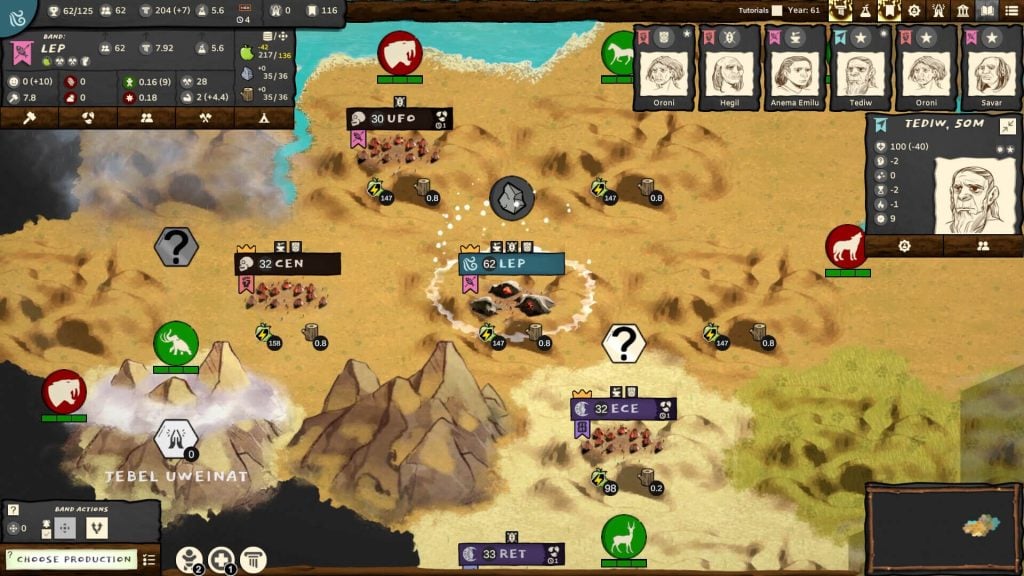
Most 4X games begin with a settlement and quickly move toward organized empires. Folk Emerging goes considerably further back, placing its tribes in the Stone Age and asking them to survive before cities, borders, and formal states have taken shape.
Individual families migrate across procedurally generated landscapes, hunting animals, gathering resources, trading with neighboring groups, and adapting to dynamic ecosystems.
Every tribe member has personal relationships and practical responsibilities, so a death may remove not only a warrior but also a hunter, parent, craftsperson, or source of inherited knowledge.
Technological progress stretches from the Pleistocene to the early Bronze Age, while cultural norms influence diplomacy, commerce, and warfare. Battles use an autobattler-style system, leaving the player responsible for preparation and composition rather than issuing every individual command.
It is a slower and more personal interpretation of the genre, where the history of a civilization begins with the survival of a few closely connected families.
Catalyst Core (Demo)
Developer: Satk
Publisher: Karus
Demo Release Date: August 28, 2026
Platform: PC
Full Release Window: Q4 2026
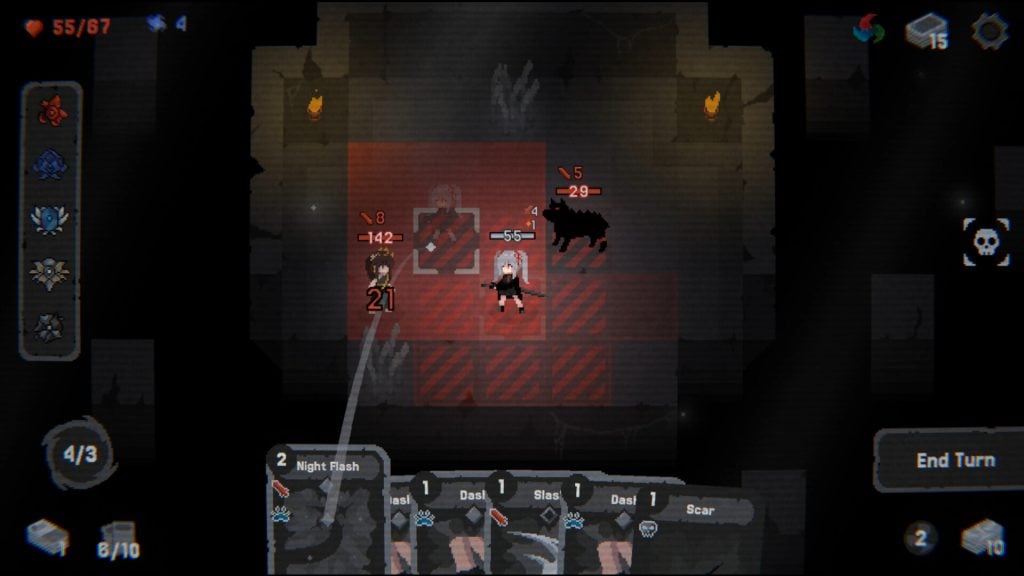
The Catalyst Core demo introduces a grid-based roguelite deckbuilder in which cards can be infused with Pyro, Hydro, and Dendro elements. Combining these properties produces different reactions, encouraging experimentation with both deck construction and the order in which abilities are deployed.
Enemies occupy the battlefield alongside the protagonist, making movement and targeting part of each card decision. New cores and randomized rewards gradually reshape the available build, creating opportunities to specialize in particular elements or construct decks around chained reactions.
With the full release currently targeted for the final quarter of 2026, the demo serves as an early test of the game’s central idea: translating element-based ability interactions into a compact tactical card system.
Heroes of Might and Magic III: Horn of the Abyss
Developer: HotA Crew
Steam Release Date: August 25, 2026
Platform: PC
Requirement: Heroes of Might and Magic III
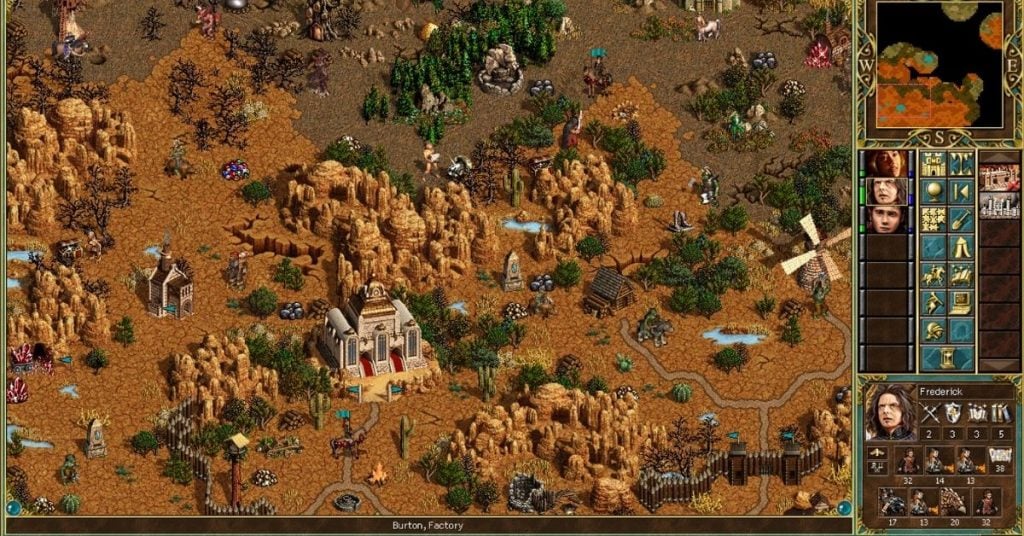
Horn of the Abyss is one of the most substantial community expansions for Heroes of Might and Magic III, and is considerably easier to access.
The free expansion introduces three additional factions, Cove, Factory, and Bulwark, along with five campaigns, 54 playable heroes, new artifacts, balance adjustments, quality-of-life improvements, and additional multiplayer options. Steam Workshop integration and a level editor further support custom maps and community-made scenarios.
Ownership of the original Heroes of Might and Magic III is required, but the Steam release provides a more straightforward entry point for returning veterans and anyone discovering the classic fantasy strategy game for the first time.
Online and local competitive play are supported alongside cooperative modes, preserving the multiplayer appeal that has helped the game remain active for decades.
Medimon (Demo)
Developer: Panacea Interactive
Publisher: Panacea Interactive
Demo Release Date: August 25, 2026
Platforms: PC, macOS
Full Release Window: Q1 2027
I love monster collectors, and I really enjoy playing them with my daughter, who’s a big fan of the genre, so I’m always happy to introduce new ones.
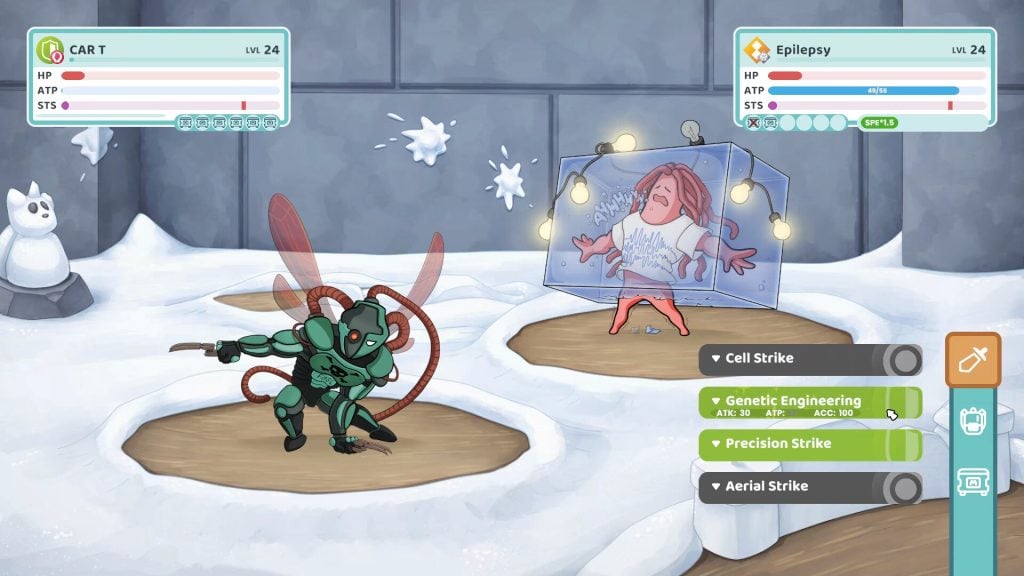
The genre receives a medical makeover in Medimon, an RPG where collectible creatures are inspired by cells, organs, diseases, and other parts of the human body. The protagonist, Brad, sets out to become a Medimaster while capturing, training, and evolving an increasingly unusual collection of companions.
Medimon can develop into healthy forms or transform into more dangerous diseased variants. Stress and battle conditions affect these changes, adding an element of risk to team development. Party composition is equally important, as different creatures can support one another through complementary biological abilities and synergies.
The demo covers the prologue and first main area, with an estimated duration of approximately 30 to 60 minutes. It is a relatively brief introduction, but long enough to sample the combat, transformation systems, and peculiar medical world before the planned 2027 release.
Full Circle (Demo)
Developer: 2nd Player Games
Publisher: Deck13 Spotlight
Demo Availability: Available now
Platform: PC
Full Release: To be announced
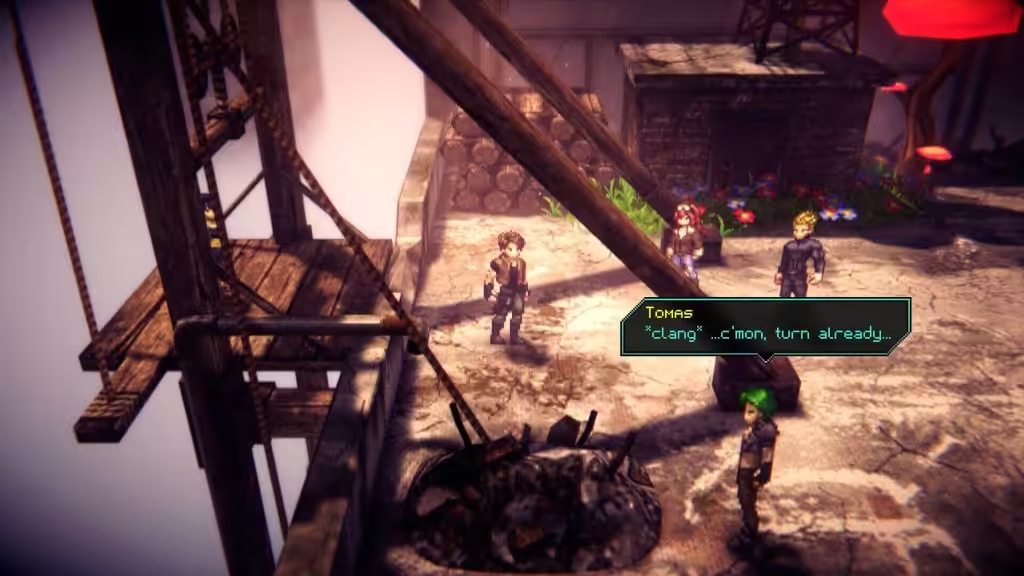
Another title I’m extremely interested in is Full Circle. I talked about it a while back, and there’s finally a demo available for this PlayStation-era-inspired JRPG.
It presents a post-apocalyptic world where humanity has retreated to floating cities while mutated creatures roam the surface below. The adventure gradually uncovers surviving communities, rival settlements, and the history behind the world’s collapse.
Battles use a traditional turn-based framework enhanced by real-time precision inputs. Proper timing can strengthen individual actions or extend attacks into larger combinations. Party members can also move between active and reserve positions, opening opportunities to rotate injured characters, prepare specialized abilities, and respond to changing threats.
Characters can deploy turrets, hack machinery, tame creatures, and manipulate parts of the environment. Combined with its 2D pixel characters and three-dimensional locations, the result is intentionally reminiscent of late-1990s RPGs without simply reproducing their combat systems unchanged.
INFERIUS (Demo)
Developer: Lucid Rain Studios
Publisher: Lucid Rain Studios
Demo Availability: Available now
Platform: PC
Full Release: 2027
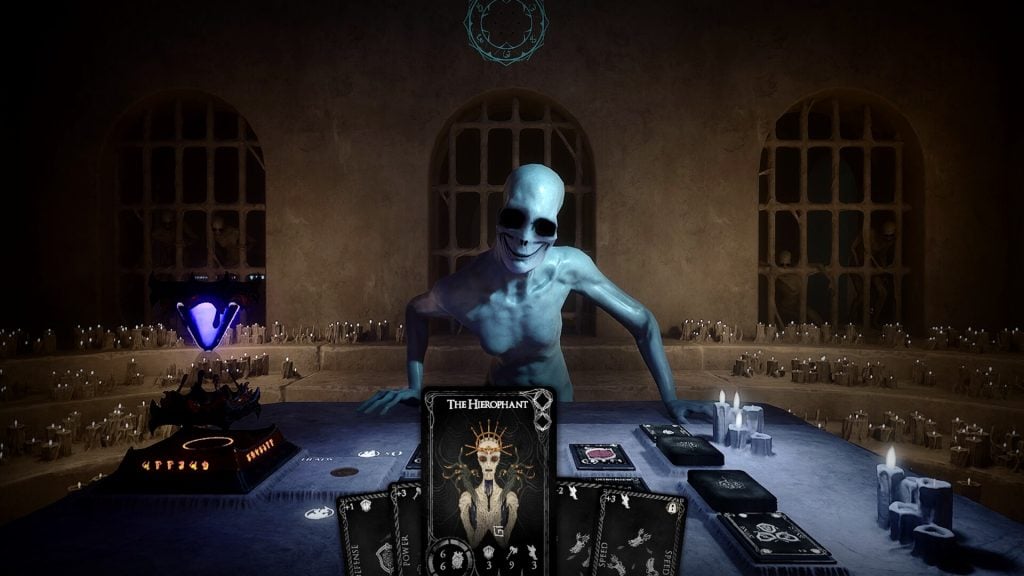
And I’m wrapping up this new-release recap with another demo for another very promising project that was showcased at Gamescom 2026.
INFERIUS takes the roguelite deckbuilder into first-person psychological horror, sending a defenseless pilgrim through a hostile interpretation of Dante’s Inferno.
Exploration revolves around a lantern powered by harvested Souls. Its light keeps the darkness at bay, but Souls are also needed to open paths and manipulate parts of the environment, creating a constant choice between immediate safety and continued progress.
Encounters with the rulers of Hell shift the action to a physical tarot table. Players draw from Major and Minor Arcana, sacrifice cards to generate Action Points, and commit up to three Major Arcana to the board.
Death returns the protagonist to the Abyss, where cards can be upgraded and passive Brands equipped before another descent. The currently available demo provides an early sample of this unusual mixture of first-person stealth, horror exploration, and turn-based tarot battles.
I hope I’ve given you a few interesting ideas for your weekend. Let me know what you’re playing this weekend. See you next time. Ciao

