


Getting a new, fully turn-based Final Fantasy after all these years honestly fills my heart with joy. I grew up on Final Fantasy VII and the many wonderful games that followed, and I’m a die-hard fan of turn-based JRPGs!
I’ve just finished the demo, and yes, I know I’m a little late. Between work and family, finding the time isn’t always easy. By now, I imagine just about everyone has shared their thoughts on this new Square Enix adventure, but I still wanted to add mine. So here are the five things I enjoyed most.

1. It Feels Like Final Fantasy Again
Let’s start with what is, in some ways, the most obvious one. Crystals. Knights. Airships. Magic. Summons. A group of heroes leaving on a journey to stop a threat that quickly becomes much bigger than they expected. Nothing particularly revolutionary there, right? And that’s exactly part of the appeal.
Resonance seems very comfortable embracing the fantasy adventure that defined many of the older games. The story begins with Rain and Lasswell, two knights of Grandshelt sent to investigate the Earth Shrine, but their mission quickly turns into something far more serious.
What I enjoyed during these first hours is how quickly everything felt familiar. Traveling with a party, stopping at towns, exploring the overworld, and venturing into dungeons, it all feels wonderfully traditional.

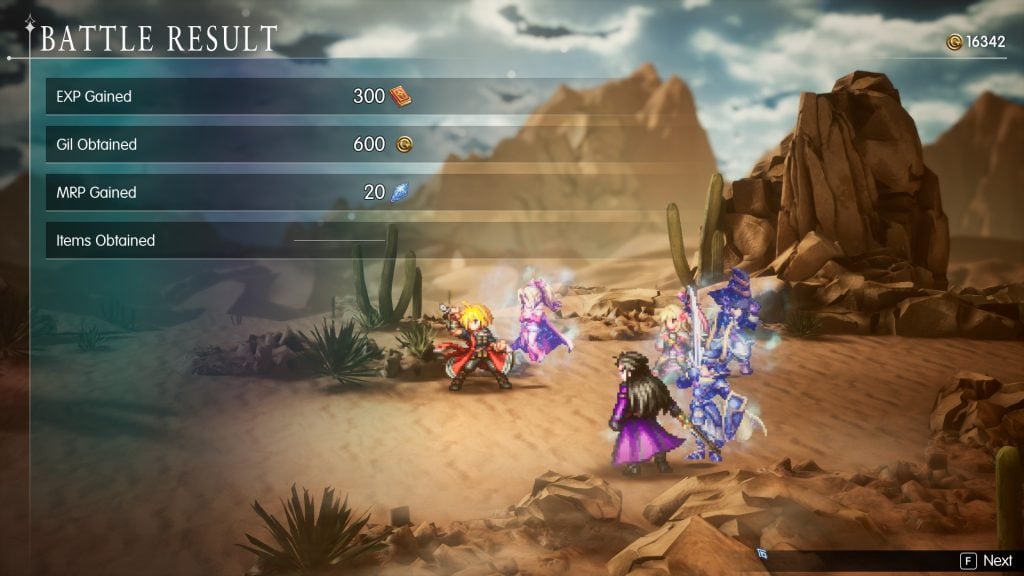
And I can’t tell you how happy that little tune on the battle results screen made me. Hearing it took me straight back to the golden age of JRPGs, and I imagine plenty of you will have the same reaction.
Square Enix said from the beginning that this project would celebrate both classic and modern Final Fantasy, and I think they’ve got it exactly right.
2. More Than A Classic Turn-Based Combat
Of course, without the turn-based combat, I wouldn’t even be here writing this article. Resonance brings back a fully menu-driven battle system, with a turn-order bar at the top of the screen showing when each ally and enemy will act.
Every enemy also has a Stagger Gauge beneath its HP. Hitting weaknesses depletes that gauge faster. Empty it completely, and the enemy becomes staggered, lowering its defense and preventing it from taking its next action.
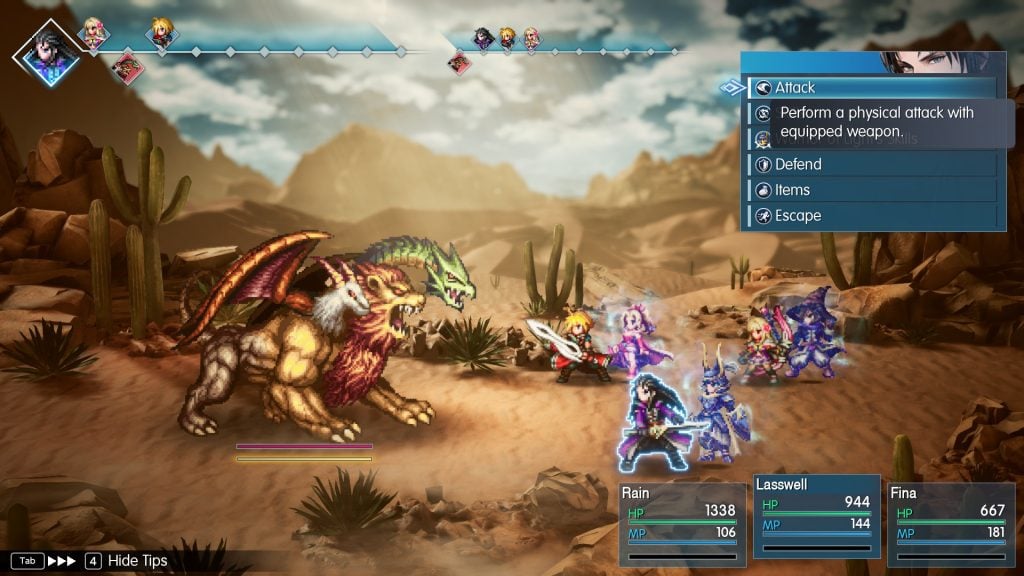
This gives you a few more things to consider when choosing your commands. You can see an enemy’s turn approaching, check how close it is to being staggered, and decide whether to attack its weakness, heal someone, use another ability, or prepare for what’s coming next.
Being able to read the timeline and work toward a stagger gives you time to plan ahead and potentially stop a dangerous attack before it happens.
If you’ve played JRPGs before, you should have no trouble getting comfortable with the basics. At the same time, the system asks you to put a little more thought into your decisions, and that’s a definite plus for me.
3. Visions Give You Plenty to Experiment With
This is where you can really dig into character customization and start experimenting with different builds. A few days ago, I talked about RPGs with a deep class and job system; now I wouldn’t say Resonance belongs there either. Maybe we should wait for the full package to better understand what we can and can’t do here, but I think there is strong potential, thanks to the Visions System.
Visions are essentially crystallized versions of characters that can be equipped to party members.
Fighting with them unlocks abilities, but the interesting part comes afterward: once an ability has been learned, it can remain equipped even when you switch to another Vision, provided you stay within the available cost limit. It’s a little like carrying abilities between jobs in Final Fantasy Tactics.
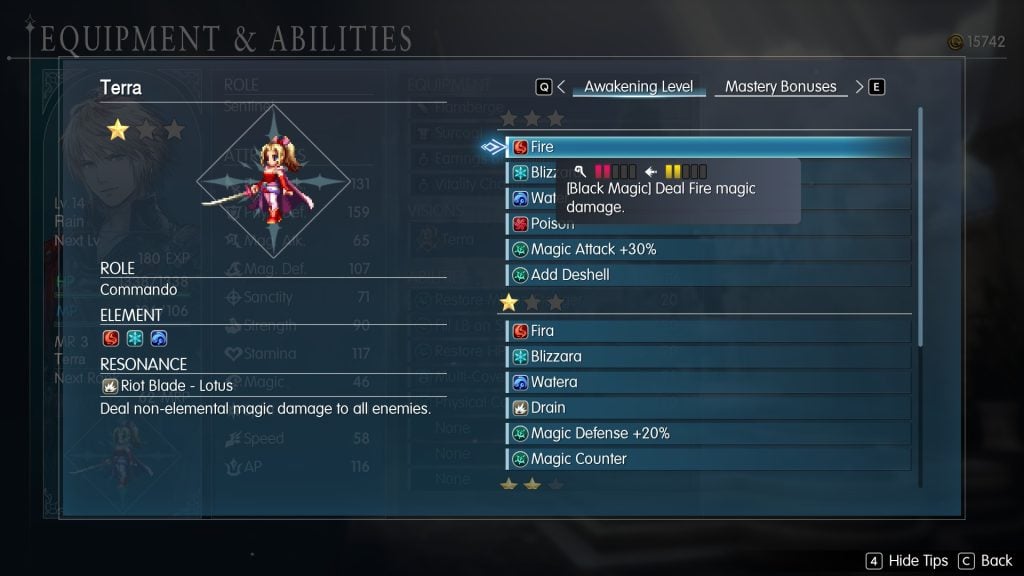
So instead of permanently locking a character into one traditional job, you can gradually mix abilities learned from different Visions. Maybe you want someone focused almost entirely on offense. Perhaps another party member can keep some healing abilities while learning skills from elsewhere. As more Visions become available, the number of possible combinations should continue to grow.
Square Enix describes the system as a more accessible evolution of the traditional Final Fantasy Job System, and based on what the demo introduces, I can already see the potential.
Then there’s the pleasure of unlocking familiar faces throughout the adventure. Visions include iconic characters from across the series, with Cloud, Tidus, and the Warrior of Light among the confirmed names. For a longtime fan, that’s already an appealing reason to seek them out. I especially like that these characters also have a direct role in developing and customizing the party.
4. Presentation and Cinematic Attacks
We’ve seen plenty of HD-2D RPGs by now, but seeing the style applied directly to Final Fantasy still hits differently. I’m a huge fan of pixel art, and honestly, I love this HD-2D trend too.
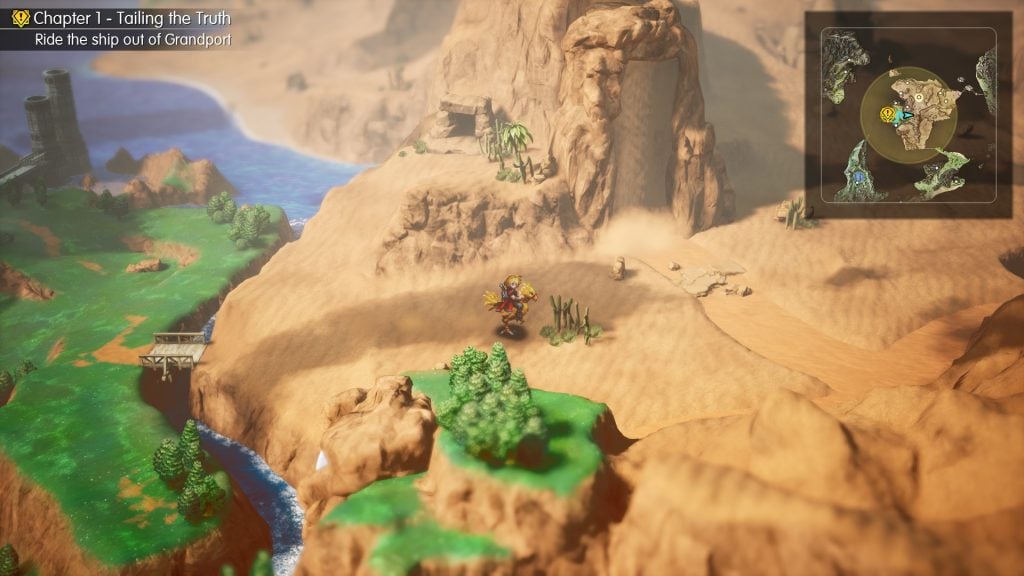
There are moments where the game immediately recalls the 16-bit era, followed seconds later by camera movements and visual effects that would never have been possible on those machines.
Wandering through small villages and dungeons, looking for a half-hidden path, is a pleasure. Exploring every corner of the desert village with a Chocobo was a particular joy for me.
That excitement carries over into the battle cinematics. I can understand why some people might find these sequences a little over the top, because the game certainly goes all out. For me, though, they give me goosebumps.
Triggering a Resonance attack, for example, launches a cinematic showing the character unleashing all their style and power on an unfortunate enemy. To use these special attacks, you need to stagger every enemy during the same turn. This triggers a Sweeping Stagger, opening an Extra Phase and allowing the party to unleash a Vision-specific Resonance attack.
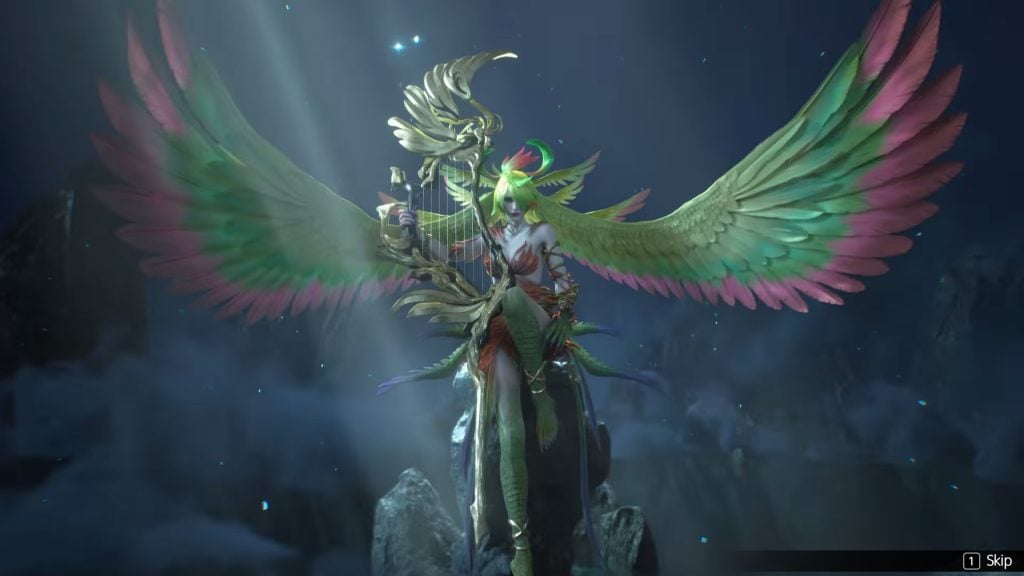
The Espers get their moment in the spotlight too, and they’re certainly no strangers to dramatic camera work after their appearances in earlier games. Once summoned, they remain alongside the party for three turns before performing a powerful finishing move and disappearing.
So yes, Final Fantasy Resonance goes big on cinematic spectacle, and I love it. There’s also the option to skip these sequences once you’ve had your fill.
5. There’s Plenty to Discover Along the Way
One thing I really like about Final Fantasy Resonance is that it doesn’t rush you straight from one story objective to the next. There are towns to explore, dungeons to investigate, treasure to find, side quests to complete, and plenty of reasons to wander away from the main path.
Even during the demo, I found myself checking corners, entering buildings, talking to NPCs, and looking for anything I might have missed. It’s a simple part of the JRPG formula, but also one I’ve always enjoyed. Those small rewards and discoveries make me want to take my time and see what else is out there.
The full game seems ready to expand on this side of the experience. Square Enix has already confirmed several pieces of optional content, including encounters with Gilgamesh (you will meet him in the demo as well), the Colosseum, the Chamber of Arms, and even a battle against Ultima Weapon.
Then, of course, there are Chocobos. The overworld brings back that unmistakable classic Final Fantasy feeling, with towns, caves, and hidden locations scattered across the map. Chocobos can be summoned to travel around much faster, and riding one across a world map is exactly the kind of thing that immediately makes the adventure feel more like Final Fantasy to me.
Sometimes I want to forget the next objective for a while, finish a side quest, search for a hidden treasure, or simply see where a road leads. Having reasons to take those detours is an important part of the experience.
Final Thoughts
Of course, all of this is based on the demo. There’s still a full adventure to discover when Final Fantasy Resonance launches on October 22, 2026, for PC and consoles.
I don’t know whether it will have the same appeal for fans who came to the series through the more recent games. But for those of us who grew up with the older entries, the demo has already been a treat, and I’m feeling very optimistic about what awaits us.
I can’t wait to take this journey and see how the pacing holds up over the full adventure, how the side quests are introduced, and how challenging the later optional content becomes. I’m curious to find out just how much time and effort those tougher quests will demand.
After all this time, I think we deserve another turn-based Final Fantasy, a game that makes us feel at home.

